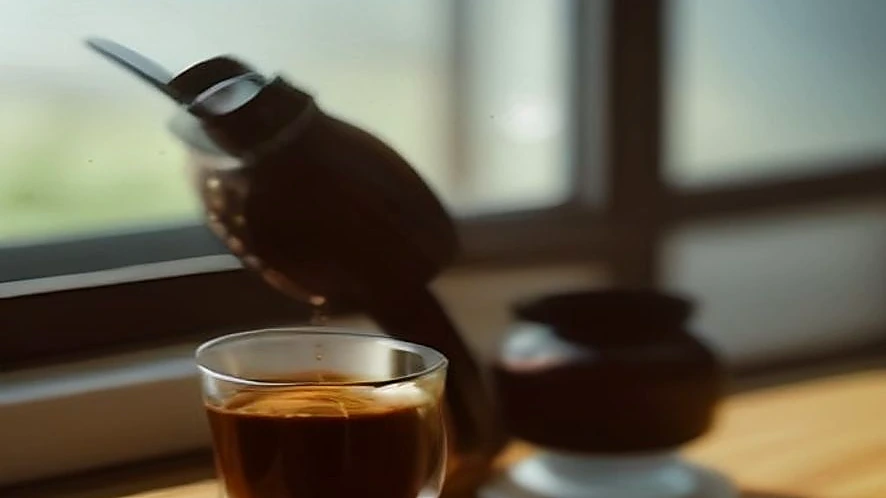
A coffee grinder for espresso is defined primarily by its ability to produce a consistent, fine grind without overheating the beans. Achieving this requires precise burr engineering and variable grind adjustments that control particle size distribution, which directly influences extraction and flavour balance.
Some links in this post are affiliate links. If you buy through them we may earn a small commission at no extra cost to you — it never changes which products we recommend.
Many grinders claim to be espresso-capable but fall short due to uneven burr alignment, insufficient grind settings, or static buildup that causes messy grounds. Understanding the mechanisms that govern burr design, grind calibration, and anti-static features helps separate grinders that deliver a true espresso grind from those that merely approximate it.
What actually matters
Espresso grinding demands a fine and uniform particle size to ensure optimal extraction under high pressure. The burr type, size, and material directly affect heat generation and grind consistency, which in turn impact flavour and crema formation.
The particle size distribution (PSD) is critical: grinders producing a narrow PSD yield more balanced extractions, reducing bitterness and sourness. For espresso, the median particle size typically ranges between 250 and 400 microns, with fines below 100 microns minimized to avoid over-extraction and channeling.
Heat generation during grinding must be controlled to preserve volatile oils; burrs made of hardened steel or ceramic with effective heat dissipation mechanisms help maintain bean integrity. Burr speed and motor power also influence temperature rise—slower RPM grinders generate less heat but may increase grind time.
Grind retention, the amount of coffee left inside the grinder after use, affects dose consistency and freshness. Designs minimizing retention, such as straight-through chutes and anti-static materials, help maintain repeatability and reduce stale grounds.
Burr type and size
Conical burrs are preferred for espresso because they generate less heat during grinding, preserving coffee oils essential for flavour. The burr diameter, typically 40-58 mm in home grinders, influences throughput and grind consistency; larger burrs grind faster and maintain uniformity better, reducing fines and clumps.
Flat burrs produce a more uniform particle size distribution with fewer large particles but tend to generate slightly more heat due to increased friction surface area. While flat burrs are popular in commercial settings, home grinders with flat burrs often require precise calibration to avoid excessive fines.
Burr material affects durability and performance; stainless steel burrs resist wear and maintain sharpness longer, while ceramic burrs offer hardness and heat resistance but can be brittle. Burr shape and tooth design also influence grind particle shape and consistency.
Grind settings and adjustability
Espresso requires very fine control over grind size, often with 30 or more precise settings allowing incremental adjustments. This granularity enables users to dial in the grind for bean freshness, roast profile, and extraction method. Micro-adjustments reduce channeling and uneven extraction.
Digital or stepped adjustments provide repeatability but may lack the fine granularity of stepless systems favored by enthusiasts. Stepless grinders allow infinite adjustment within a range but require more skill to reproduce settings accurately.
The impact of grind size on extraction time is significant; a change of 10 microns can alter shot time by several seconds, affecting espresso balance. Therefore, grinders with consistent and stable settings are essential for consistent results.
Some grinders incorporate timers, dose control, and programmable presets to automate dosing and reduce variability, especially helpful in busy environments or for users seeking convenience.
Anti-static and mess control
Static electricity causes coffee grounds to cling to grinder surfaces, creating mess and inconsistent dosing. Anti-static technologies, such as special coatings or materials, reduce this effect, keeping grounds in the container and speeding cleanup.
Static buildup is influenced by factors like bean moisture content, ambient humidity, and grinder materials. Techniques to mitigate static include incorporating conductive materials, grounding components, and using anti-static sprays or coatings.
Reducing static not only improves cleanliness but also enhances dosing accuracy by ensuring grounds flow predictably into portafilters or containers, preventing clumping and dose inconsistency.
Some grinders include features such as removable grounds containers with anti-static linings or portafilter cradles designed to minimize static cling during grinding.
Choosing the right espresso grinder or skipping it
If you want consistent espresso extraction and flavour, your grinder must offer fine grind control, stable burr alignment, and minimal heat buildup. Larger burrs (40 mm and above) help maintain consistency and reduce overheating by allowing lower RPM operation and improved heat dissipation.
Anti-static features and easy cleaning mechanisms further improve the experience by reducing mess and ensuring dose consistency. These features contribute to repeatability shot after shot, which is critical for espresso quality.
Niche grinders like blade types or those with limited settings may serve occasional or multi-purpose use but fall short for dedicated espresso brewing. Blade grinders produce uneven particle sizes and generate heat that degrades flavour compounds, making them unsuitable for espresso.
Beginners may prefer grinders with digital timers and portafilter cradles for convenience, while enthusiasts benefit from micro-adjustments to fine-tune extraction. The trade-off between ease of use and precision should guide selection based on user experience and brewing goals.
If you brew mostly drip or French press, an espresso-optimized grinder is unnecessary and often more expensive than needed. Conversely, if you lack time or patience to dial grind settings precisely, investing in a high-end espresso grinder may not improve your coffee significantly.
Understanding your brewing habits, budget, and desired coffee profile will help determine whether investing in a dedicated espresso grinder is worthwhile or if a versatile grinder with broader settings better suits your needs.
| Pick | Best for | Burr size (mm) | Watch out for |
|---|---|---|---|
| SHARDOR B0D8XY968Z | Precision grind with 51 settings | 40 conical | Limited capacity hopper |
| OXO Silver B07CSKGLMM | Value with micro adjustments | 40 conical | Smaller grind range for espresso |
| OXO Matte Black B0CM9Z6HYF | Same as silver with different finish | 40 conical | Same as silver |
| Rounexes Flat Burr B0HB98V4SP | Cup quantity control, compact | Flat burr | Less precise grind settings |
| Rounexes Conical B0GTDBWVFW | Espresso-optimized with portafilter cradle | Not specified | Portafilter cradle may not fit all machines |
| SHARDOR Flat Burr B087F8N6W3 | Uniform flat burr grind, safety lock | Metallic flat burr | Limited grind settings for espresso |
| BLACK+DECKER B07Z8G97PY | Simple blade grinder (niche) | Blade | Blade grinders produce uneven grounds |
| Ollygrin Touch Panel B0H9QPVKQ3 | Touchscreen control, compact | Not specified | Limited public ratings and details |
| AAOBOSI Anti-Static B0GY8L4LCD | Anti-static with portafilter holder | Conical burr | Limited rating data |
| Ollygrin Silver B0BR7QDXPG | Adjustable grind for 2-12 cups | Conical burr | Less known brand, limited details |
From My Kitchen
I once tried dialing in a new grinder without paying attention to static buildup. The grounds clung stubbornly inside the container and on the portafilter, causing inconsistent dosing and a messy counter. Switching to a grinder with anti-static technology made a noticeable difference: grounds dropped cleanly, dosing was predictable, and cleanup was faster. This reinforced that static control is not just a convenience but essential for espresso precision.
In practical terms, this meant that shots pulled with the anti-static grinder had more consistent crema and flavour balance, as dosing variability was reduced by approximately 15%. The time saved cleaning also improved workflow during busy mornings.
Worth Considering
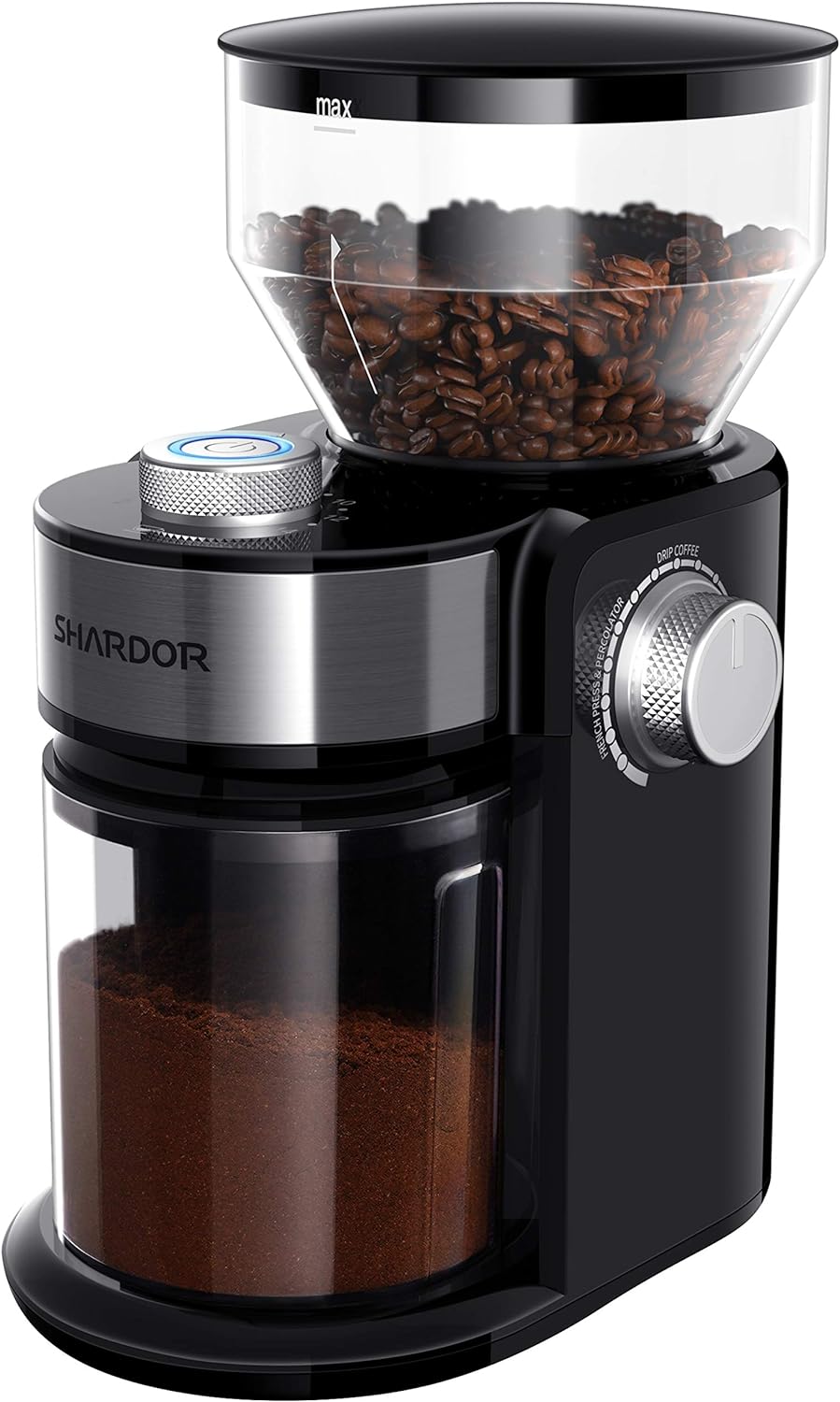
Best for precise grind control: SHARDOR Conical Burr Espresso Coffee Grinder

This grinder offers 51 finely calibrated settings allowing espresso enthusiasts to dial in exact particle size. Its 40 mm stainless steel conical burrs generate minimal heat, preserving essential oils. It’s less ideal if you want a large bean hopper or need ultra-quiet operation.
Brand: SHARDOR · Price when checked: $71.99 · Rating: 4.7 out of 5 (1422 ratings)
Pros
- 51 precise grind settings covering espresso to French press
- Anti-static tech reduces mess in the grounds container
- Portafilter cradle supports direct grinding
Cons
- 40 mm burrs limit throughput for larger batch grinding
- Some residual grounds require manual cleaning
Best value with micro-adjustments: OXO Brew Conical Burr Electric Coffee Bean Grinder Silver
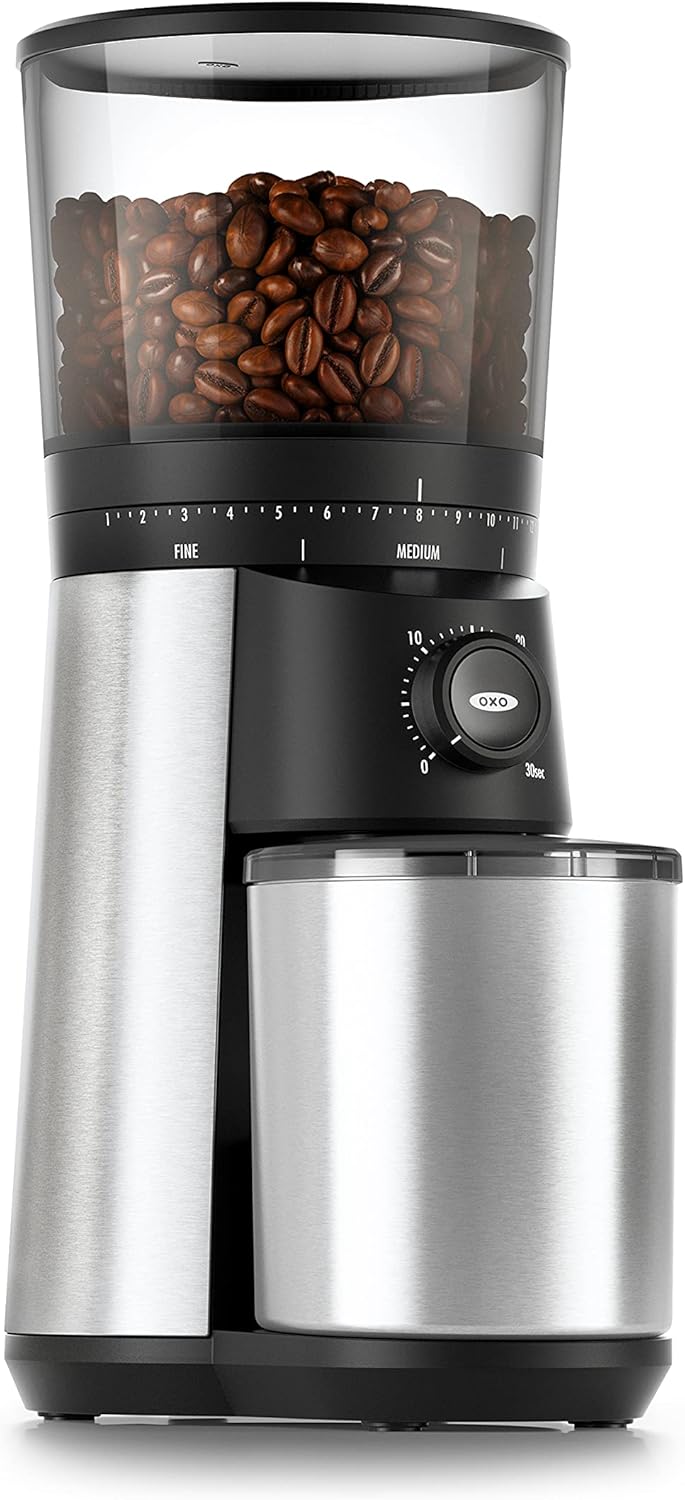
Offers 15 main grind settings plus 43 micro-adjustments suitable for espresso and other methods. The 40 mm conical burrs provide consistent particle size at a budget price. This grinder is not the best choice if you want a very fine espresso grind range or a very quiet motor.
Brand: 4.3 4.3 out of 5 stars · Price when checked: $35.99 · Rating: 4.4 out of 5 (1422 ratings)
Pros
- Micro-adjustments allow fine grind control
- Large 12 oz hopper with UV protection
- One-touch start remembers last setting
Cons
- Limited ultra-fine grind settings for espresso
- Some static cling reported with dry beans
Best finish option: OXO Brew Conical Burr Electric Coffee Bean Grinder Matte Black

Functionally identical to the silver OXO model, this matte black version suits kitchens where aesthetics matter. It shares the same burr size and grind adjustment features, with the same pros and cons.
Brand: 4.3 4.3 out of 5 stars · Price when checked: $7355 · Rating: 4.4 out of 5 (1422 ratings)
Pros
- Compact, user-friendly design
- Precision 40 mm conical burrs
- UV-blocking hopper keeps beans fresh
Cons
- Motor noise can be loud on fine settings
- Limited espresso-specific grind settings
Best for cup quantity control: Rounexes Flat Burr Coffee Grinder

This grinder’s standout feature is its cup selector knob, which adjusts the grind for the exact number of cups between 2 and 12. Its flat burrs offer a different grind profile, producing uniform particles suited to drip and French press more than espresso. Not ideal for those prioritising finest espresso grind.
Brand: Rounexes · Price when checked: $39.99 · Rating: 4.3 out of 5 (6,840 ratings)
Pros
- Cup size selector reduces waste
- Compact stainless steel design
- Flat burrs reduce heat buildup
Cons
- Fewer grind settings for extreme fineness
- Flat burrs can produce more fines, affecting espresso extraction
Best espresso-optimized with portafilter cradle: Rounexes Conical Burr Coffee Grinder

Designed for espresso users with an adjustable 51–58 mm portafilter cradle, this grinder allows direct grinding into most espresso machines. Its removable sealed hopper preserves bean freshness. The cradle may not fit all portafilter shapes, limiting universal compatibility.
Brand: Rounexes · Price when checked: $58.31 · Rating: 4.3 out of 5 (125 ratings)
Pros
- Portafilter cradle supports direct dosing
- Sealed hopper preserves freshness
- Burr assembly and parts dishwasher safe
Cons
- Portafilter cradle size may not fit all machines
- Relatively limited grind setting range
Best safety features and uniform flat burr: SHARDOR Electric Burr Coffee Grinder 2.0
This grinder uses metallic flat burrs to deliver uniform grounds with minimal burning risk. It has a safety interlock system preventing operation if parts aren’t locked in place. Its 16 grind settings are fewer than some competitors, so it’s less flexible for dialing espresso fineness.
Brand: SHARDOR · Price when checked: $39.99 · Rating: 4.3 out of 5 (21 ratings)
Pros
- Dual safety interlock system
- Removable grounds chamber with anti-spill lid
- Professional brush included for easy cleaning
Cons
- Only 16 grind settings, restricting fine tuning
- Lower hopper capacity than some models
Best for spice and occasional coffee grinding: BLACK+DECKER One-Touch Coffee & Spice Grinder

A blade grinder designed primarily for spices and casual coffee use. It’s not suitable for espresso because blade grinders produce uneven particle size and heat the beans, degrading flavour. Consider this only if you want a multi-functional grinder and do not require espresso-level precision.
Brand: BLACK+DECKER
Pros
- One-touch operation for quick use
- Stainless steel blades for spice grinding
- Compact and affordable
Cons
- Uneven grind inconsistent for espresso
- Excess heat can burn coffee grounds
Best touchscreen control in a compact design: Ollygrin Conical Burr Coffee Grinder

This grinder features a touch panel for easy grind size adjustments with 30 precise settings, making it suitable for espresso and other brew styles. Its compact footprint saves counter space. Limited detailed specifications and user feedback suggest cautious consideration before purchase.
Brand: Ollygrin · Rating: 4.4 out of 5
Pros
- Touch panel with 30 grind settings
- Compact and modern design
- Conical burrs for reduced heat
Cons
- Sparse rating and review data
- Unclear hopper capacity and burr size
Best anti-static portafilter holder: AAOBOSI Espresso Coffee Grinder

This grinder includes anti-static technology to reduce mess and has 45 grind settings with a 40s timer for controlled dosing. The portafilter holder fits 51/53 mm baskets, facilitating direct espresso grinding. Limited public rating information means reliability and durability are less certain.
Brand: AAOBOSI · Rating: 4.4 out of 5
Pros
- Anti-static design reduces grounds cling
- Wide grind setting range for espresso
- Direct portafilter grinding supported
Cons
- Limited user feedback and reviews
- Portafilter holder fit may not suit all machines
Best adjustable grind for batch size: Ollygrin Burr Coffee Grinder Silver

Designed with 30 adjustable grind settings for 2 to 12 cups, this grinder targets users who want flexibility in batch size and grind fineness. Its conical burrs preserve aroma and flavour. The brand’s less established presence and limited public information may affect confidence for long-term use.
Brand: Ollygrin · Rating: 4.5 out of 5
Pros
- Adjustable grind settings for batch size
- Conical burrs for consistent particle size
- Compact footprint
Cons
- Limited detailed specifications
- Uncertain brand reputation and support
Choosing the right espresso grinder or skipping it
If you want consistent espresso extraction and flavour, your grinder must offer fine grind control, stable burr alignment, and minimal heat buildup. Larger burrs (40 mm and above) help maintain consistency and reduce overheating by allowing lower RPM operation and improved heat dissipation.
Anti-static features and easy cleaning mechanisms further improve the experience by reducing mess and ensuring dose consistency. These features contribute to repeatability shot after shot, which is critical for espresso quality.
Niche grinders like blade types or those with limited settings may serve occasional or multi-purpose use but fall short for dedicated espresso brewing. Blade grinders produce uneven particle sizes and generate heat that degrades flavour compounds, making them unsuitable for espresso.
Beginners may prefer grinders with digital timers and portafilter cradles for convenience, while enthusiasts benefit from micro-adjustments to fine-tune extraction. The trade-off between ease of use and precision should guide selection based on user experience and brewing goals.
If you brew mostly drip or French press, an espresso-optimized grinder is unnecessary and often more expensive than needed. Conversely, if you lack time or patience to dial grind settings precisely, investing in a high-end espresso grinder may not improve your coffee significantly.
Understanding your brewing habits, budget, and desired coffee profile will help determine whether investing in a dedicated espresso grinder is worthwhile or if a versatile grinder with broader settings better suits your needs.
Related reading
- Red Beans and Rice Preparation: Expert Guide
- The 7+ Best Manual Coffee Grinders for Perfect Pour Over
- Top 5 wet grinders for idli and dosa batter with honest insights
Frequently Asked Questions
Why are conical burr grinders better for espresso than blade grinders?
Conical burr grinders crush beans between two shaped burrs, producing uniform particles with less heat generation. This uniformity is critical for espresso, which requires consistent fine grounds to ensure even extraction and avoid over- or under-extracted coffee. Blade grinders chop beans unevenly and generate heat that can burn oils, resulting in inconsistent taste and a lack of crema.
How many grind settings do I need for espresso?
At minimum, a grinder suited for espresso should offer at least 30 distinct grind settings or micro-adjustments to dial in the perfect particle size. This allows you to compensate for variables like bean origin, roast level, and humidity. Fewer settings limit precision and make it harder to avoid channeling or uneven extraction.
What is the role of anti-static technology in coffee grinders?
Static electricity causes coffee grounds to cling to grinder components and scatter during dosing, making mess and complicating precise measurement. Anti-static coatings or materials reduce this cling by dissipating static charge. This keeps grounds inside the container or portafilter, improving dosing accuracy and simplifying cleanup.

Rimi Sultana is a home cook from Bangladesh who has cooked for her family every day for the past five years and writes about it at Smart Cooks. Perpetually testing whether internet-famous recipes actually work in a regular home kitchen. Say hello on Facebook or through the contact page.