
A good milk frother for cappuccino at home does more than just whip air into milk. The essential difference lies in how it controls temperature and foam texture, which affect taste and mouthfeel. Frothers that heat milk to around 140°F to 155°F (60°C to 68°C) without overshooting preserve the milk’s natural sweetness and prevent scalding.
Some links in this post are affiliate links. If you buy through them we may earn a small commission at no extra cost to you — it never changes which products we recommend.
Foam quality depends on the frothing mechanism and how well it incorporates tiny air bubbles. Devices vary between handheld whisks and automatic frothers with heating elements. Understanding the capacity, heating consistency, and frothing speed helps avoid disappointment when the milk foam turns out too coarse or flat.
What actually matters
When selecting a milk frother for cappuccinos, focus on three main technical aspects: heating mechanism, frothing technique, and capacity. Each of these affects the quality of the foam, the temperature of the milk, and ultimately the taste and mouthfeel of your cappuccino.
Heating mechanism is critical because milk proteins begin to denature above 170°F (77°C), leading to a burnt flavor and breakdown of foam structure. The ideal temperature range is 140°F to 155°F (60°C to 68°C), which enhances milk sweetness and creates stable microfoam. Automatic frothers use induction or heating coils to maintain this range precisely. Some models include temperature sensors and feedback loops to avoid overshoot, which can occur if the heating element remains on too long. For instance, a frother with a PID controller can keep temperature within ±2°F (±1°C), ensuring consistent results.
Frothing technique determines bubble size and foam texture. Spinning whisks rapidly agitate milk, incorporating air evenly and creating microbubbles typically under 50 microns in diameter. This fine foam feels smooth and velvety, ideal for latte art and mouthfeel. Devices with multiple speed settings can adjust the shear forces applied to milk, allowing customization from dense, creamy foam to lighter, airy textures. In contrast, pump-style frothers inject air directly, often producing larger bubbles (100 microns or more), which feel less creamy and dissipate faster. The size and shape of the whisk also influence frothing speed and uniformity; larger whisks aerate milk faster but may be harder to clean.
Capacity impacts how many drinks you can make per session. Typical ranges are 100 ml to 240 ml; smaller volumes heat faster but limit serving size. For example, a 150 ml capacity suits a single cappuccino, while 240 ml can cover two or more drinks. Cleaning ease is equally important—nonstick or ceramic interiors prevent milk residue buildup, which can harbor bacteria and affect taste. Removable parts that are dishwasher safe save time but may increase the risk of loss or damage. Consider the trade-offs between convenience and durability when choosing a model.
Heating mechanism
Automatic frothers typically use induction or heating coils to warm milk while frothing. The key is reaching and maintaining between 140°F and 155°F (60°C to 68°C) to balance sweetness and texture. Overheating above 170°F (77°C) denatures milk proteins, causing a burnt taste and poor foam stability. Handheld frothers lack heating elements and rely on external heat sources, requiring separate warming.
Some advanced frothers employ temperature sensors with digital controls to maintain precise heat levels. For example, the Casimhu 4-in-1 uses an LED touchscreen to set exact temperatures, preventing overheating and allowing for customization based on milk type. Induction heating is faster and more energy efficient than traditional coils, reducing heat-up time to under 2 minutes in some models.
Frothing technique
Frothers either spin a whisk or pump air through milk. Spinning whisks incorporate air by rapidly agitating milk, creating uniform microbubbles. Devices with multiple-speed settings allow tailoring foam density. Pump-style frothers inject air but often produce larger bubbles, resulting in less creamy foam. A frother’s whisk size and shape influence how quickly and evenly foam forms.
For example, handheld frothers like the InstaWhisk Upgraded offer variable speed control, enabling users to achieve foam textures from light and airy to dense and creamy. Double whisk designs, such as the InstaWhisk Double Whisk, increase surface area contact for faster frothing. However, larger or more complex whisks may require extra cleaning effort.
Capacity and ease of cleaning
Capacity matters for how many drinks you can prepare in one go; typical ranges are 100 ml to 240 ml. Smaller capacities heat faster but limit volume. Removable or nonstick interiors ease cleaning, preventing milk residue buildup that can affect taste and hygiene. Consider dishwasher safety for parts to save time.
For instance, the Milk 9oz Automatic has a large 265 ml capacity suitable for multiple servings but is bulkier and takes longer to heat. In contrast, handheld frothers have no heating function and thus no capacity limit but require manual warming of milk. Cleaning complexity varies: ceramic-lined interiors, like in the Casimhu 4-in-1, need gentle care to avoid damage, whereas nonstick coatings simplify residue removal but may degrade over time.
Choosing the right frother for your routine
If you prefer simplicity and speed, handheld frothers like the YUSWKO or InstaWhisk models offer portability and quick foam but rely on separate milk warming. These devices are lightweight and cordless, making them convenient for small kitchens or travel. However, because they lack heating elements, you must monitor milk temperature externally, ideally with a thermometer, to avoid overheating or underheating. Overheating milk above 170°F (77°C) leads to protein denaturation, resulting in a burnt flavor and unstable foam, while underheating fails to develop the milk’s natural sweetness and produces thin foam.
Automatic frothers such as the Casimhu or Liksiy provide precise heating and consistent foam texture but require countertop space and cleaning. These machines often feature multiple modes for hot frothing, cold frothing, and warming, with temperature controls accurate to within a few degrees. For example, the Casimhu 4-in-1 can heat milk to the ideal 150°F (65°C) in about 2-3 minutes, balancing speed and quality. The Liksiy model offers quiet operation, making it suitable for early mornings without disturbing others. The trade-off is a higher price point and more complex controls, which may require a learning period.
Cold foam enthusiasts should consider dedicated cold frothers like the Milk 9oz Automatic; however, these are niche and won’t handle hot drinks. Cold foam is popular in iced lattes and cold brew coffee, providing a creamy texture without warming milk. The Milk 9oz Automatic excels at producing consistent cold foam with a 265 ml capacity, enough for multiple servings. However, it lacks heating capability and is bulkier than handheld options, which may be a drawback in small kitchens.
Those who want multi-functionality, including warming without frothing, may find Liksiy’s quiet operation worth the premium. Its four functions—cold froth, hot froth, warm milk, and steam—cover most home needs, allowing users to customize drinks from cappuccinos to flat whites. Accurate temperature control avoids overheating, preserving milk flavor and foam stability. However, the digital interface can be complex initially, and the price is higher than simpler models.
Avoid buying a frother without heating capability if you want hot cappuccinos without extra steps. Also, consider capacity carefully—small models heat faster but limit volume, which matters if you serve multiple people. For example, a 100 ml capacity frother may be ideal for solo use but inefficient for families or entertaining guests, where a 240 ml or larger capacity is preferable. Cleaning convenience is also essential; models with dishwasher-safe parts and nonstick interiors reduce maintenance time and improve hygiene.
| Pick | Best for | Capacity (ml) | Watch out for |
|---|---|---|---|
| YUSWKO Wand | Quick handheld frothing | N/A (handheld, no heating) | Requires warming milk separately; battery life limits |
| Milk 9oz Automatic | Cold foam specialty | 265 | No hot frothing; bulky for small kitchens |
| Casimhu 4-in-1 | Versatile temperature options | 240 | Ceramic bottom delicate; longer heat time |
| Liksiy 4-in-1 | Quiet operation and multi-use | 240 | Premium price; complicated controls |
| InstaWhisk Upgraded | Variable speed handheld | N/A (handheld, no heating) | No heating element; detachable parts prone to loss |
| InstaWhisk Double Whisk | Dense foam handheld | N/A (handheld, no heating) | Limited battery runtime; manual heating needed |
From My Kitchen
Once, I tried making a cappuccino with a handheld frother while heating milk on the stove. I overheated the milk to just above 180°F (82°C), causing a slightly burnt taste and foam that separated quickly. Adjusting to a lower temperature, around 150°F (65°C) using a thermometer, prevented protein denaturation and gave a smoother foam that held longer. This showed me that without built-in heating control, external temperature monitoring is essential.
In another attempt, I experimented with different frothing speeds using the InstaWhisk Upgraded. At low speed, foam formed slowly and was light and airy, suitable for a macchiato. Increasing speed produced denser, creamier foam ideal for cappuccinos but consumed battery faster. This highlighted the trade-off between foam texture and device runtime. Additionally, cleaning detachable whisks immediately after use prevented milk residue buildup, which can degrade foam quality over time.
Using the Casimhu 4-in-1, I appreciated the precise temperature control and quiet operation. The ceramic lining gently heated milk without scorching, preserving natural sweetness. However, the 2-3 minute heat-up time required planning ahead. The digital interface allowed me to select exact temperatures for different milk types, such as 145°F (63°C) for oat milk, which tends to separate if overheated. This experience underscored the value of temperature customization for alternative milks.
Worth Considering
Best for quick handheld frothing: YUSWKO Milk Frother Wand

This rechargeable handheld frother excels at creating foam quickly but lacks heating, so you must warm milk separately. It’s compact and cordless, ideal for those who want fast foam without an automatic machine. Battery life limits longer sessions or multiple drinks.
Brand: YUSWKO
Pros
- Rechargeable and cordless
- Lightweight and easy to manoeuvre
- Quick foam creation
Cons
- No heating element requires separate warming
- Battery lasts about 20 minutes
- Foam consistency can vary by technique
Best for cold foam lovers: Milk 9oz Automatic Cold Foam Maker

This automatic frother is designed exclusively for cold foam, making it great for iced lattes and cappuccinos. Its 265 ml capacity covers multiple drinks. However, it cannot heat milk, so it’s unsuitable if you want hot cappuccinos directly from the device.
Brand: Milk
Pros
- Large 265 ml capacity
- Automatic cold foam with consistent texture
- Simple one-button operation
Cons
- No heating function
- Bulky footprint not ideal for small kitchens
Best versatile temperature control: Casimhu 4-in-1 Milk Frother

The Casimhu 4-in-1 offers hot and cold frothing with a ceramic-lined bottom for gentle heating. The LED touch screen controls temperature and mode precisely, accommodating different milk types. The ceramic base requires careful cleaning to avoid damage, and heating takes 2-3 minutes.
Brand: Casimhu · Rating: 4.3 out of 5
Pros
- Multiple modes: hot, cold, warming, frothing
- Ceramic lining prevents scorching
- 240 ml capacity suits most home uses
Cons
- Ceramic base fragile, avoid metal utensils
- Longer heating cycle than coil models
Best quiet and multi-use frother: Liksiy Milk Frother and Steamer

Liksiy’s 4-in-1 model provides hot and cold froth with quiet operation, appealing if noise is a concern. It also warms milk without frothing, adding versatility. Its digital controls can be complex at first, and the higher price reflects these advanced features.
Brand: Liksiy · Rating: 4.9 out of 5
Pros
- Quiet motor suitable for morning use
- Four functions including milk warming
- Accurate temperature control
Cons
- Premium price point
- Learning curve for controls
Best variable speed handheld: InstaWhisk Upgraded Milk Frother

This handheld frother offers variable speed settings and a detachable whisk, allowing customization of foam density. It does not heat milk, so it’s best for those who already have a means to warm milk separately. Detachable parts can be misplaced, and battery life limits extended use.
Brand: InstaWhisk · Rating: 4.4 out of 5
Pros
- Variable speed for tailored foam
- Rechargeable and cordless
- Detachable whisk for cleaning
Cons
- No heating element
- Whisk parts easy to lose
Best dense foam handheld: InstaWhisk Milk Frother Double Whisk
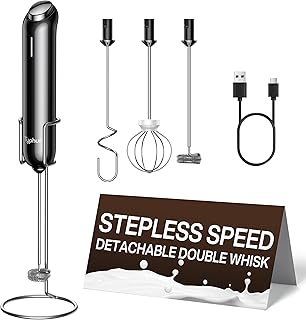
The double whisk design creates dense, creamy foam faster than single whisk models. Like other handhelds, it lacks heating, requiring milk warming separately. Battery life is limited, and the detachable whisks need careful storage to avoid loss.
Brand: InstaWhisk · Rating: 4.2 out of 5
Pros
- Double whisk speeds up frothing
- Compact and rechargeable
- Good for thick cappuccino foam
Cons
- No heating element included
- Short battery runtime
- Detachable whisks can be misplaced
Choosing the right frother for your routine
If you prefer simplicity and speed, handheld frothers like the YUSWKO or InstaWhisk models offer portability and quick foam but rely on separate milk warming. These devices are lightweight and cordless, making them convenient for small kitchens or travel. However, because they lack heating elements, you must monitor milk temperature externally, ideally with a thermometer, to avoid overheating or underheating. Overheating milk above 170°F (77°C) leads to protein denaturation, resulting in a burnt flavor and unstable foam, while underheating fails to develop the milk’s natural sweetness and produces thin foam.
Automatic frothers such as the Casimhu or Liksiy provide precise heating and consistent foam texture but require countertop space and cleaning. These machines often feature multiple modes for hot frothing, cold frothing, and warming, with temperature controls accurate to within a few degrees. For example, the Casimhu 4-in-1 can heat milk to the ideal 150°F (65°C) in about 2-3 minutes, balancing speed and quality. The Liksiy model offers quiet operation, making it suitable for early mornings without disturbing others. The trade-off is a higher price point and more complex controls, which may require a learning period.
Cold foam enthusiasts should consider dedicated cold frothers like the Milk 9oz Automatic; however, these are niche and won’t handle hot drinks. Cold foam is popular in iced lattes and cold brew coffee, providing a creamy texture without warming milk. The Milk 9oz Automatic excels at producing consistent cold foam with a 265 ml capacity, enough for multiple servings. However, it lacks heating capability and is bulkier than handheld options, which may be a drawback in small kitchens.
Those who want multi-functionality, including warming without frothing, may find Liksiy’s quiet operation worth the premium. Its four functions—cold froth, hot froth, warm milk, and steam—cover most home needs, allowing users to customize drinks from cappuccinos to flat whites. Accurate temperature control avoids overheating, preserving milk flavor and foam stability. However, the digital interface can be complex initially, and the price is higher than simpler models.
Avoid buying a frother without heating capability if you want hot cappuccinos without extra steps. Also, consider capacity carefully—small models heat faster but limit volume, which matters if you serve multiple people. For example, a 100 ml capacity frother may be ideal for solo use but inefficient for families or entertaining guests, where a 240 ml or larger capacity is preferable. Cleaning convenience is also essential; models with dishwasher-safe parts and nonstick interiors reduce maintenance time and improve hygiene.
Related reading
- Best Baby Food Maker Steamer and Blender Combos
- How to Choose a Candy Thermometer for Consistent Results
- How to Choose a Meat Thermometer That Won’t Lie to You
Frequently Asked Questions
Can I use any type of milk with these frothers for cappuccino?
Different milk types froth differently due to protein and fat content. Whole milk creates stable, creamy foam because of higher fat and protein levels. Skim milk froths more but yields lighter, less creamy foam. Plant-based milks like oat or almond can froth but results vary widely depending on brand and additives. Automatic frothers with temperature control offer better results with alternative milks, as overheating can cause separation.
How important is temperature control in a milk frother?
Temperature control is crucial because milk proteins denature above 170°F (77°C), causing scalded taste and poor foam stability. Ideally, milk should be heated between 140°F and 155°F (60°C to 68°C) to balance sweetness and texture. Frothers with built-in heating elements maintain this range consistently, avoiding guesswork and ensuring repeatable results. Handheld frothers require external heating and a thermometer for best outcomes.
Are handheld milk frothers easier to clean than automatic ones?
Handheld frothers usually have fewer parts and no heating base, making them quicker to rinse under running water. However, detachable whisks can be small and sometimes hard to clean thoroughly. Automatic frothers often have nonstick or ceramic interiors and removable lids, but their heating elements and sealed units require careful wiping to avoid damage. Dishwasher-safe parts are a plus but not universal.
Related: Top 10 sous vide machines for steak with precise temperature control

Rimi Sultana is a home cook from Bangladesh who has cooked for her family every day for the past five years and writes about it at Smart Cooks. Perpetually testing whether internet-famous recipes actually work in a regular home kitchen. Say hello on Facebook or through the contact page.