
Can openers and bottle openers are both common kitchen tools designed to open containers, but they serve fundamentally different purposes. While a can opener is specifically engineered to cut through metal lids of sealed cans, a bottle opener is designed to pry off caps from glass bottles without damaging the bottle.
Some links in this post are affiliate links. If you buy through them we may earn a small commission at no extra cost to you — it never changes which products we recommend.
Understanding the mechanical differences and intended uses of these tools can help avoid frustration and damage to containers. The design and function of each tool reflect the container it is meant to open, which means using one in place of the other can lead to inefficiency or even injury.
How their mechanisms determine their function
The fundamental difference between can openers and bottle openers lies in their mechanisms, which are tailored to the specific container types they are designed to open. A can opener typically features a rotating sharp blade that punctures and then cuts around the metal rim of a can lid. This blade is mounted on a gear system that turns the blade smoothly and continuously, allowing the user to cut through the sealed lid with minimal effort. The rotating action ensures a clean cut, reducing the risk of jagged edges or metal shards that could contaminate the contents or cause injury.
In contrast, a bottle opener operates on the principle of leverage. It consists of a solid metal piece with a hooked edge designed to catch the underside of a crimped metal bottle cap. When the user applies upward force on the handle, the tool pries the cap off the bottle by levering it away from the glass rim. This simple mechanical advantage requires no moving parts and relies on the rigidity and precise shape of the opener to function effectively.
The materials used in each tool reflect these mechanical demands. Can openers must have hardened steel cutting blades capable of slicing through tough metal, often combined with plastic or metal handles for grip and comfort. Bottle openers are usually made from solid stainless steel or cast metal to provide the necessary strength and durability for prying caps without bending or breaking.
Where each one wins
Can openers are indispensable for opening sealed metal cans containing food or other products. They are the only practical tool for safely removing a can lid without jagged edges or metal shards. The precision of the cutting blade and the turning mechanism allows for quick and clean opening, often taking less than 30 seconds per can. This efficiency is crucial in both home kitchens and commercial settings where speed and safety are priorities.
However, can openers tend to be bulkier and require more hand strength and coordination to operate effectively. Manual can openers, for example, require the user to clamp the tool onto the can and rotate a handle, which can be challenging for individuals with arthritis or limited hand dexterity. Electric can openers address this by automating the cutting process, but they are less portable and more expensive.
Bottle openers shine in opening glass bottles with metal caps, such as beer or soda bottles. Their simple design makes them compact, often pocket-sized, and highly portable. Since they have no moving parts, they are durable and require minimal maintenance. The prying action typically takes just a second or two, making bottle openers extremely efficient for their purpose.
However, bottle openers cannot cut metal lids or open sealed cans. Attempting to use a bottle opener on a can lid is ineffective and can be dangerous, as the hooked edge is not sharp and can slip, causing injury. Conversely, using a can opener to pry off bottle caps is impractical since the rotating blade cannot grip or lift the cap.
If you frequently use canned goods, a can opener is essential. For beverage bottles, a bottle opener is the right tool. Some multi-tools combine both, but each function remains distinct and cannot substitute for the other effectively. These combined tools often compromise on ergonomics and efficiency, making them less ideal for frequent or heavy use.
Understanding these nuances helps consumers choose the right tool for their kitchen needs, improving safety and convenience. For example, a household that consumes a large volume of canned foods may invest in a high-quality electric can opener to speed up meal prep, while someone who enjoys bottled beverages might prefer a sturdy stainless steel bottle opener that fits on a keychain.
| Feature | Can opener | Bottle opener |
|---|---|---|
| Primary function | Cut open metal can lids | Pry off bottle caps |
| Mechanism | Rotating sharp blade cuts metal rim | Leverages cap rim to lift off |
| Materials | Hardened steel blade with plastic or metal handle | Solid metal piece, often stainless steel or cast metal |
| Typical size | About 6 to 8 inches long with a turning handle | Usually 3 to 5 inches, flat or curved shape |
| Moving parts | Yes, blade and turning gears | No moving parts, simple solid design |
| Suitable container types | Metal cans (tin or steel) | Glass bottles with crimped metal caps |
From My Kitchen
Once, while preparing a meal, I reached for a bottle opener to try opening a can of tomatoes. The bottle opener’s hooked edge slipped off the lid without cutting it, causing the tool to abruptly jerk and almost slip from my hand. Switching to a proper can opener with a sharp rotating blade allowed me to open the can safely and efficiently. This incident reminded me that the design differences are not trivial; using the right tool avoids frustration and potential injury.
This experience highlights the importance of using tools as intended. Can openers are designed with safety features that minimize sharp edges on the lid after opening, reducing the risk of cuts. Improvising with a bottle opener or other tools can lead to jagged metal, which poses a hazard when handling food.
Moreover, the ergonomics of can openers are tailored to repetitive use. Many models incorporate comfortable grips and smooth-turning mechanisms to reduce hand fatigue. In contrast, bottle openers, being simpler, focus on portability and quick access, often doubling as keychain accessories.
In commercial kitchens, the choice of opener can impact efficiency and safety. Electric can openers can process dozens of cans per hour with minimal effort, while manual openers require more time and physical input. Similarly, bartenders rely on fast and reliable bottle openers to serve customers promptly without interrupting workflow.
Worth Considering
Best for multifunctional jar and bottle opening: Master Jar & Bottle Opener by zengxiaoyun
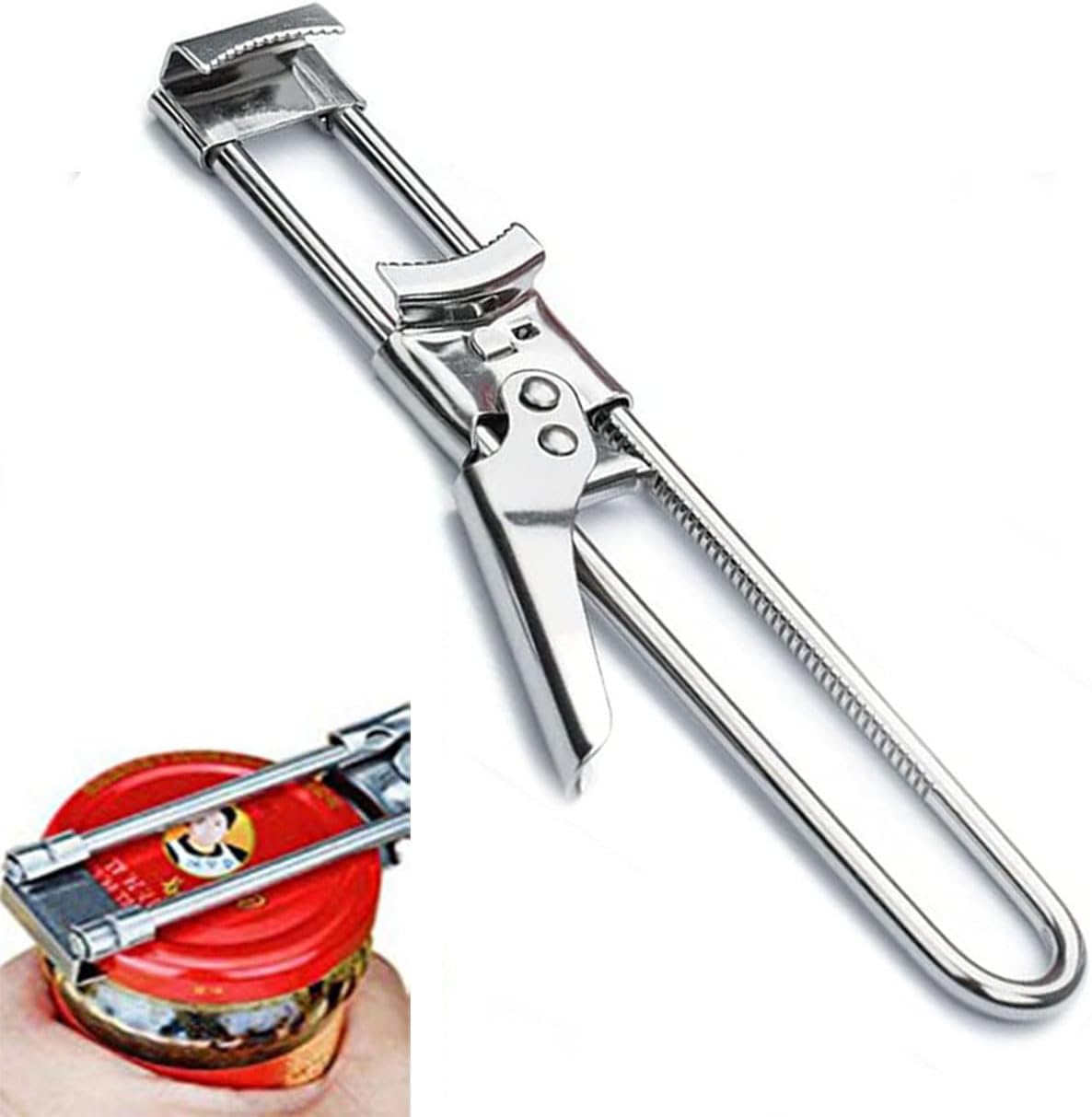
This adjustable stainless steel opener is designed primarily for jars and bottles, with a maximum adjustment of 5.3 inches to grip various lid sizes. It is suitable for those who need extra leverage on stubborn lids but is not intended to cut open metal cans.
Brand: Brand: zengxiaoyun · Price when checked: $5.90 · Rating: 4.8 out of 5 (21425 ratings)
Pros
- Adjustable length to fit different jar lids
- Stainless steel construction for durability
- Multifunctional for jars and bottles
Cons
- Not designed or effective for cutting can lids
- Requires careful use to avoid slipping
Best for easy jar and bottle lid removal: Jar Opener for Seniors by ReneeChef

This easy grip jar and bottle opener is made to assist those with weak hands or arthritis, providing effortless unscrewing of lids. It is a kitchen gadget focused on twisting off lids rather than cutting cans, so it does not function as a can opener.
Brand: ReneeChef · Price when checked: $13.99 · Rating: 4.3 out of 5 (21425 ratings)
Pros
- Ergonomic design for weak or arthritic hands
- Built to last with high-quality materials
- Effective for a wide range of jar lid sizes
Cons
- Not suitable for opening metal cans
- Limited to twisting lids, not prying caps
When neither a can opener nor a bottle opener is the right choice
Some containers require different tools entirely. For example, twist-off metal bottle caps or plastic screw caps on bottles do not need a bottle opener but rather hand strength or a jar opener designed for twist lids. Similarly, paint cans or large metal drums often have specialized openers that are not can openers in the traditional sense.
Electric can openers can automate the cutting process for cans but do not open bottles, while corkscrews and wine openers are needed for corked bottles. Knowing the container type and its sealing mechanism is key to selecting the correct opener.
If you find yourself frequently struggling with a container, it’s worth investing in the specific tool made for it rather than trying to adapt a can opener or bottle opener beyond their intended uses.
Related reading
- The Best Kitchen Gadgets on Amazon
- OXO Pop containers vs Prokeepers for flour and sugar: Which Is Better?
- Snack Storage Containers: What Actually Matters
Frequently Asked Questions
Can I use a can opener to open a bottle?
No, a can opener is designed to cut through metal lids on cans using a rotating blade. It does not have the leverage or shape to pry off metal bottle caps. Attempting to use a can opener on a bottle cap risks slipping or damaging the bottle and can be unsafe.
Why do some can openers have a bottle opener built-in?
Some manual can openers include a small hooked edge or notch that functions as a bottle opener. This is a convenience feature allowing one tool to open both cans and bottles. However, these combined tools usually perform each function less efficiently than dedicated openers and may not be as comfortable or safe for frequent use.
What is the safest way to open a can lid?
Using a sharp, well-maintained can opener that cuts along the side of the lid rather than the top edge reduces sharp metal edges and the risk of injury. Some safety can openers cut the lid just below the rim, leaving a smoother edge. Avoid using knives or improvised tools, as these can slip or create jagged edges.

Rimi Sultana is a home cook from Bangladesh who has cooked for her family every day for the past five years and writes about it at Smart Cooks. Perpetually testing whether internet-famous recipes actually work in a regular home kitchen. Say hello on Facebook or through the contact page.