Choosing between a cookware set and open stock cookware is not just about aesthetics or initial price. The key difference lies in how you acquire and use each piece — sets come bundled with a specific selection, while open stock lets you buy individual items as needed. This affects everything from your cooking style to storage and long-term investment.
Some links in this post are affiliate links. If you buy through them we may earn a small commission at no extra cost to you — it never changes which products we recommend.
Many buyers assume that sets offer a convenient, ready-to-go solution and that open stock is for those who want to handpick every pan. But the real distinction goes deeper, involving factors like material consistency, heat conduction, and how well the pieces match the tasks in your kitchen. Understanding these mechanics helps avoid common pitfalls.
Where Each One Wins
Cookware sets are best for those starting from scratch who want an immediate, broad range of pans and pots without spending time researching. They offer a uniform appearance and predictable performance which suits kitchens where visual coherence matters.
Open stock cookware shines for cooks who know their kitchen needs and prefer investing in higher quality or specialized pieces. For example, a 5-ply clad stainless steel skillet for searing and a ceramic nonstick sauté pan for eggs. This approach reduces waste and clutter, and allows upgrading single pieces over time.
If you cook a variety of cuisines or techniques requiring distinct cookware properties, open stock will serve you better. Conversely, if you want simplicity and a system that just works together visually and functionally, a set may be the more straightforward choice.
Delving deeper into the mechanics, cookware sets typically use consistent materials and thicknesses across all pieces to maintain uniform heat distribution and durability. For instance, a typical stainless steel set might feature a 3-ply construction with an aluminum core sandwiched between stainless steel layers, providing even heating and resistance to warping. However, this uniformity means each piece is optimized for general use rather than specialized tasks.
In contrast, open stock allows for tailored material choices per piece. A chef might select a heavy-gauge 5-ply stainless steel skillet with copper or aluminum cores for rapid heat responsiveness and retention, ideal for searing meats. Meanwhile, a lightweight hard-anodized aluminum sauté pan with a ceramic nonstick coating can be chosen for delicate tasks like cooking eggs or fish, minimizing the need for oil and easing cleanup. This specificity enhances cooking performance but requires more knowledge and investment.
From a numerical perspective, the average cookware set ranges from 8 to 15 pieces, covering essentials like saucepans, frying pans, stockpots, and lids. The cost per piece in a set often decreases due to bundled pricing, sometimes by 20-30% compared to buying individually. However, many users find that 30-40% of the included pieces go unused, effectively raising the cost per useful item.
Open stock purchasing, while having a higher initial cost per piece, enables gradual kitchen building. For example, investing $150 in a high-quality skillet now and adding a $100 saucepan later spreads costs over time and matches evolving cooking needs. This flexibility can translate to better long-term value and less kitchen clutter.
Functionally, cookware sets are designed to cover broad cooking needs, but this can lead to compromises. A stockpot in a set may be lighter gauge to keep costs down, affecting heat retention and durability, while open stock options often offer heavier, professional-grade construction. These differences impact cooking results: heavier pans provide more even heating and better browning, essential for techniques like searing and braising.
Maintenance and replacement also differ significantly. Sets typically come with a single warranty covering all pieces, but replacing a single worn-out item can be challenging if the model is discontinued. Open stock warranties apply per piece, allowing users to replace or upgrade individual items without affecting the rest of their collection.
In storage terms, sets may include rarely used items like a fish poacher or steamer insert, occupying valuable kitchen space. Open stock buying encourages minimalism, purchasing only what fits your cooking style and storage capabilities, which can improve kitchen organization and efficiency.
From My Kitchen
Once, I bought a nonstick cookware set that included a large stockpot I hardly ever used but felt obligated to keep because of the set. When the nonstick coating on my favourite sauté pan wore out after a year, I faced replacing the whole set or struggling with a subpar pan. Switching to open stock, I replaced just the sauté pan with a ceramic nonstick piece specialized for low-fat cooking. That single change improved my cooking experience without adding clutter or unnecessary pieces.
Expanding on this experience, the initial convenience of a set quickly gave way to frustration as the uniform nonstick coating degraded unevenly across pieces, affecting performance. The stockpot’s bulkiness made it cumbersome to store, and its infrequent use meant it occupied space that could have housed more versatile cookware.
When I transitioned to open stock, I focused on selecting pieces optimized for my cooking habits. For example, the ceramic nonstick sauté pan offered superior release properties and durability, allowing me to cook with less oil and clean effortlessly. I also invested in a 5-ply stainless steel skillet that provided excellent heat control for searing meats, something the set’s pans couldn’t match.
This targeted approach not only enhanced cooking results but also allowed me to budget more effectively, investing in quality where it mattered most. Over time, I added a cast iron Dutch oven for slow cooking and a lightweight aluminum saucepan for sauces, creating a versatile yet streamlined collection tailored to my kitchen.
The consequences of this shift were significant: improved meal quality, reduced kitchen clutter, and a more sustainable approach to cookware investment. It also underscored the importance of understanding the materials and construction behind each piece, rather than relying solely on the convenience of pre-packaged sets.
| Attribute | Cookware set | Open stock cookware |
|---|---|---|
| Material consistency | Uniform materials and thickness across all pieces | Varies by piece; tailored materials per function |
| Cost per piece | Lower cost per individual item due to bundle pricing | Usually higher per item but no unwanted extras |
| Flexibility in selection | Limited to the set’s predefined pieces | Full freedom to choose exactly needed pieces |
| Replacement and warranty | Single warranty for all pieces; replacement may require full set | Individual warranties; replace or upgrade one piece at a time |
| Storage and clutter | May include less used pieces leading to clutter | Buy only what fits your kitchen space and use |
| Suitability for specific tasks | Pieces compromise to cover broad cooking needs | Highly optimized pieces for specialized cooking |
From My Kitchen
Once, I bought a nonstick cookware set that included a large stockpot I hardly ever used but felt obligated to keep because of the set. When the nonstick coating on my favourite sauté pan wore out after a year, I faced replacing the whole set or struggling with a subpar pan. Switching to open stock, I replaced just the sauté pan with a ceramic nonstick piece specialized for low-fat cooking. That single change improved my cooking experience without adding clutter or unnecessary pieces.
Worth Considering
Best for all-in-one convenience: GreenPan Valencia Pro 22 Piece Cookware Set

This set offers a diverse range of ceramic nonstick pots and pans with diamond-reinforced surfaces for durability. It’s suitable for those who want a ready-made collection covering most cooking tasks, but it may include pieces you don’t regularly use and offers less flexibility to swap individual items.
Brand: GreenPan · Price when checked: $599.99 · Rating: 4.0 out of 5 (1,556 ratings)
Pros
- Diamond-infused nonstick surface adds scratch resistance
- Hard anodized aluminium base for even heating
- Safe on all stovetops including induction; oven safe to 600°F (315°C)
Cons
- Large number of pieces can lead to storage challenges
- Nonstick coatings will eventually degrade, necessitating replacement of multiple pieces if bought as a set
Best for targeted quality and versatility: Made In Cookware 10 Piece Stainless Steel Set
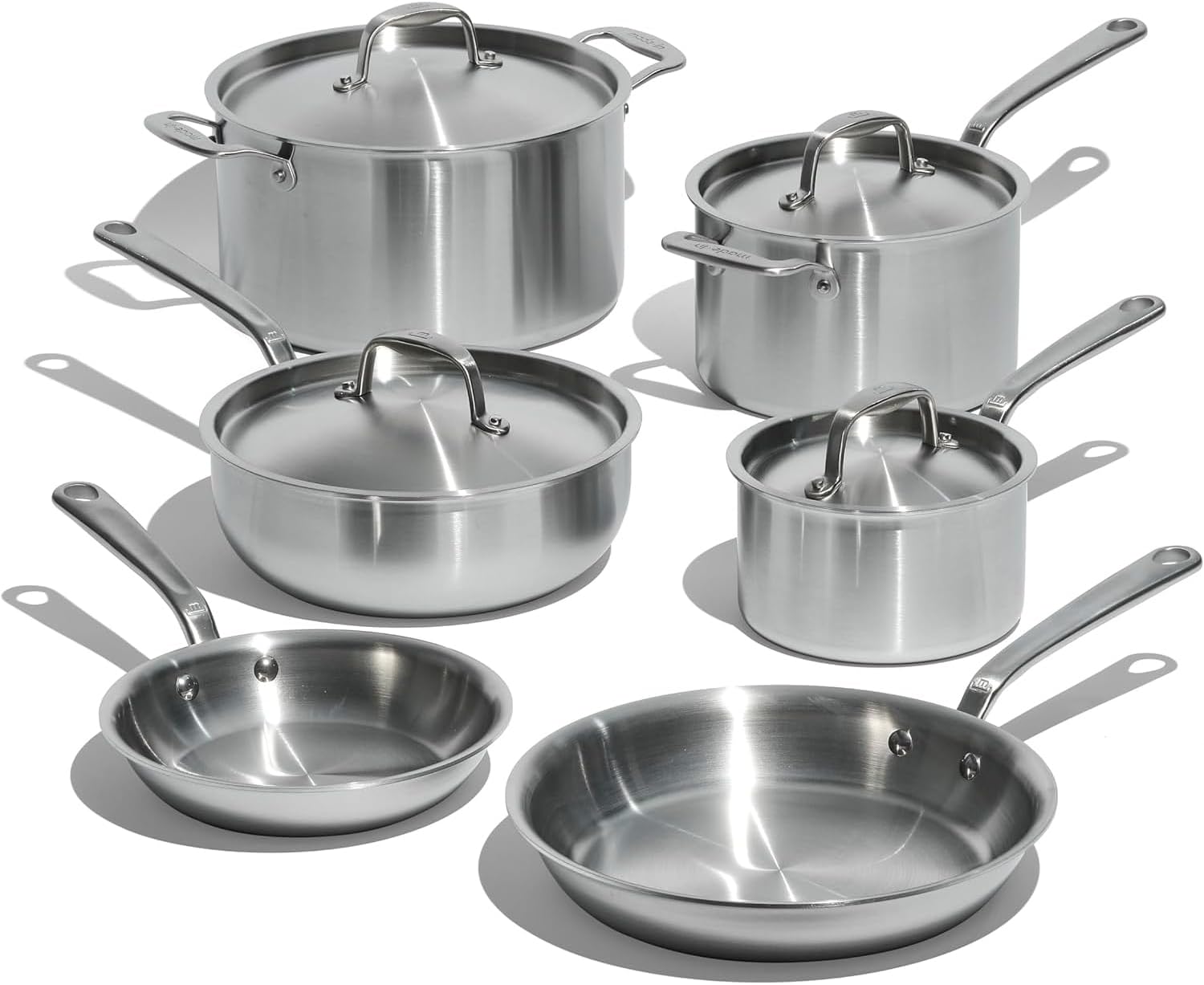
Crafted in Italy from 5-ply clad stainless steel, this open stock collection excels in heat responsiveness and durability. It’s ideal for cooks who want professional-grade performance and the ability to add or replace pieces over time. However, the upfront cost per piece is higher and it lacks the uniform look of a full set.
Brand: 4.7 4.7 out of 5 stars · Price when checked: $799.00 · Rating: 4.7 out of 5 (449 ratings)
Pros
- Five-layer metal construction for precise heat control
- Stay-cool handles riveted for long-term durability
- Compatible with all stovetops including induction
Cons
- Higher initial investment per piece
- Requires knowledge to select the right pieces for your kitchen
When Neither Cookware Set Nor Open Stock Is Ideal
For some kitchens, neither a full set nor open stock is the right approach. For example, if you cook infrequently or only simple dishes, investing heavily in multiple pans may be unnecessary. In these cases, a couple of versatile pans like a 10-inch stainless steel skillet and a medium saucepan can cover most needs. Alternatively, if you prioritise ultra-durable commercial-grade cookware or single-purpose tools such as cast iron skillets or pressure cookers, these might not fit neatly into set or open stock paradigms.
Additionally, some buyers find that certain nonstick coatings, regardless of purchasing method, wear out too quickly or react poorly to their cooking style. They might then choose bare stainless steel or cast iron, which are better suited to their usage habits, over the convenience of sets or the choice of open stock.
Related reading
- 7 Best Tamale Steamers in 2026 (What Size Vaporera You Actually Need)
- Best Baby Food Maker Steamer and Blender Combos
- Budget vs Premium Ice Cream Makers: What the Price Actually Buys You
Frequently Asked Questions
Is it better to buy a cookware set or individual pieces for a beginner cook?
Beginners often find cookware sets convenient because they provide all the basic pots and pans needed to start cooking without much research. However, the downside is that sets include some items you might rarely use. If you prefer a leaner kitchen and want to invest carefully, buying individual pieces tailored to your most common cooking tasks might be better.
How does the heat distribution compare between cookware sets and open stock pieces?
Heat distribution depends on the cookware’s construction rather than whether it’s part of a set or open stock. Sets tend to have uniform materials, so all pieces share similar heat properties, which can be consistent but not always optimal for every task. Open stock allows choosing specific materials like 5-ply clad stainless steel for skillets and hard anodized aluminum for saucepans, optimising heat conduction per use.
Are cookware sets more cost-effective than buying open stock over time?
Cookware sets often have a lower cost per piece initially because of bundled pricing. But they include items you may not need, effectively increasing cost per useful piece. Open stock pieces cost more individually but can be selected precisely to your needs, potentially saving money long-term by avoiding unnecessary purchases and allowing gradual upgrades.

Rimi Sultana is a home cook from Bangladesh who has cooked for her family every day for the past five years and writes about it at Smart Cooks. Perpetually testing whether internet-famous recipes actually work in a regular home kitchen. Say hello on Facebook or through the contact page.