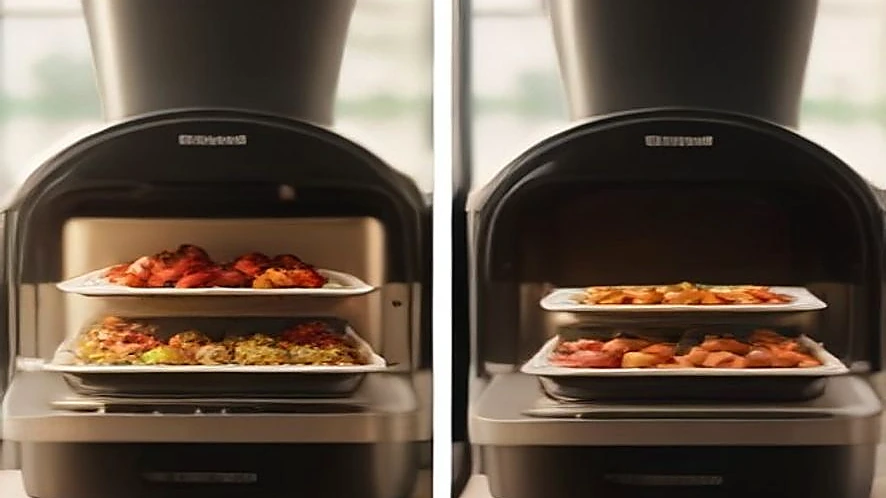
Food dehydrators and ovens both remove moisture to preserve food, but they do so through fundamentally different mechanisms that affect drying time, energy use, and food quality. Understanding these differences helps you pick the right tool for specific drying tasks rather than relying on assumptions about convenience or price.
While ovens are ubiquitous and can dry foods with heat circulating in a confined space, dehydrators use lower temperatures and controlled airflow designed specifically for drying. These distinctions influence how evenly and efficiently moisture leaves the food, impacting texture, nutrient retention, and safety.
Where each one wins
Food dehydrators excel when you want consistent, gentle drying for large batches, particularly for delicate foods like herbs, thin fruit slices, or jerky. The low heat preserves enzymes and vitamins better, and the airflow prevents pockets of moisture that can cause mould. Dehydrators also allow you to set exact temperatures, which matters when drying foods that need slow moisture removal under 140°F (60°C). The precise airflow, typically generated by a dedicated fan, ensures that moisture is continuously moved away from the food surface, accelerating drying while preventing uneven patches. This controlled environment also reduces the risk of bacterial growth by maintaining a steady drying temperature, often between 95°F and 165°F (35°C to 74°C), tailored to the food type.
Oven drying makes sense if you only occasionally dry small quantities and do not want to invest in a separate appliance. For harder items like dense fruit chunks or vegetables, where precise temperature control is less critical, an oven can do an acceptable job. It is also useful for quick drying if you can monitor frequently and adjust racks to avoid hot spots. However, ovens tend to consume more energy and require more hands-on management to avoid cooking the food. Because most ovens do not have thermostats calibrated for low temperatures, the lowest settings often exceed 140°F (60°C), increasing the risk of partially cooking the food rather than gently drying it. Additionally, airflow in ovens is usually passive, relying on venting or convection, which can lead to uneven drying and longer drying times of 8 to 16 hours depending on food thickness and moisture content.
To quantify, a typical food dehydrator operates at around 200 to 500 watts and can dry a batch of thin apple slices in approximately 6 to 12 hours, depending on humidity and slice thickness. In contrast, an oven may use between 1000 to 3000 watts and take longer due to less efficient moisture removal and the need to keep the door slightly ajar for ventilation, which also results in energy loss. This difference not only affects your electricity bill but also the carbon footprint of your food preservation method.
The consequences of these operational differences are significant. Using a dehydrator preserves more nutrients because the lower temperatures prevent the breakdown of heat-sensitive vitamins such as vitamin C and some B vitamins. The texture of dried foods is also superior, often chewier and less brittle, which is important for snacks like jerky or dried fruit. By contrast, oven drying at higher temperatures can cause uneven cooking, leading to browned or tough edges and nutrient degradation. Moreover, the risk of mould or spoilage is higher if moisture pockets remain due to uneven airflow.
Capacity is another consideration. Dehydrators typically feature multiple stackable trays, allowing you to dry large batches simultaneously without mixing flavors. Ovens, however, are limited by rack space and often require leaving the door slightly open, which can reduce drying efficiency and increase energy consumption. For example, a standard home dehydrator may accommodate 5 to 10 trays, each holding several pounds of food, whereas an oven might only effectively dry 2 to 3 trays at a time with less uniform results.
From My Kitchen
Once, I tried drying apple slices in my regular oven at its lowest setting, around 150°F (65°C). After eight hours, the outsides were brittle but the centres remained moist, and a few slices had started to brown slightly. I switched to my dehydrator the next day, setting it to 135°F (57°C). The airflow prevented steaming and softened the drying process. In about 10 hours, the slices were evenly dry and retained their colour and flavour much better.
This personal experience highlights the practical benefits of controlled airflow and precise temperature settings. The dehydrator’s fan circulated warm air evenly, preventing moisture buildup that can cause sogginess or spoilage. The lower temperature preserved the apples’ natural sweetness and nutrients, while the oven’s higher heat risked partial cooking and uneven drying. This example underscores why investing in a dehydrator can be worthwhile for frequent drying tasks or for preserving the quality of delicate foods.
| Attribute | Food dehydrator | Oven drying |
|---|---|---|
| Temperature control | Precise thermostats adjustable from 95°F to 165°F (35°C to 74°C) | Limited control; lowest settings often exceed 140°F (60°C) |
| Airflow | Dedicated fan circulates air evenly over trays | No fan or limited convection, airflow relies on oven venting |
| Drying time | Typically 6–12 hours depending on food type and thickness | Usually longer, 8–16 hours, with risk of uneven drying |
| Energy consumption | Low wattage (200–500W), designed for long use | High wattage (1000–3000W), less efficient for long drying |
| Food quality | Better texture and nutrient retention due to gentle drying | Risk of cooking or uneven drying, affecting texture and nutrients |
| Capacity | Multiple stackable trays allow drying large batches | Limited by oven rack space and need to leave door slightly open sometimes |
From My Kitchen
Once, I tried drying apple slices in my regular oven at its lowest setting, around 150°F (65°C). After eight hours, the outsides were brittle but the centres remained moist, and a few slices had started to brown slightly. I switched to my dehydrator the next day, setting it to 135°F (57°C). The airflow prevented steaming and softened the drying process. In about 10 hours, the slices were evenly dry and retained their colour and flavour much better.
When neither a dehydrator nor oven drying is ideal
If you want to preserve food with minimal nutrient loss and maintain fresh texture, drying might not be the best method. Alternatives like freezing or canning often retain more flavour and vitamins for many foods. Furthermore, drying is unsuitable for high-fat foods since fats can become rancid after drying.
Some foods require extremely low and precise temperatures or vacuum conditions to dry effectively without quality loss, such as freeze drying. These methods are beyond the scope of home ovens and typical dehydrators. For certain commercial or specialized needs, investing in professional equipment or alternative preservation methods is necessary.
Related reading
- 7 Best Fruit & Cider Presses in 2026 (The Crusher Is Half the Machine)
- Best Large & Easy-to-Clean Spoon Rests
- 7 Best Air Fryer Toaster Oven Combos for 2026
Frequently Asked Questions
Can I use my oven for all types of dehydrating?
Ovens can dry many foods but are less suited for delicate or thin items that need steady low temperatures and consistent airflow. Without a fan, ovens can cause uneven drying or partial cooking, especially at temperatures above 140°F (60°C). For herbs, thin fruit slices, or jerky, a dehydrator provides better control and results.
Is drying food in an oven safe without a dedicated dehydrator?
Yes, but you must keep the oven door slightly open to allow moisture to escape and prevent steam buildup. This can be tricky to maintain and wastes energy. Also, monitor temperature carefully to avoid overheating. Ovens usually do not have thermostats calibrated for drying range, so results can vary and require more attention.
Which method uses less electricity: oven or dehydrator?
Typically, food dehydrators consume between 200 to 500 watts and run for 6-12 hours, making them more energy-efficient for drying. Ovens use significantly more power, often 1000 to 3000 watts, and longer drying times due to less efficient moisture removal. Over time, a dehydrator usually costs less to run for drying tasks.

Rimi Sultana is a home cook from Bangladesh who has cooked for her family every day for the past five years and writes about it at Smart Cooks. Perpetually testing whether internet-famous recipes actually work in a regular home kitchen. Say hello on Facebook or through the contact page.