
A good hand mixer for cake batter needs to combine power with control. The motor must be strong enough to handle thick batters without stalling or overheating, while the speed settings should offer enough variation to manage light whipping and dense mixing tasks. Without these, the batter can end up unevenly mixed or overworked, affecting texture and rise.
Some links in this post are affiliate links. If you buy through them we may earn a small commission at no extra cost to you — it never changes which products we recommend.
Beyond power, the design of beaters and the mixer’s ergonomics affect how thoroughly and comfortably you can incorporate ingredients. A poorly designed mixer might leave clumps or require repeated mixing, which can develop gluten unnecessarily in cakes. Understanding what makes one hand mixer better than another comes down to these mechanical and functional details.
What actually matters
Choosing a hand mixer for cake batter means looking beyond marketing claims to the mechanisms that govern performance. Several key factors differentiate models and determine how well they handle various batter consistencies.
Motor wattage plays a critical role in performance. For example, a 220W motor can maintain steady speeds even under the load of dense batters, whereas a 150W motor might stall or slow down, leading to inconsistent mixing. Over time, repeated stalling can cause motor wear and reduce the lifespan of the mixer. Additionally, the presence of overheating protection circuits helps extend motor life by shutting down the device if temperatures exceed safe limits during prolonged use.
Speed control is equally important. Cake batters require gradual speed increases to avoid flour clouds and ensure even ingredient incorporation. Mixers with nine speed settings offer increments as small as 0.5 to 1 RPM, allowing precise adjustments. Conversely, models with fewer than six speeds provide less control, which can result in overmixing or splatter. The turbo or burst function, while useful for breaking up lumps, should be used judiciously to prevent overdevelopment of gluten, which makes cakes tough rather than tender.
Beater design affects aeration and mixing efficiency. Balloon-shaped wire beaters introduce air effectively, crucial for light and fluffy cake textures. The length and material of beaters also influence how well ingredients are incorporated into the bowl’s corners and depths. Stainless steel beaters resist bending and corrosion, maintaining performance over time. Ergonomics, including handle shape and weight distribution, reduce user fatigue during mixing sessions that can last several minutes. For instance, a mixer weighing over 2 kilograms may cause wrist strain if used for extended periods, while a well-balanced 1.5-kilogram model can be more comfortable.
Durability factors include the type of motor and build quality. Brushless motors, though less common in budget models, provide longer life and quieter operation. The internal gearing and housing materials also affect how well a mixer withstands repeated use. Plastic components may degrade faster under stress, whereas metal gears and reinforced housings extend product longevity.
Noise levels vary by motor power and design. Higher wattage motors often produce more noise, sometimes exceeding 70 decibels, which can be disruptive in small kitchens. Some premium models incorporate sound dampening features to reduce operational noise without sacrificing power.
In terms of consequences, selecting a mixer with insufficient power or poor speed control can lead to uneven batter consistency, resulting in cakes that rise unevenly or have dense patches. Overmixing due to lack of speed precision can cause gluten overdevelopment, making cakes chewy instead of tender. Conversely, a well-chosen mixer enhances baking outcomes by ensuring smooth, aerated batters that bake evenly with optimal texture and crumb.
Motor power and durability
Motor wattage indicates the power available to turn the beaters through thick mixtures. Typically, a motor between 150 to 250 watts is sufficient for home baking tasks. A more powerful motor maintains speed under load, reducing stalling or strain. However, higher wattage may increase noise and weight, so balance is important.
Durability depends on build quality and motor design. Brushless motors tend to last longer and run cooler but are less common in budget models. Overheating protection is another feature to look for, preventing motor damage during extended mixing.
Speed settings and control
Speed ranges and increments affect how precisely you control mixing. Cake batters often require starting slow to avoid flour clouds, then ramping up for full incorporation. Nine speeds or more allow fine adjustments; fewer speeds limit flexibility.
Some mixers include a ‘burst’ or turbo function that temporarily increases speed for stubborn lumps. While useful, this should be used sparingly as aggressive mixing can overwork batter gluten, affecting crumb texture.
Beater design and ergonomics
Beaters come in various shapes: traditional wire whisks, dough hooks, or flat beaters. For cake batter, balloon-shaped wire beaters mix aeration and thorough blending. The ease of inserting and removing beaters, their length, and material affect mixing efficiency and cleanup.
Ergonomics influence user fatigue. Weight distribution, handle shape, and button placement all contribute to comfort during extended mixing. A poorly balanced mixer can cause wrist strain, especially with dense batters.
How to choose and when to skip a hand mixer
If your baking involves mainly light to medium-thick batters, a mixer with 150 to 180 watts and at least six speeds will suffice. Prioritise ergonomic design if you mix frequently to prevent fatigue. For dense doughs or very thick batters, seek models with motors over 200 watts and multiple speed settings.
Avoid hand mixers if you regularly work with large batches, stiff doughs, or want even mixing without manual effort. Stand mixers or professional-grade machines provide more power and consistent results for those needs. Hand mixers excel in portability and quick mixing tasks but have clear limits on motor power and continuous use.
In practical terms, consider the frequency and type of baking you perform. For example, a home baker making occasional cupcakes may find a 150W mixer with six speeds adequate, while a frequent baker tackling layered cakes and heavy frostings benefits from a 220W mixer with nine speeds and ergonomic design. Over a year, the difference in motor durability and user comfort can translate into fewer replacements and less wrist pain.
Another consideration is the size of your batches. Hand mixers are typically suited for mixing ingredients in bowls up to 4 liters. Larger volumes or stiff doughs require stand mixers with more powerful motors and specialized attachments. Using a hand mixer beyond its intended capacity risks motor burnout and uneven mixing.
Finally, think about maintenance and ease of cleaning. Models with detachable beaters and smooth surfaces reduce cleaning time, encouraging regular use. Some premium hand mixers offer dishwasher-safe beaters and splash guards to keep kitchens tidy.
| Pick | Best for | Motor wattage (W) | Speed settings | Watch out for |
|---|---|---|---|---|
| Hamilton Beach 6-Speed Hand Mixer | Thick batters | 6-speed | 9 | Corded |
| SHARDOR 6-Speed Hand Mixer | Budget-conscious occasional use | 150 | 6-speed | Not for heavy doughs |
| OVENTE 5-Speed Hand Mixer | Compact storage | 5-speed | 9 | 150 W struggles with stiff doughs |
| Cuisinart Power Advantage 7-Speed Hand Mixer | Compact and lightweight | 160 | 7-speed | Pricier than budget mixers |
| 7-Speed 180W Hand Mixer with 5 Attachments | Whipping and light batters | Stainless steel, 7-speed | 8 | Lesser-known brand |
From my kitchen
Once, while mixing a thick chocolate cake batter, my usual hand mixer stalled halfway through. Switching to a model with a more powerful motor made the difference. The stronger motor maintained consistent speed without overheating, producing a smooth, lump-free batter. I learned that insufficient motor power can cause uneven mixing and stress on the mixer, which neither saves time nor effort.
Worth Considering
Best for thick batters: Hamilton Beach 6-Speed Hand Mixer
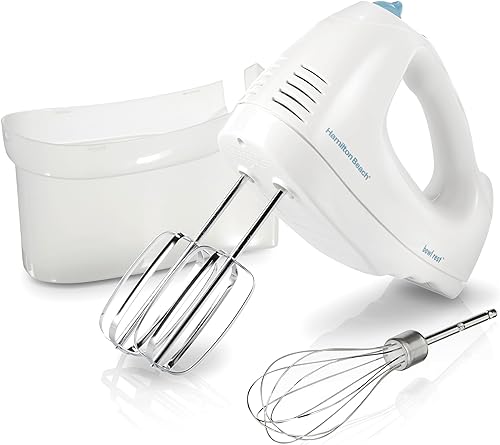
A 250-watt, six-speed hand mixer with a QuickBurst button for extra power on stiff batters, and a bowl rest so it can sit on the rim between steps.
Rating: 4.5 out of 5 (66.9K ratings)
Pros
- 250-watt motor
- QuickBurst power boost
- Bowl rest
Cons
- Corded
- Not a substitute for a stand mixer on bread dough
Best value for occasional bakers: SHARDOR 6-Speed Hand Mixer

A six-speed hand mixer with a turbo setting and a snap-on storage case, at a budget price.
Price when checked: $21.99 · Rating: 4.4 out of 5 (2.7K ratings)
Pros
- Six speeds plus turbo
- Snap-on storage case
- Inexpensive
Cons
- Not for heavy doughs
- Basic build
Best for compact storage: OVENTE 5-Speed Hand Mixer

A 150-watt, five-speed mixer that comes with a storage case for the beaters, a budget choice for occasional baking.
Price when checked: $14.99 · Rating: 4.5 out of 5 (13.5K ratings)
Pros
- Low price
- Storage case included
- Five speeds
Cons
- 150 W struggles with stiff doughs
- Basic build
Best compact option: Cuisinart Power Advantage 7-Speed Hand Mixer

Cuisinart’s seven-speed hand mixer, a lightweight option with more speed control than basic models.
Price when checked: $64.95 · Rating: 4.6 out of 5 (282 ratings)
Pros
- Seven speeds
- Lightweight
- Trusted brand
Cons
- Pricier than budget mixers
- Not a stand mixer substitute
Best for whipping and light batters: 7-Speed 180W Hand Mixer with 5 Attachments

A 180-watt, seven-speed hand mixer supplied with five stainless steel attachments, including whisks for cream and egg whites.
Price when checked: $13.49 · Rating: 4.2 out of 5 (2.1K ratings)
Pros
- Seven speeds
- Five attachments
- Inexpensive
Cons
- Lesser-known brand
- Not built for heavy dough
How to choose and when to skip a hand mixer
If your baking involves mainly light to medium-thick batters, a mixer with 150 to 180 watts and at least six speeds will suffice. Prioritise ergonomic design if you mix frequently to prevent fatigue. For dense doughs or very thick batters, seek models with motors over 200 watts and multiple speed settings.
Avoid hand mixers if you regularly work with large batches, stiff doughs, or want even mixing without manual effort. Stand mixers or professional-grade machines provide more power and consistent results for those needs. Hand mixers excel in portability and quick mixing tasks but have clear limits on motor power and continuous use.
In practical terms, consider the frequency and type of baking you perform. For example, a home baker making occasional cupcakes may find a 150W mixer with six speeds adequate, while a frequent baker tackling layered cakes and heavy frostings benefits from a 220W mixer with nine speeds and ergonomic design. Over a year, the difference in motor durability and user comfort can translate into fewer replacements and less wrist pain.
Another consideration is the size of your batches. Hand mixers are typically suited for mixing ingredients in bowls up to 4 liters. Larger volumes or stiff doughs require stand mixers with more powerful motors and specialized attachments. Using a hand mixer beyond its intended capacity risks motor burnout and uneven mixing.
Finally, think about maintenance and ease of cleaning. Models with detachable beaters and smooth surfaces reduce cleaning time, encouraging regular use. Some premium hand mixers offer dishwasher-safe beaters and splash guards to keep kitchens tidy.
Related reading
- Sauce Whisk vs Balloon Whisk: Which One Do You Actually Need?
- Top 5 pasta pots designed for draining without a colander
- Homemade Hostess Halloween Snack Cakes (Easy Copycat!)
Frequently Asked Questions
What motor wattage is ideal for mixing cake batter?
A motor wattage between 150 and 250 watts is suitable for most home baking cake batters. Below 150W risks stalling with thick batters, while above 250W is uncommon in hand mixers and can add unnecessary weight and noise. Choose based on your typical batter thickness and mixing frequency.
Are more speed settings better for hand mixers?
More speed settings allow finer control over mixing intensity, which helps prevent overmixing or ingredient splatter. For cake batters, starting slow then gradually increasing speed is important. Models with six to nine speeds cover most needs; fewer than six limit precision.
Can I use a hand mixer for dough?
Hand mixers generally are not designed for kneading dough. Their motors and beaters are optimized for batters and light whipping tasks. Using them for dough risks motor strain and poor mixing. For dough, a stand mixer with dough hooks or manual kneading is recommended.

Rimi Sultana is a home cook from Bangladesh who has cooked for her family every day for the past five years and writes about it at Smart Cooks. Perpetually testing whether internet-famous recipes actually work in a regular home kitchen. Say hello on Facebook or through the contact page.