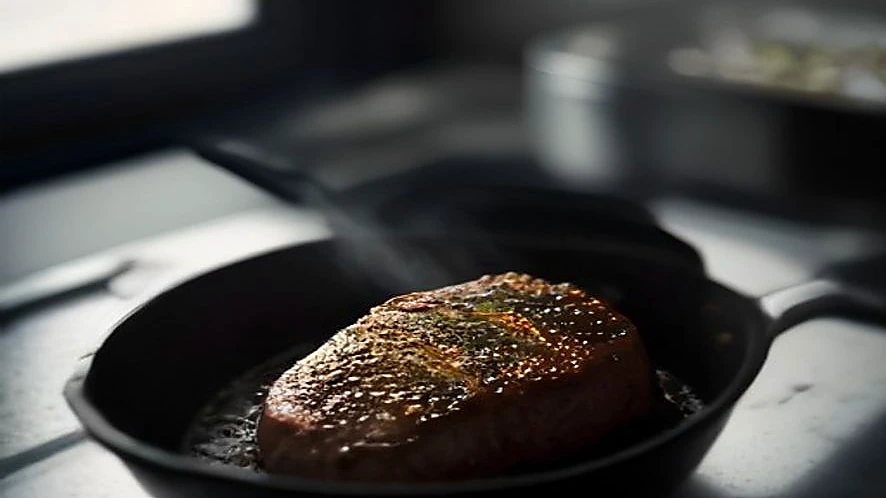
Choosing a carbon steel pan for high heat searing boils down to understanding how the pan’s material and construction affect heat conduction and retention. Unlike cast iron, carbon steel heats quickly and cools faster, so the thickness and shape of the pan determine how stable the cooking temperature stays during searing.
Some links in this post are affiliate links. If you buy through them we may earn a small commission at no extra cost to you — it never changes which products we recommend.
A good carbon steel pan will handle temperatures well above 400°F (204°C) without warping or uneven hotspots, which are common issues in thinner, lower-quality pans. The pan’s seasoning potential and handle design also influence everyday usability and long-term performance.
What actually matters
When evaluating carbon steel pans for high heat searing, certain technical factors separate a competent pan from a frustrating one. These include the steel thickness, handle construction, and surface finish, each influencing how the pan performs and endures.
Understanding these aspects in depth can help you predict how a pan will behave during intense searing sessions and over years of use.
Thickness and heat management
Carbon steel pans typically range from 1.5 mm to 3 mm in thickness. Thicker pans hold heat better and resist temperature fluctuations when food is added, preventing the pan’s surface temperature from dropping too quickly. Thinner pans heat faster but cool rapidly, which can cause uneven searing and sticking. A pan around 2.5 mm thick often balances heat retention with manageable weight.
For example, a 2.5 mm thick pan can retain heat sufficiently to maintain surface temperatures above 400°F (204°C) even when a cold steak is placed on it, enabling a consistent Maillard reaction that creates a flavorful crust. In contrast, a 1.5 mm pan may see temperature drops of up to 50-70°F (10-20°C) upon food contact, leading to steaming instead of searing.
Moreover, the pan’s thickness influences its thermal mass, which affects how evenly heat distributes across the cooking surface. Thicker pans reduce hotspots, minimizing the risk of burning or undercooking parts of the food.
However, increased thickness comes with added weight, which might affect handling and comfort during prolonged cooking.
Handle comfort and heat transfer
Handle materials and attachment methods affect both safety and handling. Carbon steel handles can conduct heat rapidly, becoming hot during searing, necessitating the use of a cloth or mitt. Some pans incorporate wooden or silicone grips or have hollow or riveted handles designed to stay cooler. The shape and length also matter for manoeuvrability and balance when flipping or tossing food.
For instance, a solid carbon steel handle can reach temperatures exceeding 250°F (121°C) within minutes of searing, posing burn risks. Hollow or riveted handles dissipate heat more effectively, reducing surface temperature by approximately 30-50°F (15-25°C).
Longer handles provide better leverage and control but may be cumbersome in small kitchens. Ergonomic designs improve grip comfort and reduce wrist fatigue during repetitive motions.
Additionally, handle attachment methods influence durability. Riveted handles tend to be more secure and long-lasting compared to welded ones, which may weaken over time under thermal stress.
Surface finish and seasoning
A rougher surface helps seasoning layers adhere better, which improves non-stick performance over time. Some pans come pre-seasoned; others require seasoning before use. The pan’s ability to develop and maintain a durable seasoning depends on the steel’s composition and surface texture. Smooth finishes may feel easier to clean initially but often need more patience to build a lasting patina.
Seasoning forms through polymerisation of fats and oils, creating a hard, hydrophobic layer that improves food release and protects the steel from rust. Rougher textures increase the surface area for oil bonding, accelerating seasoning build-up.
For example, pans with a slightly textured finish can develop a robust seasoning after 5-7 uses, whereas very smooth pans might take 10-15 uses to achieve similar non-stick properties.
Regular maintenance, such as applying a thin oil layer after cleaning and avoiding abrasive scrubbing, extends the seasoning life and enhances performance.
Steel composition also matters; high-carbon steels with fewer impurities generally hold seasoning better and resist flaking.
| Pick | Best for | Thickness (mm) | Watch out for |
|---|---|---|---|
| Merten & Storck 12-Inch Carbon Steel Pan | Professional quality searing | Carbon steel, pre-seasoned, 12-inch | Needs ongoing seasoning |
| Matfer Bourgeat 11 5/8 inch | Heavy-duty kitchen workhorse | 3.0 | Heavier than average pans |
| Lodge 10 Inch Carbon Steel Skillet | Budget-friendly entry point | 2.3 | Factory seasoning is thin |
| Merten & Storck 8-Inch | Compact pan for small batches | 2.0 | Smaller cooking surface |
| OXO Outdoor Pre-Seasoned | Pre-seasoned convenience for outdoor use | 2.5 | Handle heats up quickly |
| Lodge 12-Inch Carbon Steel Skillet | Large family cooking | Carbon steel, pre-seasoned, 12-inch | Early seasoning can flake |
| Matfer Black Steel 10 Inch | Versatile mid-size pan | 2.5 | Handle can get hot rapidly |
From My Kitchen
Once, I tried searing a thick ribeye on a thin carbon steel pan that was less than 2 mm thick. The pan’s temperature dropped as soon as the steak hit the surface, causing uneven browning and sticking. Switching to a 2.5 mm thick pan with a rougher surface fixed the problem, allowing the meat to form a proper crust without sticking, confirming the importance of thickness and seasoning.
This experience highlights how a pan’s thermal response directly impacts cooking results. The thicker pan’s greater heat capacity maintained surface temperatures near 450°F (232°C), optimal for the Maillard reaction, whereas the thinner pan dropped below 380°F (193°C), insufficient for rapid browning.
Additionally, the rougher surface of the thicker pan helped build a seasoning layer that further improved food release, reducing the need for excess oil and simplifying cleanup.
Worth Considering
Best for professional quality searing: Merten & Storck 12-Inch Carbon Steel Pan

A 12-inch pre-seasoned carbon steel skillet: lighter than cast iron but just as happy at searing heat.
Price when checked: $41.99 · Rating: 4.2 out of 5 (5.5K ratings)
Pros
- Pre-seasoned
- Lighter than cast iron
- Handles very high heat
Cons
- Needs ongoing seasoning
- Acidic sauces can strip the seasoning
Best for heavy-duty kitchen use: Matfer Bourgeat 11 5/8 inch
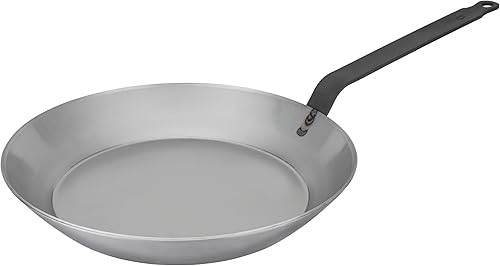
At 3 mm thickness, this is a robust carbon steel pan suited for high-volume, professional kitchens. It retains heat exceptionally well but its weight may be cumbersome for home cooks not used to heavier pans. Not the best for those seeking a lightweight pan to flip delicate food.
Price when checked: $113.00 · Rating: 4.4 out of 5 (8.2K ratings)
Pros
- Excellent heat retention and distribution
- Thick steel resists warping
- Handles designed for firm grip
Cons
- Heavier than typical home pans
- Long seasoning break-in period
Best budget pick for beginners: Lodge 10 Inch Carbon Steel Skillet

This pan offers a good introduction to carbon steel searing with a 2.3 mm thickness and factory seasoning. The seasoning is thin and needs reinforcing, but the price point allows experimenting without a large investment. It’s not the quickest to heat due to its weight and can feel bulky.
Price when checked: $39.90 · Rating: 4.3 out of 5 (7.8K ratings)
Pros
- Affordable carbon steel option
- Pre-seasoned for immediate use
- Sturdy handle with good grip
Cons
- Factory seasoning is light and uneven
- Heavier and slower to respond
Best compact pan for small batches: Merten & Storck 8-Inch

Ideal for searing smaller portions or single servings, this 2 mm thick pan heats rapidly but doesn’t retain heat as well. It’s lightweight and easy to manoeuvre but less versatile for larger meals. Not suitable if you often cook for groups.
Price when checked: $27.99 · Rating: 4.2 out of 5 (5.5K ratings)
Pros
- Lightweight and easy to handle
- Pre-seasoned, ready to use
- Compact size saves storage space
Cons
- Thinner steel cools quickly
- Limited cooking surface
Best for pre-seasoned outdoor cooking: OXO Outdoor Pre-Seasoned

This 2.5 mm carbon steel pan comes pre-seasoned, making it convenient for outdoor grilling and searing. The handle heats quickly, so gloves are necessary. It performs well on camp stoves but the handle design can limit indoor stovetop comfort.
Price when checked: $59.99 · Rating: 4.2 out of 5 (116 ratings)
Pros
- Pre-seasoned for immediate use
- Good heat conduction for searing
- Durable for outdoor conditions
Cons
- Handle becomes hot fast
- Less ergonomic for indoor use
Best for large family cooking: Lodge 12-Inch Carbon Steel Skillet

Lodge’s 12-inch carbon steel skillet comes pre-seasoned with a long handle, giving room for family-size portions.
Price when checked: $44.99 · Rating: 4.3 out of 5 (7.8K ratings)
Pros
- 12-inch surface
- Pre-seasoned
- Well-known maker
Cons
- Early seasoning can flake
- Heavy when full
Best versatile mid-size pan: Matfer Black Steel 10 Inch
This pan balances size and thickness (2.5 mm) for everyday searing tasks. It heats quickly but the handle conducts heat, requiring caution. A solid option for cooks wanting a no-nonsense pan that can handle most searing jobs without too much fuss.
Price when checked: $102.00 · Rating: 4.4 out of 5 (8.2K ratings)
Pros
- Good thickness for heat retention
- Moderate weight for handling
- Durable blackened finish
Cons
- Handle heats quickly
- Seasoning requires time to develop
Who should consider alternatives to carbon steel pans
Carbon steel pans excel in durability and heat conduction but require seasoning and maintenance to prevent rust and sticking. If you prefer a pan that performs well out of the box with minimal upkeep, a stainless steel or non-stick pan might be a better choice. Additionally, those who cook exclusively delicate foods or need dishwasher-safe cookware should look beyond carbon steel.
For example, stainless steel pans offer excellent corrosion resistance and are dishwasher safe but generally lack the seasoning benefits of carbon steel, which can affect non-stick performance during searing. Non-stick pans provide easy release and cleaning but typically cannot withstand the high temperatures required for optimal searing without degrading the coating.
Therefore, the choice depends on your cooking style, maintenance willingness, and the types of dishes you prepare most often.
Related reading
- Cooler vs Ice chest: what really sets them apart
- Top 10 Black & Orange Tiered Serving Trays for Cupcakes
- 9+ Best Stainless Steel Skillets: Top Picks & Reviews
Frequently Asked Questions
How do I properly season a carbon steel pan for high heat searing?
Seasoning carbon steel involves applying a thin layer of cooking oil with a high smoke point, like flaxseed or grapeseed oil, and heating the pan to around 400-450°F (204-232°C) until the oil polymerises and bonds with the metal. Repeating this process several times builds a durable, non-stick patina that improves searing performance. It’s important to dry the pan immediately after washing to prevent rust.
Can carbon steel pans be used on induction cooktops for searing?
Yes, carbon steel is magnetic and compatible with induction cooktops. However, the pan’s thickness and flatness affect induction efficiency. Thicker pans with flat bases provide better contact and heat distribution on induction surfaces, resulting in more consistent searing temperatures.
What temperature range is safe for searing with carbon steel pans?
Carbon steel pans can safely handle searing temperatures between 400°F to 600°F (204°C to 316°C). Going above 600°F risks damaging the seasoning layer and warping thinner pans over time. Maintaining temperatures within this range allows effective Maillard reactions without compromising pan integrity.
Related: Top 5 wet grinders for idli and dosa batter with honest insights

Rimi Sultana is a home cook from Bangladesh who has cooked for her family every day for the past five years and writes about it at Smart Cooks. Perpetually testing whether internet-famous recipes actually work in a regular home kitchen. Say hello on Facebook or through the contact page.