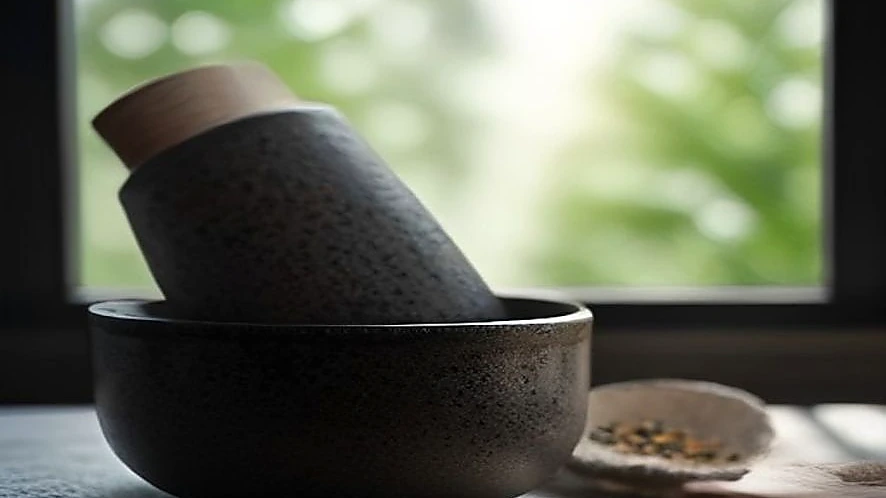
Choosing the right mortar and pestle for grinding fresh masala depends on how well the tool can break down dry and moist spices to release oils and aromas. The key is the texture and weight of the bowl and pestle, which determine how efficiently they crush and grind the ingredients without slipping or sticking.
Some links in this post are affiliate links. If you buy through them we may earn a small commission at no extra cost to you — it never changes which products we recommend.
A poorly chosen mortar can either be too smooth, causing spices to slip rather than grind, or too rough and porous, absorbing flavours and becoming difficult to clean. Size and shape also matter; a bowl that is too small limits the amount you can grind at once, while one too large can make control difficult.
What actually matters
Understanding the material, size, and surface texture is crucial for selecting a mortar and pestle that suits fresh masala grinding. The grinding mechanism relies heavily on friction generated between the pestle and the bowl surface. For effective grinding, the surface texture should be rough enough to create resistance against the spices, allowing them to be crushed and ground rather than merely pressed.
The efficiency of grinding can be quantified by how quickly the spices break down into a paste or powder. For example, a granite mortar with a coarse interior can reduce whole spices like cardamom pods and dried chilies to a fine paste in approximately 3 to 5 minutes of continuous grinding, whereas smoother materials like marble may take twice as long or result in uneven texture.
The weight of the mortar and pestle plays a pivotal role in maintaining stability during the grinding process. Heavier mortars, typically weighing between 2 to 5 kilograms, provide a steady base that resists movement, allowing the user to apply more force without the tool slipping. Conversely, lighter mortars may require more effort to hold in place, potentially reducing grinding efficiency and increasing fatigue.
In terms of size, a mortar with a diameter of 4 to 6 inches (10 to 15 cm) and a depth of 3 to 4 inches (7.5 to 10 cm) is generally optimal for preparing fresh masala for 2 to 4 servings. This size balances capacity and control, enabling thorough mixing without overcrowding. The curvature of the bowl must complement the shape of the pestle to ensure all ingredients are uniformly ground; mismatched curvature can leave pockets of unground spices.
Surface texture and maintenance are interconnected. Rough surfaces increase friction but also trap spice residues and oils, which can lead to flavor carryover or bacterial growth if not cleaned properly. For instance, granite and basalt mortars require immediate rinsing with hot water and scrubbing with a stiff brush to remove trapped particles. Seasoning the mortar occasionally by grinding dry rice helps absorb residual oils and refresh the surface. Brass mortars, while smooth and easy to clean, can tarnish and react chemically with acidic masala ingredients, potentially altering flavor and requiring polishing.
Choosing the right mortar and pestle is thus a balance of material properties, size, texture, and maintenance requirements. Understanding these factors helps in selecting a tool that not only performs efficiently but also lasts long and preserves the authentic flavors of fresh masala.
Material and grinding efficiency
Granite and basalt are the preferred materials for fresh masala grinding due to their hardness and coarse texture, which generate high friction essential for breaking down fibrous and oily spices. The density of granite, typically around 2.6 to 2.7 grams per cubic centimeter, contributes to the mortar’s substantial weight, enhancing stability during use. Basalt, a volcanic rock, shares similar properties but often has a more porous surface that requires seasoning to eliminate stone dust and improve grinding performance.
Brass and marble mortars offer a different grinding experience. Brass, being a metal, provides weight and durability but has a smoother surface that reduces friction, making it less effective for moist or fibrous ingredients. Additionally, brass can chemically react with acidic spices such as tamarind or lemon juice, potentially imparting metallic flavors and necessitating careful use. Marble, a metamorphic rock with a polished surface, is non-porous and hygienic but tends to be too smooth to grip fibrous spices effectively, leading to slipping during grinding.
Porcelain mortars are non-porous and easy to clean, making them suitable for small quantities of dry spices. However, their highly smooth surface often causes spices to slip rather than grind, limiting their efficiency for fresh masala. Porcelain is also relatively fragile and prone to chipping if used with excessive force.
In summary, the material choice directly influences grinding efficiency, durability, and maintenance. Hard, rough materials like granite and basalt excel in releasing essential oils and flavors by effectively crushing spices, while smoother materials prioritize ease of cleaning but compromise grinding performance.
Size and shape considerations
The size of the mortar affects both the volume of masala that can be prepared and the ease of grinding. Mortars with diameters smaller than 4 inches (10 cm) limit batch sizes to single servings, which may be inefficient for family meals or frequent cooking. Conversely, mortars larger than 6 inches (15 cm) can be cumbersome to handle and may reduce control over the grinding process, leading to inconsistent texture.
The depth of the bowl is equally important; a deeper bowl prevents spices from spilling during vigorous grinding motions. Typically, a depth of 3 to 4 inches (7.5 to 10 cm) is sufficient to accommodate the pestle’s movement and the volume of ingredients. The curvature of the bowl should allow the pestle to reach all areas easily, ensuring uniform grinding without leaving unprocessed pockets.
The pestle’s design complements the mortar’s size and shape. A rounded pestle that fits comfortably in the hand reduces fatigue during prolonged grinding sessions. The length of the pestle should be proportional to the mortar’s diameter, generally about 6 to 8 inches (15 to 20 cm), allowing for effective leverage and control.
Ergonomics also play a role; mortars with a flared lip or wider base provide stability and prevent slipping on kitchen surfaces. Some traditional designs include feet or ridges to enhance grip. These features contribute to safer and more efficient grinding, especially when dealing with tough spices or large batches.
In conclusion, selecting the right size and shape enhances grinding efficiency, user comfort, and the quality of the final masala paste or powder.
Surface texture and maintenance
The interior surface texture of a mortar determines how spices interact during grinding. Rough, unpolished textures increase friction, facilitating the breakdown of tough fibers and release of essential oils. For example, a granite mortar with a coarse finish can reduce whole spices to powder in under five minutes, whereas a polished marble surface may take significantly longer.
However, rough surfaces tend to trap spice particles and oils, which can lead to flavor contamination between uses if not cleaned properly. Immediate rinsing with hot water and scrubbing with a stiff brush are recommended to remove residues. Soap is generally discouraged for porous materials like granite and basalt because it can seep into the stone and impart unwanted flavors.
Seasoning a new granite or basalt mortar is an important maintenance step. This involves grinding dry rice grains to powder, which absorbs loose stone particles and residual oils. Repeating this process several times before first use ensures a smoother, cleaner surface and improves grinding efficiency.
Materials like brass require polishing to prevent tarnishing and maintain a smooth surface. Brass mortars should be dried thoroughly after washing to avoid corrosion. Porcelain and ceramic mortars, while easier to clean due to their glazed surfaces, are fragile and can chip or crack if mishandled.
Wooden mortars absorb oils and aromas over time, which can affect the flavor of masalas and make thorough cleaning difficult. They are best reserved for dry herbs and gentle crushing rather than wet or oily spice pastes.
In summary, surface texture influences both grinding performance and cleaning requirements. Proper maintenance extends the life of the mortar and preserves the purity of flavors in fresh masala preparation.
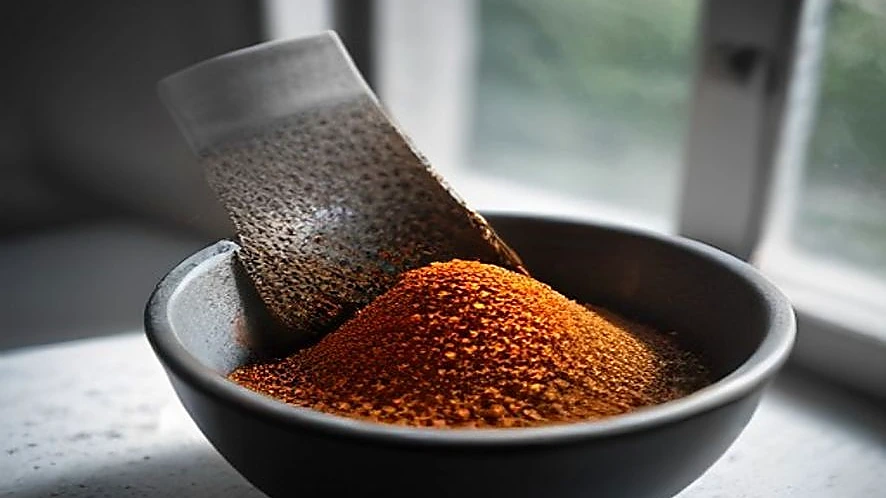
Choosing the right mortar and pestle for your kitchen
If you regularly prepare fresh masala in moderate to large quantities, a granite or basalt mortar with a rough texture and a weighty pestle generally offers the best balance of efficiency and durability. These materials’ hardness and surface coarseness generate the friction necessary to break down fibrous and oily spices effectively, releasing their essential oils and aromas. For example, a 5-inch granite mortar weighing around 3 kilograms can handle batches sufficient for 3 to 4 servings, making it ideal for family cooking.
For light, occasional grinding or purely dry spices, smoother materials like marble or brass can suffice and are easier to clean. Marble mortars with a polished surface are non-porous and hygienic but may require longer grinding times and are better suited for soft spices or herbs. Brass mortars provide durability and weight but should be used cautiously with acidic ingredients to avoid chemical reactions that might alter flavor.
Users who prefer very small batches or want a decorative option might opt for porcelain or ceramic mortars but should accept that these are not as effective at thoroughly crushing fibrous, moist spices. Porcelain mortars, typically around 3.5 inches in diameter, are lightweight and easy to clean but prone to chipping and less efficient for wet masalas.
Wooden and cast iron mortars serve very niche purposes and require specific care to avoid damage or flavour issues. Wooden mortars absorb oils and odors, making them unsuitable for wet or oily pastes, while cast iron mortars are extremely durable but prone to rust if not dried properly. Their heavy weight makes them suitable for pounding dense ingredients but less common for traditional masala grinding.
Those who rarely grind fresh masalas or prefer electric grinders for convenience might not need a mortar and pestle at all. However, for anyone wanting to control texture and aroma with traditional methods, investing in a well-made granite or basalt set is worthwhile. The tactile experience and manual control offered by these materials allow for nuanced adjustments in grinding pressure and timing, which can significantly influence the flavor profile of the final dish.
| Pick | Best for | Material and size | Watch out for |
|---|---|---|---|
| ChefSofi Granite Mortar and Pestle (2-Cup) | Heavy-duty grinding | Granite, 2-cup | Heavy |
| Brass Mortar and Pestle Set | Dry spices | Brass | Very few reviews |
| ChefSofi White Marble Mortar and Pestle | Light grinding and easy cleaning | Marble, granite, 1.5-cup | Smoother surface grinds more slowly |
| E-liu Porcelain Mortar and Pestle with Lid | Small quantities | Porcelain | Small capacity |
| 8-Inch Mexican Lava Rock Molcajete | Rustic coarse grinding | Lava rock, 8-inch | Must be cured before first use |
| United Scientific Ceramic Mortar and Pestle | Tiny amounts | Ceramic | Very small capacity |
| Samhita Acacia Wood Mortar and Pestle | Dry herbs only | Acacia, wood | Wood absorbs oils and odours |
| Velaze Cast Iron Mortar and Pestle | Heavy pounding | Cast iron, 3-cup | Needs drying to avoid rust |
| Cook Craft Soapstone Mortar and Pestle | Fine grinding small batches | Soapstone | Small capacity |
| ChefSofi Granite Mortar and Pestle (1.5-Cup) | Compact granite | Granite, 1.5-cup | Small for big batches |
From My Kitchen
Once, while making a fresh masala paste for a Bengali fish curry, I used a smooth marble mortar which made the spices slip instead of grinding properly. The resulting paste was unevenly crushed, affecting the dish’s texture. Switching to my granite mortar with a rough interior and a heavier pestle solved the problem, allowing me to break down tough cardamom pods and dried chilies into a consistent, fragrant masala paste within minutes.
This experience highlights the importance of choosing the right material and texture for effective grinding. The granite mortar’s rough surface increased friction, facilitating the release of essential oils and creating a uniform paste. The pestle’s weight and ergonomic shape also made it easier to apply consistent pressure, reducing fatigue during the process. These factors combined to improve both the efficiency and quality of the masala preparation.
Worth Considering
Best for heavy-duty grinding: ChefSofi Granite Mortar and Pestle (2-Cup)

An unpolished natural granite mortar holding two cups. The rough interior grips seeds and garlic so they break down instead of skidding around.
Price when checked: $32.99 · Rating: 4.8 out of 5 (24.4K ratings)
Pros
- Unpolished grinding surface
- 2-cup capacity
- Very well reviewed
Cons
- Heavy
- Stone can hold strong smells
Best for dry spices: Brass Mortar and Pestle Set
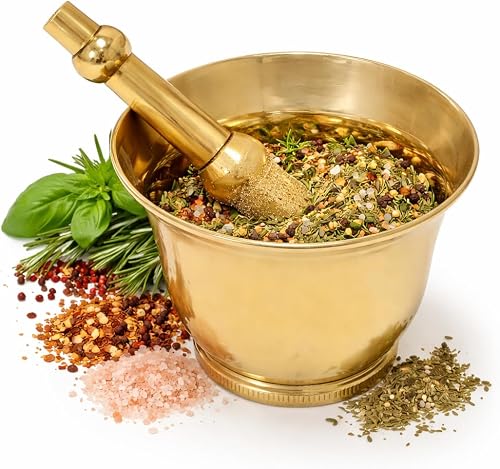
A small brass mortar and pestle of the kind used for dry spices. Metal does not absorb flavours, but it suits dry grinding more than wet pastes.
Price when checked: $25.99 · Rating: 5.0 out of 5 (2 ratings)
Pros
- Brass does not absorb odours
- Compact
- Good for whole spices
Cons
- Very few reviews
- Not ideal for wet pastes
Best for light grinding and easy cleaning: ChefSofi White Marble Mortar and Pestle

A 1.5-cup white marble mortar. Marble is smoother than granite and easy to wipe clean, so it is best for soft herbs and small amounts.
Price when checked: $29.99 · Rating: 4.8 out of 5 (24.4K ratings)
Pros
- Easy to clean
- Attractive marble
- Compact
Cons
- Smoother surface grinds more slowly
- Acidic ingredients can etch marble
Best for small quantities: E-liu Porcelain Mortar and Pestle with Lid

A porcelain mortar and pestle with a lid, useful for small amounts of spice without scattering bits across the counter.
Price when checked: $21.29 · Rating: 4.7 out of 5 (2K ratings)
Pros
- Lid keeps contents in
- Non-porous porcelain
- Small footprint
Cons
- Small capacity
- Can chip if dropped
Best for rustic coarse grinding: 8-Inch Mexican Lava Rock Molcajete
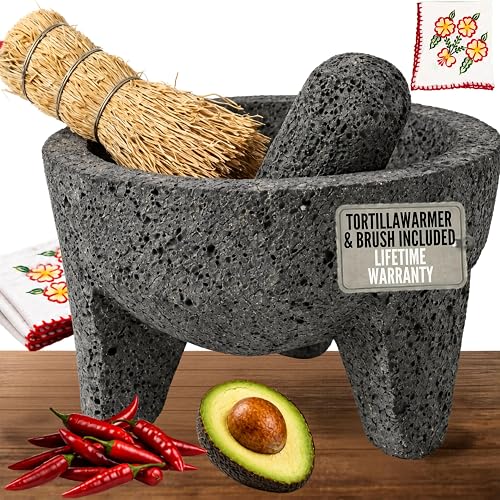
An 8-inch molcajete made from volcanic lava rock in Mexico. The porous stone is ideal for salsas and guacamole with a coarse texture.
Price when checked: $54.95 · Rating: 4.5 out of 5 (813 ratings)
Pros
- Authentic lava rock
- Large 8-inch bowl
- Excellent for salsa
Cons
- Must be cured before first use
- Heavy
Best for tiny amounts: United Scientific Ceramic Mortar and Pestle

A 70 mL lab-style ceramic mortar and pestle, suited to crushing a few peppercorns or saffron threads.
Price when checked: $13.44 · Rating: 4.6 out of 5 (827 ratings)
Pros
- Deep-form bowl
- Non-porous ceramic
- Inexpensive
Cons
- Very small capacity
- Plain lab look
Best for dry herbs only: Samhita Acacia Wood Mortar and Pestle
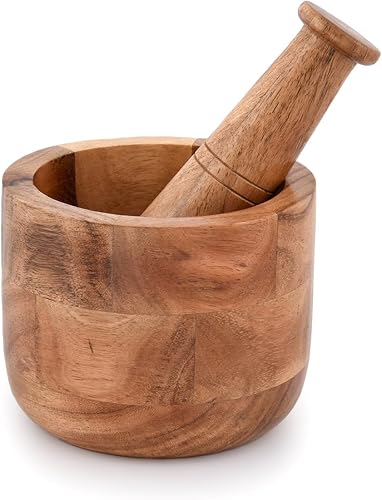
A handmade acacia wood mortar and pestle, light and quiet, best kept for dry herbs, nuts and garlic.
Price when checked: $14.89 · Rating: 4.5 out of 5 (925 ratings)
Pros
- Lightweight
- Handmade acacia wood
- Quiet to use
Cons
- Wood absorbs oils and odours
- Not for heavy pounding
Best for heavy pounding: Velaze Cast Iron Mortar and Pestle

A 3-cup cast iron mortar with a pour spout and a 6.5-inch pestle. The weight does most of the work when pounding.
Price when checked: $39.30 · Rating: 4.7 out of 5 (1K ratings)
Pros
- Heavy cast iron
- Pour spout
- 3-cup capacity
Cons
- Needs drying to avoid rust
- Heavy to move
Best for fine grinding small batches: Cook Craft Soapstone Mortar and Pestle

A small grey soapstone mortar about three inches wide, for a pinch of spice or a single clove of garlic.
Price when checked: $44.00 · Rating: 4.6 out of 5 (13 ratings)
Pros
- Dense, smooth soapstone
- Compact
- Easy to store
Cons
- Small capacity
- Few reviews
Best for compact granite: ChefSofi Granite Mortar and Pestle (1.5-Cup)
The smaller 1.5-cup version of ChefSofi’s unpolished granite mortar, easier to lift and store.
Price when checked: $27.49 · Rating: 4.8 out of 5 (24.4K ratings)
Pros
- Same granite as the larger model
- Compact
- Very well reviewed
Cons
- Small for big batches
- Still heavy for its size
Choosing the right mortar and pestle for your kitchen
If you regularly prepare fresh masala in moderate to large quantities, a granite or basalt mortar with a rough texture and a weighty pestle generally offers the best balance of efficiency and durability. These materials’ hardness and surface coarseness generate the friction necessary to break down fibrous and oily spices effectively, releasing their essential oils and aromas. For example, a 5-inch granite mortar weighing around 3 kilograms can handle batches sufficient for 3 to 4 servings, making it ideal for family cooking.
For light, occasional grinding or purely dry spices, smoother materials like marble or brass can suffice and are easier to clean. Marble mortars with a polished surface are non-porous and hygienic but may require longer grinding times and are better suited for soft spices or herbs. Brass mortars provide durability and weight but should be used cautiously with acidic ingredients to avoid chemical reactions that might alter flavor.
Users who prefer very small batches or want a decorative option might opt for porcelain or ceramic mortars but should accept that these are not as effective at thoroughly crushing fibrous, moist spices. Porcelain mortars, typically around 3.5 inches in diameter, are lightweight and easy to clean but prone to chipping and less efficient for wet masalas.
Wooden and cast iron mortars serve very niche purposes and require specific care to avoid damage or flavour issues. Wooden mortars absorb oils and odors, making them unsuitable for wet or oily pastes, while cast iron mortars are extremely durable but prone to rust if not dried properly. Their heavy weight makes them suitable for pounding dense ingredients but less common for traditional masala grinding.
Those who rarely grind fresh masalas or prefer electric grinders for convenience might not need a mortar and pestle at all. However, for anyone wanting to control texture and aroma with traditional methods, investing in a well-made granite or basalt set is worthwhile. The tactile experience and manual control offered by these materials allow for nuanced adjustments in grinding pressure and timing, which can significantly influence the flavor profile of the final dish.
Related reading
- Blade vs. Burr Coffee Grinder: Why It Actually Matters for How Your Coffee Tastes
- Mixer grinder vs wet grinder: Understanding the real differences
- Spice grinder vs mortar and pestle: what really sets them apart
Frequently Asked Questions
What material is best for grinding fresh masala spices?
Granite and basalt mortars are generally considered best for fresh masala because their rough, hard surfaces create friction that efficiently crushes fibrous and oily spices. This releases essential oils and flavors more effectively than smoother materials like marble or porcelain, which can cause spices to slip instead of grind.
How do I clean and maintain a porous granite mortar?
Porous granite should be rinsed immediately after use to prevent absorption of oils and residues. Avoid soap, which can seep into the stone and affect flavour. Instead, scrub with a stiff brush under hot water. Occasionally, seasoning with rice grains ground to powder can remove trapped particles and refresh the surface.
Can I use a mortar and pestle for wet masala pastes?
Yes, but the mortar must have a texture that can handle moist ingredients without slipping. Rough granite or basalt mortars are preferred for wet masala pastes as they allow grinding with both pounding and twisting motions. Smooth materials tend to be less effective since ingredients slip and do not break down evenly.

Rimi Sultana is a home cook from Bangladesh who has cooked for her family every day for the past five years and writes about it at Smart Cooks. Perpetually testing whether internet-famous recipes actually work in a regular home kitchen. Say hello on Facebook or through the contact page.