Choosing a good meat thermometer for steak comes down to how quickly and accurately it reads the internal temperature. The key difference between thermometers is their sensing mechanism and response time, which affects how well you can hit your target doneness without overcooking.
Some links in this post are affiliate links. If you buy through them we may earn a small commission at no extra cost to you — it never changes which products we recommend.
Many thermometers claim speed and precision, but what matters in practice is the probe type, sensor quality, and how the device displays and holds readings. A slow or inaccurate thermometer means leaving your steak on the heat too long or cutting into it too soon, both of which impact texture and flavour.
What actually matters
Thermometer features vary, but the real criteria to judge them by rely on three technical aspects. Understanding these can help you choose the right device and improve your cooking outcomes.
Firstly, the sensing mechanism directly influences response time and accuracy. Thermocouples, for example, can detect temperature changes in under a second, enabling you to monitor the steak’s core temperature in real-time. This rapid feedback minimizes heat loss from prolonged probing and reduces the risk of overcooking.
Secondly, the physical characteristics of the probe, such as thickness and tip shape, affect both the speed of temperature equilibration and the integrity of the meat. Thin, pointed probes penetrate easily with minimal juice loss, preserving the steak’s texture and flavor. In contrast, thicker or blunter probes take longer to provide stable readings and can damage delicate cuts, causing moisture loss and uneven cooking.
Finally, display features like update frequency, brightness, and font size impact usability. A thermometer that updates readings every 0.5 seconds allows precise timing when pulling the steak off heat. Backlit displays and large fonts are essential for visibility in varying lighting conditions, such as outdoor grilling or dim kitchens.
Probe type and sensor technology
The probe is the thermometer’s sensor that you insert into the steak. Thermocouple probes use two junctions of dissimilar metals to produce a voltage related to temperature. This design reacts in less than a second, making thermocouples the fastest and most accurate option. Thermistor probes rely on changes in resistance to measure temperature but are slower, often taking 3-5 seconds for a stable reading.
The thickness and shape of the probe also affect how quickly it equilibrates with the meat’s core temperature. Thin, pointed probes penetrate easily with minimal juice loss. Blunter or thicker probes take longer to stabilise and can damage delicate cuts.
Readout speed and display clarity
A thermometer’s speed is only useful if the display updates rapidly and stays legible. Some thermometers update the reading every 0.5 seconds; others take longer. Fast reaction time helps prevent overshooting the ideal temperature by allowing you to pull the steak right on target.
Screen brightness and font size matter when working outdoors or near a grill where lighting varies. A backlit or large digital display reduces guesswork.
Accuracy, calibration, and temperature range
Accuracy is how close the reading is to the actual temperature inside the steak. Most quality thermometers have ±1°F (±0.5°C) accuracy within typical cooking ranges (100°F–212°F / 38°C–100°C). Calibration capability ensures you can adjust the device if it drifts over time.
You also want a thermometer that covers a wide temperature range, at least from 32°F to 572°F (0°C to 300°C), so it handles everything from rare steak to searing surface temps without damage.
For example, a thermometer with a ±1°F accuracy at 130°F (54°C) ensures that your medium-rare steak is cooked precisely, avoiding the risk of undercooking or overcooking. If the device drifts by even a few degrees over time, it can mean the difference between a juicy steak and a dry one.
Calibration can be performed by immersing the probe in an ice water slurry (0°C / 32°F) or boiling water (100°C / 212°F) to verify and adjust the reading. Regular calibration maintains confidence in your thermometer’s accuracy.
Choosing the right meat thermometer for steak
If you cook steak frequently and want precise control over doneness, investing in a thermocouple-based thermometer is worthwhile. Their sub-second readings and high accuracy reduce guesswork and prevent heat loss during checks.
Thermocouple thermometers typically cost more but offer professional-grade performance. For example, the 0.5-Second Instant-Read Meat Thermometer provides readings in under one second with ±0.7°F (±0.4°C) accuracy, allowing chefs to monitor multiple steaks quickly and consistently.
For occasional cooks or those on a budget, thermistor thermometers offer acceptable accuracy but require patience and slightly longer wait times. Their response times range from 3 to 5 seconds, which may cause slight temperature overshoot if not monitored carefully.
Avoid models without backlit displays if you often grill outdoors or in low light, as poor visibility can lead to misreading temperatures and overcooking.
Wireless or Bluetooth thermometers are not covered here but can be useful for indirect grilling or sous vide, though they often have slower sensor response times. If you prefer quick, direct feedback and handheld control, the models listed here are more reliable.
Consider the probe design as well: thin, sharp probes minimize juice loss and provide faster readings, preserving steak quality. Also, look for thermometers with a broad temperature range (at least 32°F to 572°F / 0°C to 300°C) to cover all cooking scenarios from rare to well-done and surface searing.
In summary, balancing speed, accuracy, and usability features will help you choose a thermometer that fits your cooking style and ensures perfect steak doneness every time.
| Pick | Best for | Sensor type & speed | Watch out for |
|---|---|---|---|
| 0.5-Second Instant-Read Meat Thermometer | Fast instant reads | Thermocouple, sub-second readout | Lesser-known brand |
| Lavatools Javelin PRO Classic | Value with fast response | Thermocouple, ~2 second readout | Screen glare in sunlight |
| Alpha Grillers Instant Read Thermometer | Mid-range with backlight | Thermistor, ~4 second readout | Not a professional-grade model |
| TempPro TP19H | Waterproof budget option | Thermistor, ~4-5 second readout | Longer wait, less precise |
| Kizen Instant Read | Affordable & compact | Thermistor, ~5 second readout | Screen dims quickly, limited range |
From my kitchen
Once, I was rushing dinner and used a slower thermistor-based thermometer on a thick ribeye. I waited the listed 5 seconds, but the reading kept creeping up, making me doubt the steak’s doneness. Switching to a thermocouple probe with a faster response fixed this: I could check the temperature immediately and pulled the steak exactly at 130°F (54°C) for medium-rare. The difference in timing prevented overcooking, which had happened several times before with slower devices.
This experience highlighted the practical impact of sensor technology on cooking results. A delay of even a few seconds can mean the difference between a juicy, tender steak and one that is dry or unevenly cooked. Investing in a fast, accurate thermometer pays off by reducing guesswork and improving consistency.
Worth Considering
Best for fast instant reads: 0.5-Second Instant-Read Meat Thermometer
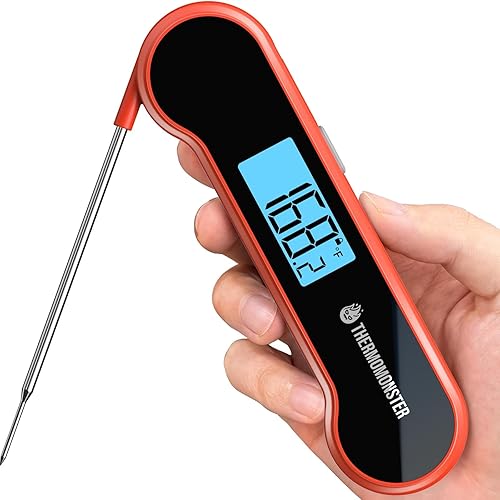
An instant-read thermometer claiming 0.5-second readings and plus or minus 0.5 °F precision, with thousands of reviews.
Rating: 4.8 out of 5 (8K ratings)
Pros
- Fast reading
- High claimed accuracy
- Well reviewed
Cons
- Lesser-known brand
- Not for leaving in the oven
Best value fast response: Lavatools Javelin PRO Classic

This thermometer balances cost and performance with a thermocouple sensor giving results in about 2 seconds. Its large display is easy to read but can reflect sunlight outdoors, making it less ideal for bright conditions. A solid pick for home cooks wanting speed without premium price.
Price when checked: $42.99 · Rating: 4.7 out of 5 (18.3K ratings)
Pros
- Fast 2-second readout
- Thermocouple sensor accuracy
- Magnetic backing for hands-free use
Cons
- Screen glare in direct sunlight
- Does not have a probe cover
Best mid-range option: Alpha Grillers Instant Read Thermometer

A budget instant-read thermometer claiming 1-2 second readings, with a huge number of reviews.
Price when checked: $12.31 · Rating: 4.8 out of 5 (92.3K ratings)
Pros
- Fast readings
- Very well reviewed
- Low price
Cons
- Not a professional-grade model
- Not for leaving in the oven
Best waterproof budget pick: TempPro TP19H

The TempPro TP19H is a budget-friendly, waterproof thermometer using a thermistor probe. It takes 4 to 5 seconds to stabilise temperature readings and has ±1.8°F (±1°C) accuracy. It’s a reasonable choice for occasional steak cooking but not suited for fast or high-precision needs.
Price when checked: $16.99 · Rating: 4.7 out of 5 (56.2K ratings)
Pros
- Waterproof and easy to clean
- Affordable price point
- Foldable probe for safe storage
Cons
- Slower response time
- Less precise accuracy
Best compact and affordable: Kizen Instant Read

This compact thermometer offers an instant read feature with a thermistor sensor that takes about 5 seconds to stabilise. It has a small screen that dims quickly and a narrower temperature range, which limits use for very rare or very well-done steaks. Good for beginners on a tight budget.
Rating: 4.6 out of 5 (77.5K ratings)
Pros
- Very affordable and lightweight
- Simple one-button operation
- Auto shut-off conserves battery
Cons
- Screen brightness fades quickly
- Limited temperature range
Choosing the right meat thermometer for steak
If you cook steak frequently and want precise control over doneness, investing in a thermocouple-based thermometer is worthwhile. Their sub-second readings and high accuracy reduce guesswork and prevent heat loss during checks.
For occasional cooks or those on a budget, thermistor thermometers offer acceptable accuracy but require patience and slightly longer wait times. Avoid models without backlit displays if you often grill outdoors or in low light.
Wireless or Bluetooth thermometers are not covered here but can be useful for indirect grilling or sous vide, though they often have slower sensor response times. If you prefer quick, direct feedback and handheld control, the models listed here are more reliable.
Related reading
- Best Large & Easy-to-Clean Spoon Rests
- Best Oil Splatter Screens for Cast Iron Pans
- Best Under Cabinet Smart Lights with Motion Sensor for Your Kitchen
Frequently Asked Questions
How often should I calibrate my meat thermometer?
Calibration frequency depends on usage but generally once every six months is sufficient for home cooks. Calibrating ensures the thermometer maintains ±1°F (±0.5°C) accuracy. You can do this by placing the probe in an ice water slurry (should read 32°F / 0°C) or boiling water (212°F / 100°C at sea level) and adjusting the device if readings deviate.
Can I use the same thermometer for different types of meat?
Yes, a good digital meat thermometer with a suitable temperature range can measure poultry, beef, pork, and fish. However, remember that different meats have different safe internal temperatures. For steaks, the target temp ranges from 120°F (49°C) for rare up to 160°F (71°C) for well done, while chicken requires at least 165°F (74°C) for safety.
Why do some thermometers give different readings on the same steak?
Differences can arise from probe placement, sensor type, or response time. Inserting the probe too close to the surface or fat can give higher or lower readings. Thermocouple sensors stabilize faster, reducing reading drift, while thermistors may require steady placement and longer wait times. Always insert the probe into the thickest part of the steak, avoiding bone or fat.

Rimi Sultana is a home cook from Bangladesh who has cooked for her family every day for the past five years and writes about it at Smart Cooks. Perpetually testing whether internet-famous recipes actually work in a regular home kitchen. Say hello on Facebook or through the contact page.