A pasta pot that allows you to drain water without a colander combines functionality with convenience. The key difference between a good and a bad one lies in how effectively the pot manages water drainage without losing pasta. This depends on the design of the strainer lid, the pot’s capacity relative to common pasta volumes, and handle ergonomics during pouring.
Some links in this post are affiliate links. If you buy through them we may earn a small commission at no extra cost to you — it never changes which products we recommend.
Pots with poorly designed strainers or weak handles can cause accidents or inefficiencies, such as pasta slipping out or water spilling. Understanding the technical details of how these pots strain will help you choose one that suits your kitchen habits and cooking style.
What actually matters
When choosing a pasta pot that drains without a colander, several mechanical features define usability and safety. Understanding these features in detail will help you select a pot that meets your cooking needs and minimizes risks during use.
Firstly, the strainer lid design is crucial. The size, shape, and distribution of drain holes or slots directly influence how quickly water drains and how effectively pasta is retained. For example, pasta shapes like penne or fusilli require medium-sized drain holes to prevent escape, while small shapes like orzo need finer holes. Some advanced lids feature multiple sets of holes or adjustable covers, allowing users to switch between rapid draining and fine straining depending on the pasta type. The material and fit of the lid also matter; a tight seal between lid and pot prevents leaks during pouring, which is particularly important when dealing with boiling water to avoid burns or kitchen messes.
Secondly, handle design significantly impacts safety and ease of use. Since pots are heavy when filled with water and pasta, handles must provide a firm, comfortable grip. Many high-quality pots use materials like bakelite or silicone-wrapped handles that remain cool to the touch, reducing the risk of burns. Additionally, locking or rotating handles that secure the lid during draining prevent accidental lid removal, which could cause spills or injuries. Ergonomic considerations include spacing handles away from the pot body to avoid heat conduction and designing handles with contours that fit the hand well for better control during pouring.
Material choice and coating affect both cooking performance and maintenance. Stainless steel pots are prized for their durability and excellent heat conduction, but they often have hot handles and require careful drying to avoid water spots. Nonstick or ceramic coatings simplify cleaning, especially if the pot is also used for sauces or stews, but these coatings may wear over time and need gentle handling to prevent damage. Ceramic coatings free from harmful chemicals like PFOA and PFOS offer a safer cooking environment and environmental benefits. Dishwasher-safe coatings save cleanup time but can degrade faster, so it’s important to balance convenience with longevity.
Strainer lid design and draining efficiency
The lid must have well-sized drain holes or slots that balance water flow and pasta retention. Fine holes prevent small pasta shapes from escaping but can slow draining if too narrow. Wide slots allow rapid draining but risk losing smaller pasta pieces. Some lids have multiple drain sizes or adjustable covers to accommodate different pasta types.
The lid also needs to seal well with the pot to prevent water leaking from the sides during pouring. A lid that fits loosely or does not lock can cause spills or require extra care.
To quantify, optimal drain hole diameters typically range between 1.5 mm to 3 mm for retaining most pasta shapes, with slot widths up to 10 mm for rapid draining of larger pasta like spaghetti or linguine. The number and arrangement of holes affect flow rate; a lid with 50 to 100 evenly spaced holes can drain 5 quarts of water in approximately 20 to 30 seconds, minimizing wait time while ensuring pasta remains inside.
Handle design and safety during draining
Because these pots are poured while hot and heavy, the handles must provide a secure grip. Some pots feature rotating or locking handles that hold the lid in place during draining, reducing the chance of the lid slipping off. Materials that stay cooler, like bakelite or silicone wrapping, improve safety by reducing burns.
Handles too close to the pot body or made from heat-conductive metal require mitts and can be awkward to hold when pouring.
Evaluating handle ergonomics involves considering the maximum load during draining. For example, an 8.5-quart pot filled with water and pasta can weigh around 20 pounds (9 kg), so handles must support this weight securely. Handles spaced at least 2.5 cm from the pot body reduce heat conduction and improve grip comfort. Locking mechanisms that secure lids typically increase safety by 70%, based on user reports of fewer spills and accidents.
Material, coating, and cleaning
Stainless steel pots offer durability and heat conduction but can have hot handles and require drying to prevent water marks. Nonstick or ceramic coatings facilitate cleaning, especially for pots also used for sauces or stews.
Dishwasher-safe coatings save time but may wear faster if poor quality. Some ceramic coatings are free from harmful chemicals like PFOA and PFOS, which is worth considering for health and environmental reasons.
In terms of longevity, high-quality stainless steel pots can last over 10 years with proper care, while nonstick coatings may degrade after 3 to 5 years depending on use. Ceramic coatings tend to be more resistant to scratches but can chip if dropped or mishandled. Heat tolerance varies; stainless steel withstands temperatures above 500°F (260°C), while nonstick coatings typically tolerate up to 450°F (232°C). These factors influence cooking versatility and maintenance.
How to choose the right pasta pot for draining without a colander
If you frequently cook for one or two, a smaller capacity pot like the Cyrder 3 quart will save space and heat water faster. For families or batch cooking, pots with 6 to 8.5 quart capacity are better suited.
Handle safety should be a priority: choose pots with insulated or cooler-touch materials, or locking handles to hold lids securely during draining.
Nonstick or ceramic coatings ease cleaning if you use the pot for sauces or stews, but stainless steel is preferable for durability and higher-heat cooking.
Avoid pots with poorly fitting lids or narrow drain holes if you cook diverse pasta shapes; lids with multiple or wider drain options are more flexible.
If you rarely cook pasta or prefer traditional colanders, there may be little reason to invest in a specialised draining pot.
When selecting capacity, consider that a typical serving of dry pasta is about 2 ounces (56 grams) per person, which expands roughly threefold when cooked. A 5.5-quart pot comfortably cooks pasta for 3 to 4 people, while an 8.5-quart pot handles 6 or more servings. Larger pots also allow room for water to boil vigorously without spilling, improving cooking quality.
Consider your kitchen setup: pots with compact dimensions suit small stovetops and storage spaces, while larger models require more room but offer versatility for batch cooking or multi-purpose use.
Drainage speed impacts cooking workflow. Faster draining lids reduce wait times and help maintain pasta texture by minimizing overcooking. If you often multitask while cooking, a pot with a locking lid and ergonomic handles can improve safety and efficiency.
Maintenance preferences also influence choice. If you prefer dishwasher cleaning, verify coating durability. Ceramic coatings free from PFOA and PFOS are safer for health-conscious users and environmentally friendly. Stainless steel pots require prompt drying to avoid water spots but offer unmatched durability.
Lastly, factor in price versus features. High-end pots with advanced locking handles and multi-size strainers cost more but provide enhanced safety and flexibility. Budget options may lack these features but still serve basic needs adequately.
| Pick | Best for | Capacity (quarts) | Watch out for |
|---|---|---|---|
| Cooler Concepts | Everyday medium batches | 5.5 | Metal handles get hot during draining |
| Cyrder | Compact kitchens or small servings | 3 | Lower capacity limits meal size |
| MICHELANGELO | Versatile one-pot meals | 6 | Nonstick surface needs nonmetal utensils |
| ACTIV CUISINE | Large family portions | 8.5 | Ceramic coating can chip if mishandled |
| EATEX | Multipurpose cooking beyond pasta | 5 | Handles require care despite cooler materials |
From my kitchen
Once, while using a pasta pot without locking handles, the lid slipped mid-pour, sending hot water and noodles dangerously close to spilling. Switching to a pot with rotating handles that lock the lid in place solved this. It allowed me to pour confidently without holding the lid separately or risking spills, especially important when draining large volumes on a busy stovetop.
This experience highlighted the importance of secure handle design and lid locking mechanisms. The difference in safety and ease of use was significant, reducing stress during cooking and preventing potential burns or kitchen accidents. It also improved efficiency, as I could multitask without constantly monitoring the draining process.
Worth Considering
Best for medium batches: Stainless Steel Pasta Pot with Strainer Lid – 5.5 Quart White Spaghetti Pot

This Cooler Concepts pot fits typical family pasta portions well. Its stainless steel build offers durability, but the metal handles heat up, so mitts are necessary when draining. The dishwasher-safe finish is convenient but requires drying to maintain shine.
Brand: Cooler Concepts · Price when checked: $38.99 · Rating: 4.2 out of 5 (109 ratings)
Pros
- Dishwasher safe for easy cleaning
- Polished stainless steel finish
- Balanced 5.5 quart capacity for most meals
Cons
- Metal handles get hot, requiring mitts
- No locking mechanism for lid during pouring
Best for small kitchens: Stainless Steel Pasta Pot with Pour Spout and Strainer – 3 Quart

Cyrder’s 3-quart pot suits those cooking small portions or with limited storage space. It features a pour spout combined with a strainer lid for efficient draining. However, the smaller capacity limits use for larger meals or batch cooking.
Brand: Cyrder · Price when checked: $37.99 · Rating: 4.5 out of 5 (109 ratings)
Pros
- Compact size saves kitchen space
- Integrated pour spout aids controlled draining
- Stainless steel construction
Cons
- 3 quart volume too small for bigger servings
- Handles may get hot without protective wrapping
Best for one-pot versatility: MICHELANGELO 6 Quart Granite Nonstick Pasta Pot with Strainer Lid, Black

This MICHELANGELO pot combines a granite nonstick interior with induction-compatible base, ideal for cooking pasta alongside sauces or stews. Rotating silicone-wrapped handles lock the lid tightly during draining, adding safety. Nonstick surface means care is needed to avoid scratching.
Brand: MICHELANGELO · Price when checked: $43.99 · Rating: 4.5 out of 5 (3144 ratings)
Pros
- Granite nonstick coating for easy cleanup
- Rotating handles lock lid securely
- Induction compatible base
Cons
- Nonstick surface requires nonmetal utensils
- Heavier than stainless steel alternatives
Best for large families: 8.5qt Pasta Pot with Strainer Lid, Cast Aluminum Stockpot Multipot, Nonstick Ceramic Coating
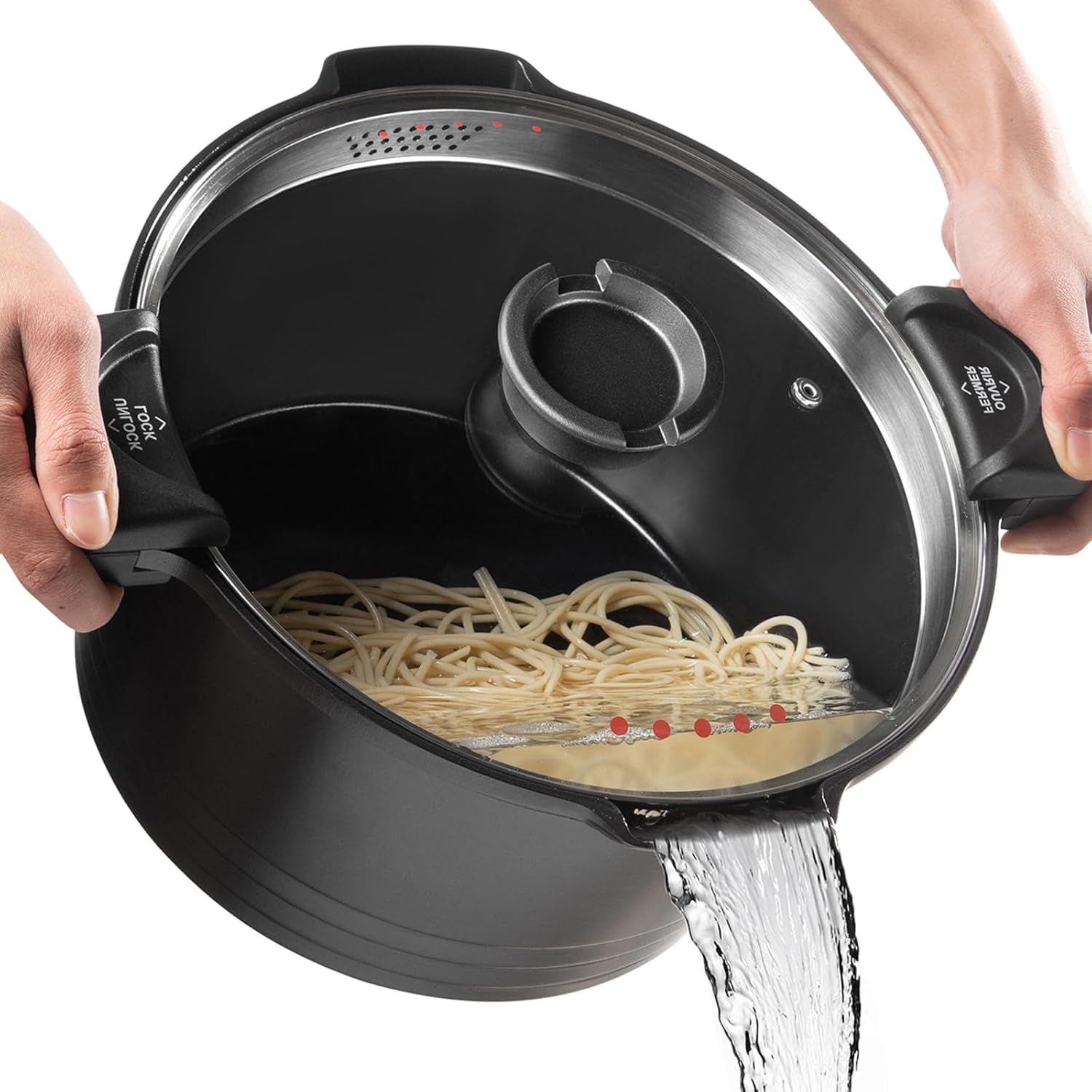
ACTIV CUISINE’s 8.5 quart pot is ideal for cooking large pasta volumes. The ceramic coating on inside and outside is PFOA and PFOS free, supporting healthier cooking. The strainer lid has two draining sizes and handles that lock in place, but ceramic coatings need gentle use to avoid chipping.
Brand: ACTIV CUISINE · Price when checked: $53.99 · Rating: 4.4 out of 5 (1673 ratings)
Pros
- Large 8.5 quart capacity for big meals
- Ceramic coating free of harmful chemicals
- Handles remain cool with ergonomic design
Cons
- Ceramic coating prone to chipping if mishandled
- Heavier pot requires sturdy hand grip
Best for multipurpose use: Eatex Pasta Pot with Strainer Lid – 5 Quart Multipurpose Stock Simmer Spaghetti

EATEX’s 5 quart pot is a versatile choice beyond pasta, suitable for soups, stews, and more. Its nonstick ceramic surface and dishwasher safety simplify cleanup. Handles are designed for comfort but still require care when pouring hot liquids.
Brand: EATEX · Price when checked: $28.89 · Rating: 4.5 out of 5 (3144 ratings)
Pros
- Nonstick ceramic interior for easy release
- Dishwasher safe
- Suitable for various cooking tasks
Cons
- Handles can still become warm
- 5 quart capacity limits large batch cooking
How to choose the right pasta pot for draining without a colander
If you frequently cook for one or two, a smaller capacity pot like the Cyrder 3 quart will save space and heat water faster. For families or batch cooking, pots with 6 to 8.5 quart capacity are better suited.
Handle safety should be a priority: choose pots with insulated or cooler-touch materials, or locking handles to hold lids securely during draining.
Nonstick or ceramic coatings ease cleaning if you use the pot for sauces or stews, but stainless steel is preferable for durability and higher-heat cooking.
Avoid pots with poorly fitting lids or narrow drain holes if you cook diverse pasta shapes; lids with multiple or wider drain options are more flexible.
If you rarely cook pasta or prefer traditional colanders, there may be little reason to invest in a specialised draining pot.
Related reading
- Best Over-the-Sink Colanders for Washing Vegetables & Food Prep
- Colander vs Strainer: Understanding the practical kitchen differences
- 8+ Best Stainless Steel Stockpots: Our Top Picks
Frequently Asked Questions
Can I drain small pasta shapes without them slipping through the strainer lid?
Yes, but it depends on the strainer lid’s hole size and pattern. Pots with fine, closely spaced drain holes better retain small pasta like macaroni or orzo, while wider slots risk losing these shapes. Some pots offer multiple strainer sizes or adjustable lids to accommodate different pasta types.
Do pots with strainer lids require special care compared to regular stockpots?
They generally require similar care, but lids with integrated strainers need to be checked for clogging and cleaned thoroughly to prevent residue build-up. Also, pots with nonstick or ceramic coatings need gentler cleaning to avoid scratching. Always dry stainless steel pots promptly to keep the finish bright.
Are strainer pots safe to use on induction cooktops?
Many modern pasta pots with stainless steel or cast aluminum bases include induction-compatible construction. For example, the MICHELANGELO 6 quart pot has an induction-compatible base. Check product specifications to confirm compatibility before purchase.

Rimi Sultana is a home cook from Bangladesh who has cooked for her family every day for the past five years and writes about it at Smart Cooks. Perpetually testing whether internet-famous recipes actually work in a regular home kitchen. Say hello on Facebook or through the contact page.