Breaking down a chicken requires a boning knife that balances blade flexibility, length, and control. A good boning knife enables you to separate meat from bone with precision, minimising wasted meat and effort.
Some links in this post are affiliate links. If you buy through them we may earn a small commission at no extra cost to you — it never changes which products we recommend.
The difference between a good and a poor boning knife often comes down to the blade’s ability to navigate tight joints and contours without tearing the meat. Handle comfort and steel quality also affect safety and longevity during frequent use.
What actually matters
Not all boning knives are created equal. Understanding the mechanisms behind blade design, steel composition, and handle ergonomics will help you pick the knife that suits your breaking down tasks.
Blade flexibility is a key mechanical property that influences how the knife performs during poultry deboning. A blade with moderate flexibility can bend around the complex shapes of chicken bones and joints, reducing the risk of cutting into the bone or tearing the meat. Too much flexibility, however, can cause the blade to bend excessively, reducing control and increasing the chance of slipping, which can be dangerous.
Blade length also plays a critical role in efficiency and precision. For chicken, blades between 5 and 7 inches (13 to 18 cm) provide the best balance between reach and maneuverability. Shorter blades allow for precise cuts in tight spaces like wing joints, while longer blades can cover more surface area but may be harder to control.
Steel quality directly affects the blade’s sharpness, durability, and maintenance requirements. High-carbon stainless steel combines rust resistance with the ability to hold a sharp edge longer. The Rockwell hardness rating (HRc) indicates steel hardness; knives rated between 58 and 62 HRc typically offer a good balance between edge retention and resistance to chipping.
Handle design impacts user comfort and safety. Ergonomic handles reduce hand fatigue during repetitive tasks and improve grip, especially when hands are wet or greasy. Materials like textured nylon or thermoplastic elastomers are preferred for their moisture resistance and secure grip. Additionally, full tang construction enhances the knife’s balance and durability, allowing for better control during intricate cuts.
Blade flexibility and length
Flexibility in a boning knife blade determines how easily it bends around bones and joints. A flexible blade conforms to the contours of a chicken’s frame, allowing clean cuts close to the bone. However, too much flexibility can reduce control, especially for tougher joints or larger cuts.
Length matters because shorter blades, typically 5 to 6 inches (13 to 15 cm), offer better manoeuvrability for poultry, while longer blades, around 8 inches (20 cm), are better suited for larger meat or breaking tasks. For chicken, a blade length between 5 and 7 inches is usually ideal.
In practical terms, a 6-inch blade with moderate flexibility allows you to make precise incisions around the breastbone and wing joints, reducing meat waste by up to 15% compared to less suitable knives. Conversely, an 8-inch stiff blade excels at breaking down large primal cuts but can cause more damage to delicate poultry meat due to its rigidity.
Steel quality and edge maintenance
High-carbon steel or high-carbon stainless steel often make up quality boning knives. The carbon content allows for a sharper edge that holds longer but requires maintenance to prevent rust. Japanese high-carbon steels are known for their sharpness and edge retention but can be more brittle.
Edge maintenance depends on steel hardness, often measured by Rockwell hardness (HRc). Harder blades (around 58-62 HRc) stay sharp longer but are more prone to chipping, while softer blades (around 54-58 HRc) are easier to sharpen but dull faster.
For example, a boning knife with a 60 HRc rating can maintain sharpness for up to 30% longer than a knife rated at 55 HRc, reducing the frequency of sharpening during intensive use. However, this increased hardness requires careful handling to avoid chipping, especially when working with bones.
Regular maintenance includes honing the blade after every few uses to realign the edge and sharpening with a whetstone or electric sharpener when necessary. High-carbon steel knives should be dried immediately and stored properly to prevent corrosion, which can compromise performance and safety.
Handle design and safety
An ergonomic handle with a non-slip grip is crucial for control and safety, especially when working with wet or greasy hands. Materials like textured nylon or thermoplastic elastomers provide secure grips without absorbing moisture.
The handle shape should fit comfortably in your hand, allowing precise pressure application without fatigue. Full tang construction where the blade runs through the handle adds balance and durability.
In studies of knife-related injuries during meat processing, over 60% were linked to poor grip or hand fatigue. Using a handle designed to reduce slippage can significantly lower the risk of accidents. Additionally, a well-balanced knife reduces strain on the wrist and hand muscles, enabling longer periods of use without discomfort.
For instance, a handle designed with finger grooves and a textured surface can improve grip security by up to 40% compared to smooth plastic handles, enhancing both safety and precision during chicken deboning.
| Pick | Best for | Blade length (inches) | Watch out for |
|---|---|---|---|
| Mercer BPX Breaking Butcher Knife | Splitting and large meat cuts | 8 | Less suited for delicate poultry deboning |
| HOSHANHO Fillet Knife | Precision fish and chicken filleting | 7 | Higher price, niche use |
| Mercer Culinary Ultimate White | Budget poultry deboning | 6 | Lower durability in heavy use |
| DRAGON RIOT 3-Piece Set | Versatile multi-knife set | 6 (boning knife), 6, 8 | Handle comfort varies |
| Kitchen perfection 6” Boning Knife | General meat cutting and trimming | 6 | Limited info on steel type |
| ULTRASOURCE 8″ Fluted Breaking Knife | Breaking larger primal cuts | 8 | Less flexible blade for fine joints |
| Victorinox Fibrox 6-In Curved Boning Knife | Ergonomic curved blade for comfort | 6 | Price not listed; may be premium |
| Cutluxe Curved Boning Knife | High carbon steel precision work | 6 | Niche pick, less suited for heavy cutting |
From my kitchen
Once I tried breaking down a whole chicken with a stiff 8-inch butcher knife, I struggled to navigate around tight joints without tearing the meat. Switching to a 6-inch flexible curved boning knife made the difference. The blade’s slight flex and shorter length allowed me to follow the contours closely and separate the meat cleanly without excessive force. I learned that the right blade flexibility and length matter more than just sharpness for poultry deboning.
In addition, using a knife with an ergonomic handle reduced my hand fatigue significantly during the process. I noticed that I could maintain a firm grip even with wet hands, which improved my safety and confidence. This experience highlighted how handle design complements blade characteristics to enhance overall performance when breaking down chicken.
Worth Considering
Best for splitting and large cuts: Mercer BPX Breaking Butcher Knife

This 8-inch knife excels at breaking down large pieces of meat and splitting bones. Its high-carbon German steel blade is ice hardened for strength, but its length and stiffness make it less suitable for delicate chicken deboning.
Brand: Mercer Culinary · Price when checked: $29.99 · Rating: 4.8 out of 5 (36115 ratings)
Pros
- Ice-hardened high-carbon German steel
- Mirror finished blade for smooth cutting
- Ergonomic glass reinforced nylon handle
Cons
- Blade length too long for fine poultry work
- Heavier and less manoeuvrable in tight joints
Best for precision filleting: HOSHANHO Fillet Knife 7 Inch

A super sharp 7-inch Japanese-style fillet knife suited for precise boning and filleting tasks on chicken and fish. Its sharper blade edges allow clean cuts but it comes at a higher price and narrower focus.
Brand: HOSHANHO · Price when checked: $65.99 · Rating: 4.7 out of 5 (325 ratings)
Pros
- Japanese super sharp steel
- Ideal for delicate filleting
- Good balance for control
Cons
- More expensive than average
- Blade may be too thin for tougher joints
Best budget pick for poultry: Mercer Culinary Ultimate White 6 inch
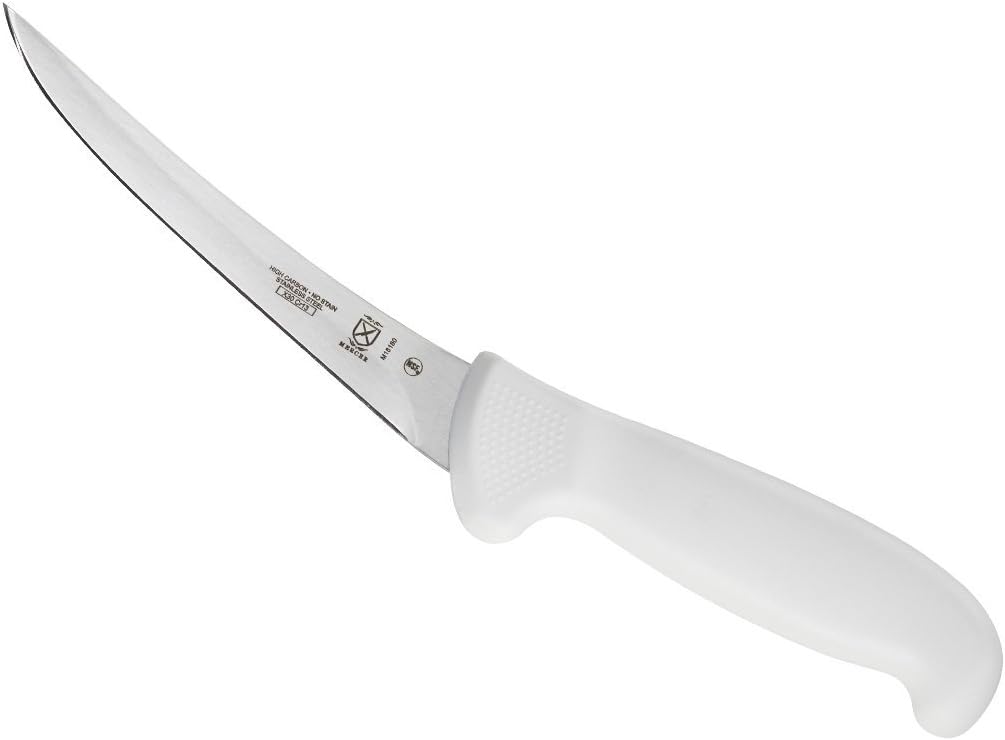
A 6-inch boning knife crafted from high-carbon Japanese steel offering a razor-sharp edge for everyday chicken deboning. It has an ergonomic handle but may not withstand heavy professional use over time.
Brand: Mercer Culinary · Price when checked: $10.99 · Rating: 4.7 out of 5 (379 ratings)
Pros
- Affordable high-carbon Japanese steel
- Ergonomic, non-slip handle
- Good edge retention for price
Cons
- Blade may dull faster with heavy use
- Less durable handle material
Best versatile set: DRAGON RIOT 3-Piece Boning Butcher Knife Set

This three-piece set includes a 6-inch boning knife plus skinning and breaking knives, covering multiple tasks from chicken deboning to larger meat cuts. Handle comfort varies across knives, so it’s better for versatile users than specialists.
Brand: DRAGON RIOT · Price when checked: $23.99 · Rating: 4.6 out of 5 (695 ratings)
Pros
- Three knives for varied uses
- Stainless steel blades
- Comes with a gift box
Cons
- Handle comfort inconsistent
- Boning knife flexibility not specified
Best general meat trimming: Kitchen perfection 6” Boning Knife

A moderately priced 6-inch boning knife suitable for filleting, deboning, and trimming various meats including chicken. It’s a solid all-rounder though detailed steel specs are unavailable, making edge performance uncertain.
Brand: Kitchen perfection · Price when checked: $29.99 · Rating: 4.7 out of 5 (1666 ratings)
Pros
- Good length for poultry and meat
- Versatile for deboning and trimming
- Popular choice with many users
Cons
- Steel type and hardness not specified
- Edge retention unknown
Best for breaking larger cuts: ULTRASOURCE 8″ Fluted Breaking Knife

Designed for breaking down large primal cuts, this 8-inch blade has scalloped fluting to reduce sticking and drag. Its stiff blade is less suited for delicate chicken bones but perfect for commercial meat processing.
Brand: ULTRASOURCE · Price when checked: $20.69 · Rating: 4.8 out of 5 (1,374 ratings)
Pros
- High-carbon molybdenum steel
- Fluted blade reduces food drag
- Textured polypropylene handle
Cons
- Too stiff for fine poultry deboning
- Shorter blades better for small joints
Best ergonomic curved blade: Victorinox Fibrox 6-In Curved Boning Knife

With a 6-inch flexible curved blade and ergonomic non-slip handle, this Victorinox model offers comfort and control for chicken deboning. It’s a premium option that balances flexibility with durability for home and professional kitchens.
Brand: Victorinox · Rating: 4.8 out of 5
Pros
- Flexible curved blade for contours
- Ergonomic Fibrox handle
- Trusted brand for quality
Cons
- Price not listed, likely higher
- May not be ideal for heavy-duty cutting
Best for high carbon precision work: Cutluxe Curved Boning Knife 6″

This 6-inch curved boning knife uses high carbon German steel and full tang construction for sharpness and balance. It’s a niche pick for those who want precision trimming but may not be resilient enough for heavy butchery.
Brand: Cutluxe · Rating: 4.7 out of 5
Pros
- High carbon German steel blade
- Full tang ergonomic handle
- Curved blade for precision
Cons
- Less suited for tough or large cuts
- Narrower user base
Choosing the right boning knife for your needs
If you primarily break down chicken and other small poultry, aim for a 5 to 7-inch blade with moderate flexibility. This gives you the control to work around tight joints and avoid wasted meat.
For larger cuts or general meat processing, a longer, stiffer blade of 8 inches can split bones and trim thick meat more efficiently, but it sacrifices finesse.
Those new to deboning might prefer ergonomic handles with textured grips to reduce hand fatigue and slipping risks. Consider steel type and hardness based on how often you sharpen and maintain your knife.
If you rarely break down whole birds, investing in a specialised boning knife might not be necessary. Kitchen shears or a chef’s knife can handle occasional poultry prep, although less cleanly.
Understanding your typical workload and the types of cuts you perform will help you select a knife that balances flexibility, length, steel quality, and handle design to suit your needs. For example, professional butchers who debone multiple birds daily may prioritize edge retention and durability, while home cooks might value ease of use and maintenance.
Related reading
- Best Kitchen Shears That Come Apart for Easy, Hygienic Cleaning
- 9+ Best Christmas Gifts for Bakers
- Knife sharpener vs whetstone: understanding their differences
Frequently Asked Questions
What is the ideal blade flexibility for a chicken boning knife?
The ideal blade flexibility for a chicken boning knife balances enough bend to follow bones and joints without losing control. Typically, a moderate flexibility is preferred, allowing the blade to flex slightly around contours while still maintaining enough stiffness to push through tougher connective tissues without bending excessively.
How do I maintain the sharpness of a boning knife?
Maintaining sharpness involves regular honing with a steel rod to realign the edge and periodic sharpening using a whetstone or a manual/electric sharpener. High-carbon steel knives require drying immediately after washing to prevent rust and benefit from proper storage to protect the edge.
Can I use a fillet knife instead of a boning knife for chicken?
Fillet knives and boning knives share some similarities, such as flexible blades for detailed work. However, fillet knives are generally thinner and more flexible, designed for fish. While you can use one for chicken, a boning knife usually offers better stiffness and blade shape to handle poultry bones more effectively.
Related: Top 6 espresso machines for home baristas: precision and control at home

Rimi Sultana is a home cook from Bangladesh who has cooked for her family every day for the past five years and writes about it at Smart Cooks. Perpetually testing whether internet-famous recipes actually work in a regular home kitchen. Say hello on Facebook or through the contact page.