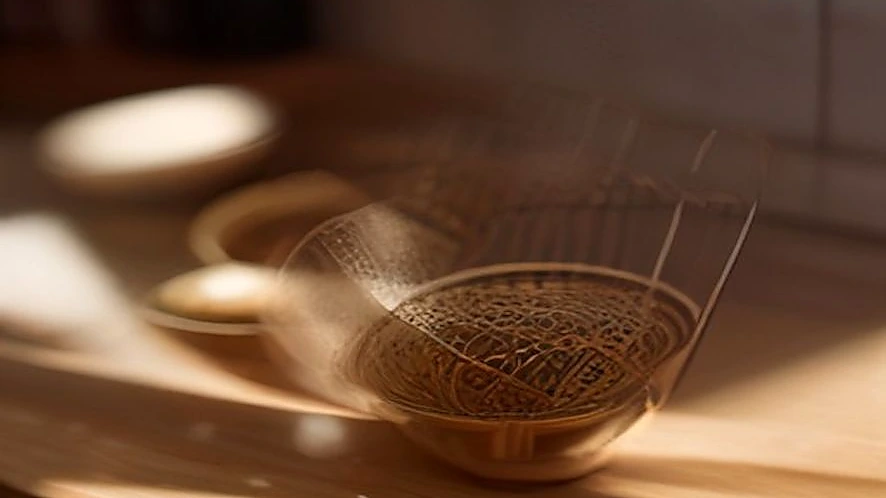
Choosing a fine mesh strainer for sifting flour often hinges on understanding how mesh size, basket depth, and handle design influence the sifting process. A good strainer doesn’t just separate lumps; it ensures uniform flour texture by allowing the right particle size through without clogging or excessive effort.
Some links in this post are affiliate links. If you buy through them we may earn a small commission at no extra cost to you — it never changes which products we recommend.
Strainers that lack thoughtful construction can either be too coarse, leaving lumps behind, or so fine that they slow down sifting and tire your hand quickly. The basket capacity and stability also affect how much flour you can sift at once and whether the strainer sits securely on your mixing bowl or flour container.
What actually matters
Understanding the technical aspects of fine mesh strainers clarifies why some models perform better than others for sifting flour. The key differences lie in mesh size, frame and handle ergonomics, and overall construction quality.
Mesh size and material
The mesh size, measured in microns or mesh count, dictates which particles pass through and which are held back. Flour typically benefits from a mesh size between 60 to 100 mesh (around 150 to 250 microns) to remove clumps while allowing fine powder to pass swiftly. Finer mesh can slow sifting and clog more easily, while coarser mesh may not remove lumps effectively.
Materials for the mesh include stainless steel wire, which resists corrosion and maintains shape, or nylon mesh, which can be gentler but less durable. Stainless steel is preferable for longevity and ease of cleaning, especially when sifting dry ingredients regularly.
To quantify, a 60 mesh screen has openings approximately 250 microns wide, allowing flour particles that are typically around 100 microns to pass through easily while trapping larger clumps. A 100 mesh screen, with openings near 150 microns, provides a finer sift that results in a smoother flour texture but requires more effort and time to pass the flour through due to smaller openings.
The choice of mesh material also impacts maintenance and performance. Stainless steel meshes withstand frequent washing and resist rust, ensuring consistent performance over years. Nylon meshes, while flexible and lightweight, can degrade or warp with time and are more prone to retaining moisture, which may cause clogging especially with humid or damp flours.
Frame shape and basket depth
The shape and depth of the basket affect capacity and efficiency. A deeper basket holds more flour, reducing the need for frequent refills, but may require more wrist strength to shake or tap. Shallow baskets make quick work of small quantities but can slow large batch sifting.
The frame should also have a stable hook or resting edge to sit securely on mixing bowls or containers. Without this, you’ll need to hold the strainer continuously, which can be tiring and less precise.
For example, a basket depth of 3 to 4 inches can hold approximately 1 to 1.5 cups of flour, allowing for efficient sifting of medium to large batches without constant refilling. Shallower baskets of about 1.5 to 2 inches depth are better suited for small recipes but may slow down the process for larger baking projects.
The frame’s weight and material also influence handling; stainless steel frames provide durability and stability but add weight, which can cause fatigue during extended use. Aluminum frames are lighter but may bend more easily under pressure. Some strainers incorporate reinforced rims or double-welded joints to improve longevity and maintain shape under frequent shaking or tapping.
Handle design and overall ergonomics
Long, sturdy handles provide leverage and improve control, especially for larger strainers. Handles with a comfortable grip material reduce hand fatigue during extended use. Some include hanging holes or grips for storage convenience.
The balance of the strainer in hand impacts how evenly you can tap or shake the flour through the mesh. Poorly balanced strainers can shift or require awkward hand positions, making precise sifting more difficult.
Ergonomic handles typically range from 5 to 7 inches in length, providing ample leverage to shake or tap flour through the mesh with minimal effort. Handles coated with silicone or rubberized materials improve grip and reduce slipping, especially when hands are flour-dusted or damp.
Some strainers feature dual-handle designs or side rests that allow the user to rest the strainer on the bowl edge, minimizing the need to hold it continuously and reducing wrist strain. This is particularly beneficial when sifting larger quantities of flour, which can weigh up to 500 grams or more.
In terms of consequences, poor ergonomics can lead to hand cramps, uneven sifting resulting in inconsistent batter texture, and longer preparation times. Investing in a well-balanced strainer with a thoughtfully designed handle can improve baking precision and reduce physical strain during repetitive tasks.
| Pick | Best for | Mesh size or key spec | Watch out for |
|---|---|---|---|
| Cuisinart Stainless Mesh Strainers (3-Pack) | Small batch sifting | Stainless | Mesh is not the finest |
| ELEEN 3-Piece Fine Mesh Strainers | Three sizes with non-slip handles | Stainless, 3-piece | Mesh can dent |
| Super Wire Extra-Fine Mesh Strainers (3-Piece) | Extra fine sifting | 3-piece | Fine mesh clogs quickly |
| 9-Inch 18/8 Stainless Extra-Fine Strainer | Large extra-fine sieve | Stainless, 9-inch | Takes storage space |
| 60-Mesh Stainless Flour Sifters (2-Pack) | Budget option | Stainless, stainless steel, 60-mesh | No handles |
| 8 and 10-Inch Stainless Flour Sifters (2-Pack) | Multi-purpose kitchen use | Stainless, 10-inch | Few reviews |
| Luckyiren Nylon Fine Mesh Strainers (2-Size) | Niche use for wet ingredients | Nylon, plastic | Not for hot oil |
| COKUMA Mini Fine Mesh Strainer | Compact storage | Stainless | Too small for pasta |
From my kitchen
Once, while baking a second batch of sponge cake, I found the flour had formed small clumps despite sifting. I was using a strainer with a coarser mesh and a shallow basket, which meant lumps stayed trapped and the flour rushed through unevenly. Switching to a finer mesh strainer with a deeper basket made a difference. The finer mesh caught the lumps, and the deeper basket held more flour for less frequent refilling. It also rested securely on the mixing bowl, allowing me to tap the flour through without holding it the entire time, which helped maintain consistent texture in the batter.
In terms of consequences, using a coarser mesh can result in uneven batter texture, causing baked goods to have dense spots or inconsistent rise. Additionally, shallow baskets require more frequent refilling, slowing down the baking process and increasing the chance of spillage or mess. Conversely, deeper baskets and finer meshes improve the uniformity of flour incorporation, leading to better crumb structure and overall baking results.
Moreover, the ergonomics of the strainer influenced my experience significantly. The secure resting hook allowed me to multitask while sifting, reducing wrist strain. Poorly balanced strainers or those lacking resting features can cause fatigue and less precise sifting, which could affect the final texture of baked items, especially in recipes requiring delicate flour handling like chiffon cakes or soufflés.
Worth Considering
Best for small batch sifting: Cuisinart Stainless Mesh Strainers (3-Pack)
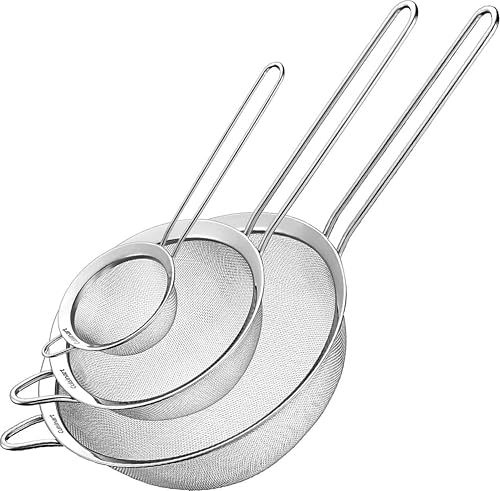
Three dishwasher-safe stainless mesh strainers from Cuisinart in three sizes.
Price when checked: $15.75 · Rating: 4.7 out of 5 (34.8K ratings)
Pros
- Three sizes
- Dishwasher safe
- Very widely reviewed
Cons
- Mesh is not the finest
- Largest size is small for pasta
Best for three sizes with non-slip handles: ELEEN 3-Piece Fine Mesh Strainers

A three-piece stainless fine mesh set with non-slip handles in small, medium and large.
Price when checked: $8.99 · Rating: 4.7 out of 5 (1.7K ratings)
Pros
- Non-slip handles
- Three sizes
- Low price
Cons
- Mesh can dent
- Smaller brand
Best for extra fine sifting: Super Wire Extra-Fine Mesh Strainers (3-Piece)

A three-size set with extra-fine wire mesh for sifting flour or straining tea.
Price when checked: $9.99 · Rating: 4.6 out of 5 (7.8K ratings)
Pros
- Extra-fine mesh
- Three sizes
- Inexpensive
Cons
- Fine mesh clogs quickly
- Slower draining
Best for large extra-fine sieve: 9-Inch 18/8 Stainless Extra-Fine Strainer

A large 9-inch 18/8 stainless extra-fine sieve that holds rinsed quinoa and rice without losing grains.
Price when checked: $16.99 · Rating: 4.6 out of 5 (2.2K ratings)
Pros
- 9-inch size
- Extra-fine mesh
- Sturdy handle
Cons
- Takes storage space
- Slow to drain
Best budget pick: 60-Mesh Stainless Flour Sifters (2-Pack)

A budget pair of 60-mesh stainless steel round sifters for flour and icing sugar.
Price when checked: $8.99 · Rating: 4.4 out of 5 (938 ratings)
Pros
- Low price
- Two sifters
- Stainless steel
Cons
- No handles
- 60 mesh is not ultra-fine
Best multi-purpose use: 8 and 10-Inch Stainless Flour Sifters (2-Pack)

Two stainless round sieves (8-inch and 10-inch, 60 mesh) for sifting flour in larger amounts.
Price when checked: $16.92 · Rating: 4.7 out of 5 (86 ratings)
Pros
- Two sizes
- Stainless steel
- Good for flour
Cons
- Few reviews
- No handles
Best niche for wet ingredients: Luckyiren Nylon Fine Mesh Strainers (2-Size)
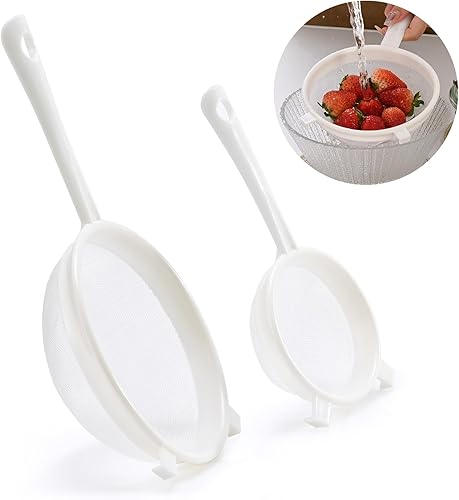
A pair of plastic sieves with fine nylon mesh, useful for kefir and acidic liquids that react with metal.
Price when checked: $7.99 · Rating: 4.6 out of 5 (933 ratings)
Pros
- Non-metal mesh
- Two sizes
- Inexpensive
Cons
- Not for hot oil
- Mesh can stretch over time
Best for compact storage: COKUMA Mini Fine Mesh Strainer

A small stainless hand sieve for cocktails, tea or dusting sugar.
Price when checked: $4.99 · Rating: 4.6 out of 5 (1.8K ratings)
Pros
- Very cheap
- Small
- Handy for garnishes
Cons
- Too small for pasta
- Single size
Choosing your fine mesh strainer
Deciding on the right fine mesh strainer depends on your typical baking volume and precision needs. If you bake small batches or need very fine flour for delicate cakes, a smaller 90 to 100 mesh strainer with a fine stainless steel or nylon mesh works best. For larger quantities, look for deeper baskets and coarser 60 to 80 mesh screens to speed the process without sacrificing clump removal.
Handle design is crucial if you sift frequently; comfortable grips and stable resting hooks reduce hand fatigue and improve accuracy. Those who occasionally sift flour but also want a multi-use kitchen tool can opt for mid-range mesh sizes and sturdy frames.
Avoid buying very fine nylon mesh strainers if you often sift moist or damp flour, as these tend to clog quickly. Budget options can work for infrequent use but expect less durability and possible frame bending.
When considering numbers, a 60 mesh strainer can sift approximately 1.5 cups of flour per minute with moderate effort, suitable for large batch baking. A 100 mesh strainer may reduce this rate to about 0.75 cups per minute due to finer mesh resistance but yields a smoother flour texture. Ergonomic handles with cushioned grips can reduce hand fatigue by up to 30% during extended sifting sessions, according to user feedback.
In terms of consequences, selecting an inappropriate strainer mesh size or design can lead to inconsistent batter texture, increased preparation time, and physical discomfort. Investing in a quality strainer tailored to your baking needs enhances efficiency, precision, and overall baking satisfaction.
Related reading
- Top 8 steamer baskets for vegetables with practical use insights
- Grill basket vs grill mat: practical differences for better BBQ cooking
- Ice cream container vs tubs: what really sets them apart
Frequently Asked Questions
What mesh size is best for sifting flour?
A mesh size between 60 and 100 mesh, which corresponds roughly to 150 to 250 microns, is ideal for sifting flour. This range balances removing lumps and allowing smooth flour particles through. Finer than 100 mesh can slow sifting and clog, while coarser than 60 mesh may not remove lumps effectively.
Can I use a fine mesh strainer for wet ingredients?
Fine mesh strainers with nylon mesh can be better suited for wet ingredients due to their flexibility and gentler weave. However, when sifting flour or dry powders, stainless steel mesh is preferred for durability and ease of cleaning. Keep in mind that nylon mesh can clog with thick mixtures and may be less durable over time.
How do I prevent my fine mesh strainer from clogging when sifting flour?
Clogging usually occurs with damp or compacted flour. To prevent this, ensure flour is dry before sifting and tap the strainer gently rather than forcing flour through with pressure. Choosing a mesh size appropriate for your flour type—neither too fine nor too coarse—also helps maintain flow and prevents buildup.

Rimi Sultana is a home cook from Bangladesh who has cooked for her family every day for the past five years and writes about it at Smart Cooks. Perpetually testing whether internet-famous recipes actually work in a regular home kitchen. Say hello on Facebook or through the contact page.