Chef knives and cleavers are often confused because both cut food, but they differ fundamentally in design, weight distribution, and intended use. The chief distinction lies in the shape and thickness of their blades, which determine how they perform tasks like slicing, chopping, and butchering.
Some links in this post are affiliate links. If you buy through them we may earn a small commission at no extra cost to you — it never changes which products we recommend.
Understanding these differences helps you select the right tool for your cooking style. While a chef knife offers versatility for detailed prep work, a cleaver is built to handle tougher jobs that require more force. This comparison breaks down what truly sets them apart.
Where each one wins
Chef knives excel at tasks that require precision and finesse. Their curved blades enable a smooth rocking motion, making them ideal for slicing vegetables thinly, dicing herbs finely, and preparing boneless meats with control. The balanced weight reduces wrist strain during prolonged prep work.
Cleavers are the go-to for heavy chopping jobs. Their thick, heavy blades and front-weighted design let you chop through bones, hard squash, or large pieces of meat with fewer strikes. They can double as a tenderiser and are less prone to damage when used on cutting boards resistant to wear.
For everyday cooking involving varied ingredients, most home cooks benefit more from a chef knife. Cleavers suit those who frequently butcher whole animals or need a tool that can handle coarse chopping without blade damage.
Delving deeper into the mechanics, the chef knife’s curved blade allows for a rocking motion that maximizes cutting efficiency while minimizing effort. This design facilitates continuous, fluid chopping motions that are gentle on the wrist and enable precise cuts. The blade’s thinness, typically 2-3 mm at the spine, allows it to slice through soft ingredients cleanly without crushing them, preserving texture and flavor.
In contrast, the cleaver’s broad, rectangular blade is designed for impact and power. Its thickness, often ranging from 4 to 6 mm at the spine, provides the strength necessary to withstand repeated heavy chopping without bending or dulling quickly. The front-heavy weight distribution enhances the momentum behind each chop, making it easier to break through dense materials like bone or thick-skinned squash with fewer strikes. This power comes at the cost of finesse, as the cleaver is less effective for delicate slicing or detailed work.
The consequences of using the wrong tool can be significant. Using a chef knife to chop bones or hard vegetables risks bending or chipping the blade, which can compromise its sharpness and longevity. Conversely, attempting to use a cleaver for fine slicing can result in imprecise cuts, food damage, and increased user fatigue due to its weight and lack of balance for detailed tasks.
Understanding these functional distinctions helps cooks optimize their workflow and maintain their knives better. For example, cleavers require less frequent sharpening due to their thicker edges but must be used on appropriate cutting surfaces to avoid premature dulling. Chef knives demand more regular honing and sharpening to maintain their fine edge but reward users with unparalleled versatility in the kitchen.
Practical experiences and considerations
Once I tried cutting through a particularly dense butternut squash with a chef knife. The blade bent slightly under the force, slowing progress and risking damage. Switching to a cleaver, I used a few solid chops to break it down cleanly without straining my wrist or the blade. That moment showed me the limits of the chef knife’s thinner blade and why cleavers remain indispensable for heavy-duty cutting.
This personal experience highlights the importance of matching the tool to the task. The chef knife’s thin, sharp blade excels at precision but is vulnerable to damage when forced beyond its design limits. The cleaver’s robust construction and weight distribution make it the ideal choice for tough jobs, but its bulk and heft make it less suitable for delicate prep work.
In terms of numbers, a typical chef knife weighs between 150 to 250 grams, striking a balance between control and power. Cleavers, on the other hand, can weigh from 400 grams up to 1 kilogram or more, depending on size and material, emphasizing their role as chopping tools rather than slicing instruments.
The ergonomic implications are also notable. Using a cleaver for fine tasks can lead to hand fatigue and less precise cuts due to its heavier weight and less balanced design. Meanwhile, the chef knife’s lighter, balanced feel enables prolonged use without discomfort, making it indispensable for daily kitchen tasks.
Moreover, the blade angles contribute to performance differences. Chef knives typically feature a cutting angle of 15-20 degrees per side, allowing for a sharper edge that slices cleanly through soft ingredients. Cleavers have a wider angle of 20-25 degrees per side, trading some sharpness for edge durability to withstand repeated impact against hard materials.
In summary, the chef knife and cleaver serve complementary roles in the kitchen. Understanding their mechanical differences, weight, blade geometry, and ergonomic impacts helps cooks choose the right tool, avoid damage, and improve efficiency and safety during food preparation.
| Attribute | Chef knife | Cleaver |
|---|---|---|
| Blade shape | Narrow, tapered, curved edge | Broad, rectangular, flat edge |
| Blade length | Typically 7-8 inches (18-20 cm) | Typically 7 inches or more (18+ cm) |
| Blade thickness | Thin, around 2-3 mm at spine | Thicker, around 4-6 mm at spine |
| Weight distribution | Balanced along handle and blade | Front-heavy for chopping power |
| Cutting angle | 15-20° per side for precision | 20-25° per side for durability |
| Primary use | Slicing, dicing, chopping vegetables and boneless meats | Chopping bones, tough vegetables, heavy-duty butchery |
From My Kitchen
Once I tried cutting through a particularly dense butternut squash with a chef knife. The blade bent slightly under the force, slowing progress and risking damage. Switching to a cleaver, I used a few solid chops to break it down cleanly without straining my wrist or the blade. That moment showed me the limits of the chef knife’s thinner blade and why cleavers remain indispensable for heavy-duty cutting.
Worth Considering
Best for versatile chopping and slicing: Sunnecko Nakiri Knife – 7″ Chef Knife

This knife offers a 7-inch blade designed for vegetable chopping and general kitchen prep with a shape that mimics a chef knife’s precision. It suits cooks who want a multi-use blade without the bulk of a cleaver. Not ideal for breaking down bones or very hard materials.
Brand: Sunnecko · Price when checked: $24.99 · Rating: 4.8 out of 5 (413 ratings)
Pros
- Sharp, thin blade suitable for fine slicing
- Balanced weight for control and less fatigue
- Comfortable handle for extended use
Cons
- Blade too thin for heavy chopping tasks
- Not suitable for cutting through bones
Best for heavy-duty chopping: Mueller 7-Inch Meat Cleaver Butcher Knife
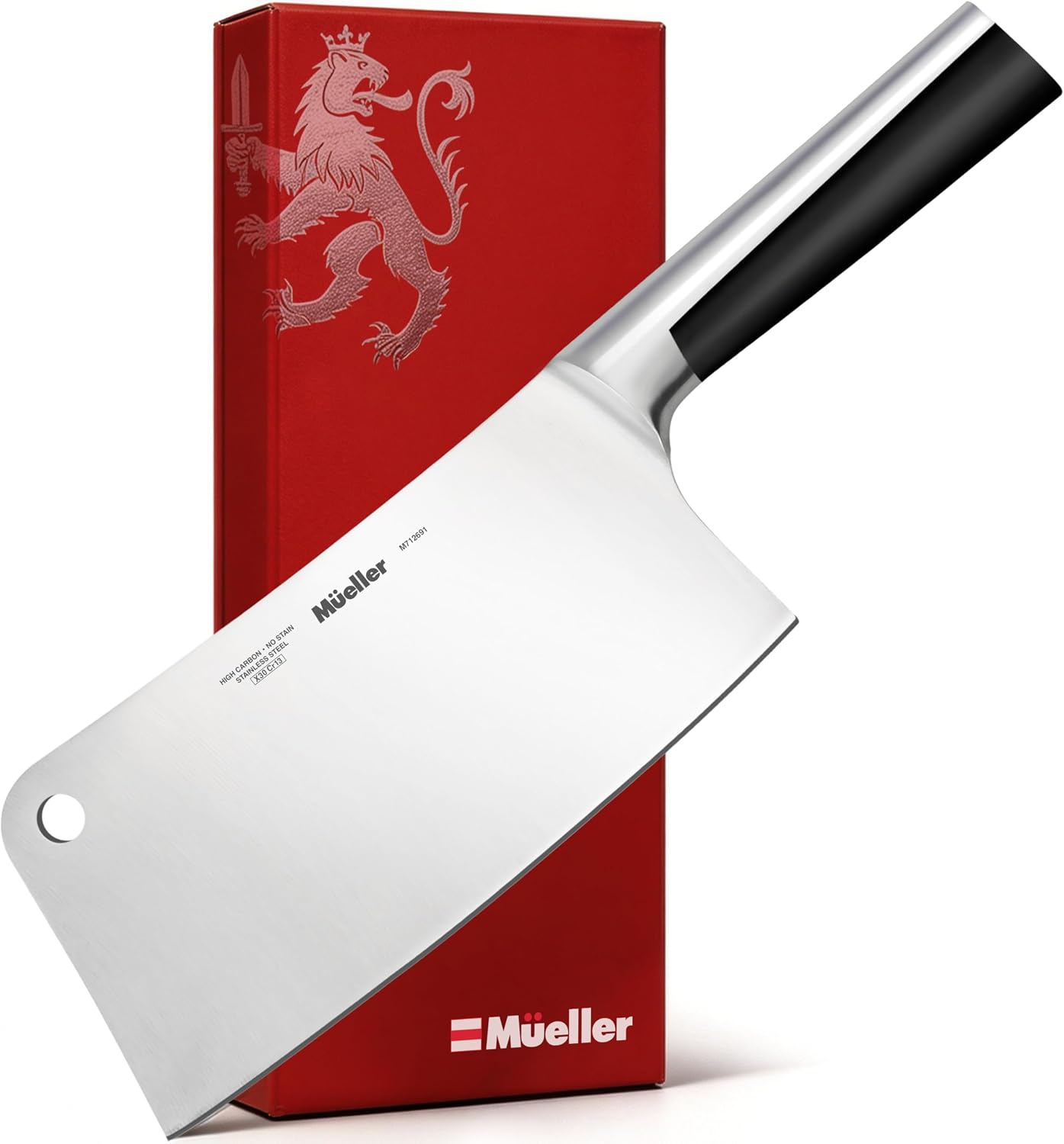
This cleaver features a broad, thick blade made from German high carbon steel, designed to handle bones and tough cuts. Ideal for butchers or cooks who need a robust tool for breaking down large cuts of meat. Less useful for delicate slicing or precise vegetable prep.
Brand: Mueller · Price when checked: $19.99 · Rating: 4.7 out of 5 (36115 ratings)
Pros
- Heavy, front-weighted blade delivers chopping power
- Durable high carbon steel resists chipping
- Wide blade surface can also crush garlic or ginger
Cons
- Heavier and less manoeuvrable for fine slicing
- Not designed for detailed cutting tasks
When neither a chef knife nor a cleaver is the right choice
Certain kitchen tasks call for specialised knives beyond the scope of either a chef knife or a cleaver. For example, filleting delicate fish requires a flexible fillet knife with a narrow blade that can glide along bones without tearing flesh. Similarly, a serrated bread knife is necessary for slicing crusty loaves cleanly without crushing them.
Using a chef knife or cleaver for these tasks results in frustration, poor results, and possible damage to the blade edges. Knowing when to reach for purpose-built tools will save time and preserve your knives’ longevity.
Related reading
- Nakiri Knife: The Ultimate Japanese Vegetable Knife Explained
- Nakiri knife vs usuba knife: detailed differences and uses
- Knife Sharpener: Manual vs Electric
Frequently Asked Questions
Can a chef knife replace a cleaver in most home kitchens?
For many home cooks, a chef knife covers the majority of food prep tasks, including chopping vegetables and slicing boneless meats. However, it cannot replace a cleaver when heavy chopping through bones or thick squash is involved. If you rarely handle tough cuts, a chef knife alone might suffice.
How do I maintain a cleaver differently from a chef knife?
Cleavers often have thicker blades and are used for heavier work, so they tolerate less frequent sharpening. However, their edges are typically ground wider to withstand impact, which can dull with improper use or cutting on hard surfaces. Both knives benefit from regular honing and use of a sharpening stone or manual sharpener designed for their edge angle.
Is the weight of a cleaver a disadvantage for everyday cooking?
Cleavers are heavier and less balanced for delicate tasks, which can cause user fatigue if used extensively for slicing or dicing. For everyday cooking involving varied ingredients and fine cuts, a lighter, balanced chef knife is more ergonomic and efficient.


Rimi Sultana is a home cook from Bangladesh who has cooked for her family every day for the past five years and writes about it at Smart Cooks. Perpetually testing whether internet-famous recipes actually work in a regular home kitchen. Say hello on Facebook or through the contact page.