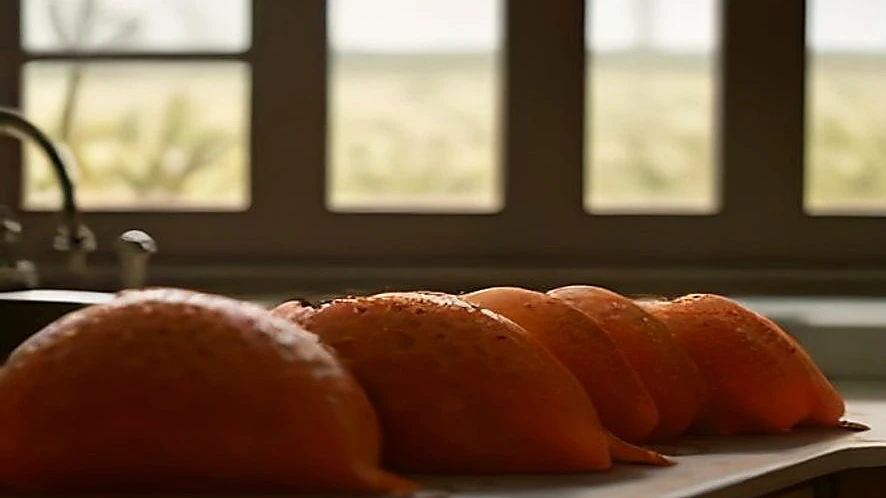
A good food dehydrator for fruit leather needs to manage temperature precisely and distribute heat evenly across flat trays to avoid sticky or unevenly dried sheets. Fruit leather requires a consistent drying environment typically between 95°F and 160°F (35°C and 71°C) to remove moisture without burning or drying too quickly, which affects texture and flavour.
Some links in this post are affiliate links. If you buy through them we may earn a small commission at no extra cost to you — it never changes which products we recommend.
Many dehydrators are designed primarily for jerky or herbs, which have different drying requirements and tray designs. The deciding quality in this category is how well the machine handles thin, wet liquid spreads, including the availability of solid or mesh fruit leather trays that prevent sagging or pooling during drying.
What actually matters
When selecting a dehydrator specifically for fruit leather, three technical aspects stand out: heat distribution, temperature control, and tray design. These factors determine drying uniformity and final product quality.
Understanding the precise mechanisms behind these factors helps in making an informed choice. Heat distribution depends largely on the type and placement of the heating element and fan. A rear-mounted fan combined with a horizontal heating element creates a consistent airflow that evenly removes moisture from all trays. This uniformity prevents the common problem of some areas drying faster than others, which can lead to textural inconsistencies such as overly brittle or under-dried patches.
Temperature control is critical because fruit leather is sensitive to both under- and over-drying. Maintaining temperatures within the ideal range of 95°F to 160°F (35°C to 71°C) ensures the fruit leather dries thoroughly without caramelizing sugars or toughening the texture. Digital thermostats that allow fine increments (1°F or 1°C) offer precise control, reducing the risk of overheating. In contrast, mechanical dials often fluctuate, which can extend drying times or damage the product.
Tray design is equally important. Fruit leather is spread as a thin liquid layer, so trays must prevent sagging or dripping. Solid trays or very fine mesh screens are necessary to support the puree evenly. Stainless steel trays are preferred because they resist staining and warping better than plastic, which can absorb flavors and degrade with prolonged use. Additionally, removable trays facilitate easier cleaning, crucial when dealing with sticky fruit sugars.
Heat distribution and airflow
Fruit leather dries best when warm air flows evenly from the heat source to all trays. Rear-mounted fans push air horizontally across stacked trays, maintaining consistent temperature and moisture removal. Top or bottom-only heating elements without a fan can cause hotspots or uneven drying, leading to chewy or overly brittle patches.
In contrast, some budget dehydrators use vertical airflow, which can cause moisture to drip onto lower trays and uneven drying. For fruit leather, horizontal airflow with a rear fan is preferred.
Quantitatively, a rear fan typically circulates air at speeds around 100-150 cubic feet per minute (CFM), which ensures rapid moisture removal without drying the surface too quickly. This balance prevents case hardening, a condition where the outer layer dries too fast, trapping moisture inside and causing spoilage.
The consequence of poor airflow includes longer drying times—sometimes doubling the expected 8 to 12 hours—and inconsistent texture, which can ruin the delicate chewiness characteristic of good fruit leather.
Precise temperature control
Fruit leather requires temperatures generally between 95°F and 160°F (35°C to 71°C). Too low and drying can take excessively long, inviting spoilage; too high and sugars caramelize or the leather hardens. Digital thermostats with increments of 1°F or 1°C allow fine adjustments. Mechanical dials often lack this accuracy and can fluctuate during operation.
Timers up to 48 hours are useful since fruit leather drying can exceed 8–12 hours depending on thickness and fruit water content.
For example, drying a 1/8-inch thick layer of apple puree at 135°F (57°C) typically takes about 10 hours, whereas thicker layers or fruit with higher water content like watermelon can require up to 15 hours. Deviations in temperature of even 5°F can extend drying time by 20-30%, increasing energy costs and risk of microbial growth.
Accurate temperature control also preserves the nutritional quality and flavor profile of the fruit leather. Excessive heat can degrade vitamin C and cause Maillard reactions that alter taste and color.
Tray design and materials
Fruit leather is spread as a thin liquid layer that needs a non-absorbent, flat drying surface. Solid trays or fine mesh screens keep the leather from dripping through or pooling. Trays made of stainless steel resist staining and warping better than plastic, which can absorb flavours and degrade over time.
Removable trays simplify cleaning, which is important given sticky fruit sugars. Some models include dedicated fruit leather trays or accessories designed specifically to hold liquid spreads.
A typical fruit leather tray measures approximately 12 x 12 inches, providing a drying surface area of about 144 square inches per tray. More trays mean larger batch sizes; for example, a dehydrator with 10 trays can dry up to 1,440 square inches of fruit leather at once, equivalent to roughly 10 standard 6×8 inch fruit leather sheets.
Materials also influence drying performance. Stainless steel trays conduct heat evenly and do not react with acidic fruit purees, maintaining flavor integrity. Silicone mats can be used on solid trays to prevent sticking, but they may slightly increase drying time due to reduced airflow.
Consequences of poor tray design include sagging fruit leather that pools and dries unevenly, leading to tacky textures and difficulty peeling off the trays, which can waste product and increase cleaning time.
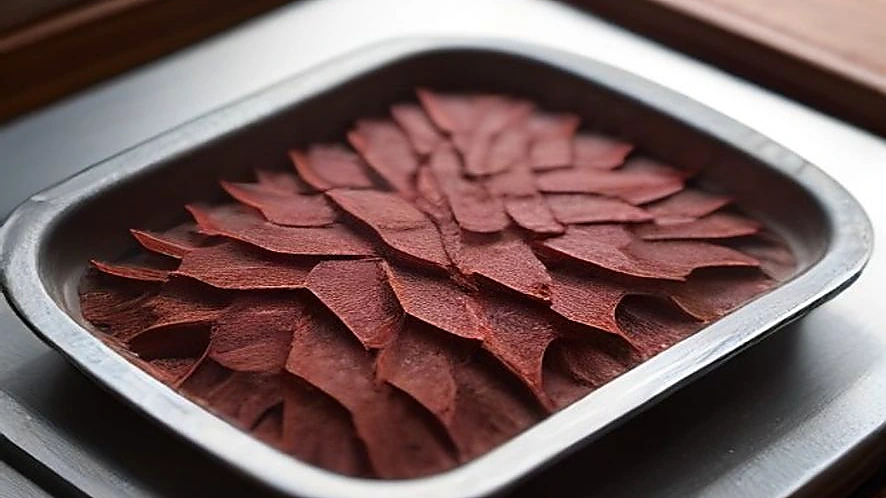
Choosing the right food dehydrator for fruit leather
If you plan to make fruit leather regularly or in large quantities, prioritize dehydrators with multiple stainless steel solid trays or dedicated fruit leather trays to avoid dripping and ensure uniform drying. Digital temperature control with fine increments is crucial because fruit leather requires a narrow drying temperature range.
Casual users who want occasional fruit leather might prefer budget options with included fruit leather accessories, understanding that plastic trays may stain and reduce long-term performance. Those with limited space should select compact models but accept smaller batch sizes.
If you mainly dry jerky or herbs and only occasionally fruit leather, a general-purpose dehydrator with rear fan airflow and adjustable temperature will suffice. However, for consistent fruit leather quality, avoid vertical airflow models or ones without solid trays.
When considering capacity, a dehydrator with 5 to 10 trays can handle batch sizes ranging from approximately 720 to 1,440 square inches of drying surface. This translates to 5 to 10 standard fruit leather sheets per cycle. Larger capacity models with more than 10 trays may reduce drying time per batch by allowing simultaneous drying of multiple sheets, but they also consume more electricity—typically between 600W and 1000W depending on size and power rating.
Energy consumption is an important factor. A 1000W dehydrator running for 12 hours uses about 12 kWh, which may cost around $1.50 in electricity depending on local rates. Efficient models with good insulation and fan design can reduce drying times by up to 20%, saving energy and operational costs.
Maintenance considerations include ease of cleaning trays and replacing accessories. Stainless steel trays are dishwasher safe and resist staining, while plastic trays may require hand washing and can retain odors or colors from strongly flavored fruits.
Finally, user interface and programmability affect convenience. Models with digital timers and preset programs for fruit leather simplify the process, reducing the risk of user error and improving repeatability of results.
| Pick | Best for | Tray count & type | Watch out for |
|---|---|---|---|
| vassillias B0DFC2RQLL | Precise temperature control with stainless steel trays | 5 stainless steel trays + silicone mesh & fruit roll trays | Small drying area may limit batch size |
| Cercker B0CCXWK7CC | Large capacity drying for bigger batches | 12 trays (material unspecified) | Higher power uses more electricity |
| Septree B09MCHTXHW | Compact size for small households | 4 stainless steel trays | Limited capacity; fewer trays |
| PSIIDAN B0H6BMWH1K | Faster drying with 8 stainless steel trays | 8 stainless steel trays | Less known brand with fewer user reviews |
| Hamilton Beach B012CG8N26 | Budget option with simple operation | Mesh screen and fruit leather tray included | Plastic trays prone to staining and warping |
| FOHERE B0DM1T7JR6 | High power and large drying space | 10 trays (material unspecified) + multiple accessories | Bulky size may not suit small kitchens |
| London B0DP72M5DQ | Preset programs and extensive tray accessories | 7 stainless steel trays + 7 fine mesh | Price and availability unclear |
From my kitchen
Once, I tried drying fruit leather in a dehydrator without a dedicated leather tray, spreading puree directly on mesh trays. The liquid sagged and dripped through, causing a sticky mess and uneven drying. Switching to a solid tray specifically designed to hold liquid spreads fixed the problem. The fruit leather dried flat and consistent, peeling off cleanly. This episode underlined that tray design matters as much as temperature control.
Additionally, I noted that precise temperature control allowed me to experiment with drying times and temperatures for different fruit blends. For instance, berry-based leathers dried best at slightly lower temperatures (around 110°F or 43°C) to preserve delicate flavors, while mango or apricot leathers tolerated higher temperatures up to 140°F (60°C) for faster drying without flavor loss.
I also observed that using trays with silicone liners reduced sticking but slightly increased drying time by about 10%, likely due to reduced airflow directly beneath the puree. This tradeoff between ease of cleanup and drying efficiency is worth considering depending on your priorities.
Worth Considering
Best for precise temperature control: vassillias Food Dehydrator Machine

This unit excels in allowing temperature adjustments from 86°F to 176°F (30°C to 80°C) in 1-degree increments with a digital control panel, essential for drying fruit leather evenly without overcooking. The inclusion of stainless steel trays and dedicated fruit roll trays makes it easy to manage sticky fruit purees. Its smaller drying area might not suit those wanting larger batches.
Brand: vassillias · Price when checked: $79.99 · Rating: 4.2 out of 5 (145 ratings)
Pros
- Digital thermostat with 1-degree precision
- 5 stainless steel trays plus silicone mesh and fruit roll trays
- Removable trays simplify cleaning
Cons
- Limited drying surface for larger batches
- Smaller capacity compared to some competitors
Best for large batch drying: Cercker Food-Dehydrator Machine 12 Trays

With 12 trays and an 800W heating element, this dehydrator suits users who need to dry extensive quantities of fruit leather or multiple food types simultaneously. The higher power speeds drying but increases electricity use. Tray materials are not specified, which could affect cleaning and durability.
Brand: Cercker · Price when checked: $175.99 · Rating: 4.4 out of 5 (122 ratings)
Pros
- 12-tray capacity ideal for large batches
- Adjustable temperature control
- Powerful 800W heating speeds drying
Cons
- Higher energy consumption
- Tray material not specified; potential durability concerns
Best for compact kitchens: Septree Compact Food Dehydrator

This dehydrator offers four stainless steel trays and a maximum temperature of 190°F (88°C), slightly higher than most, which helps speed drying for small households. Its compact size is convenient for limited counter space but restricts batch size and flexibility in layering fruit leather.
Brand: Septree · Price when checked: $98.95 · Rating: 4.4 out of 5 (145 ratings)
Pros
- Compact footprint for small kitchens
- Stainless steel trays resist staining
- Digital timer and temperature control
Cons
- Only 4 trays limit drying volume
- Higher max temperature risks over-drying if not monitored
Best for faster drying: PSIIDAN Food Dehydrator Machine 8 Trays

The PSIIDAN offers eight stainless steel trays and a 650W heater, positioning it between compact and large models. It balances drying speed with capacity, good for medium to large fruit leather batches. Lack of extensive user reviews suggests cautious consideration of build quality.
Brand: PSIIDAN · Price when checked: $143.99 · Rating: 4.9 out of 5 (40 ratings)
Pros
- 8 stainless steel trays provide decent capacity
- 650W power allows faster drying than smaller units
- Stainless steel construction for durability
Cons
- Limited user feedback available
- No detailed info on temperature control precision
Best for budget buyers: Hamilton Beach Digital Food Dehydrator

This model includes a mesh screen and a solid fruit leather tray specifically for drying thin purees, which is uncommon at its price point. While easy to clean and widely available, its plastic trays are prone to staining and warping, which may affect long-term use and fruit leather consistency.
Brand: Hamilton Beach · Price when checked: $59.95 · Rating: 4.4 out of 5 (9,512 ratings)
Pros
- Mesh screen and fruit leather tray included
- Affordable and widely available
- Easy to clean with dishwasher-safe trays
Cons
- Plastic trays may stain or warp over time
- Less precise temperature control compared to digital thermostats
Best for high capacity and accessories: FOHERE Food Dehydrator 10 Trays

FOHERE’s dehydrator features ten trays and a 1000W heater, enabling quick drying of large fruit leather batches. It comes with multiple anti-stick nets and mesh sheets to accommodate various drying needs. Its size, however, means it may not fit comfortably in smaller kitchens.
Brand: FOHERE · Price when checked: $139.99 · Rating: 4.4 out of 5 (104 ratings)
Pros
- Powerful 1000W heater reduces drying time
- 10 trays with anti-stick nets and mesh sheets
- Digital timer and temperature control
Cons
- Bulky size limits placement options
- Higher power consumption
Best for preset convenience: London Sunshine Food Dehydrator 7 Trays

This dehydrator offers preset programs including one for fruit leather, simplifying operation for users who prefer not to monitor temperature manually. Seven stainless steel trays and fine mesh inserts support drying without dripping. Lack of detailed pricing and user count may concern buyers seeking wider validation.
Brand: London · Rating: 4.8 out of 5
Pros
- 10 preset drying programs including fruit leather
- 7 stainless steel trays plus fine mesh inserts
- User-friendly digital controls
Cons
- Unclear price and availability details
- Limited public reviews
Choosing the right food dehydrator for fruit leather
If you plan to make fruit leather regularly or in large quantities, prioritize dehydrators with multiple stainless steel solid trays or dedicated fruit leather trays to avoid dripping and ensure uniform drying. Digital temperature control with fine increments is crucial because fruit leather requires a narrow drying temperature range.
Casual users who want occasional fruit leather might prefer budget options with included fruit leather accessories, understanding that plastic trays may stain and reduce long-term performance. Those with limited space should select compact models but accept smaller batch sizes.
If you mainly dry jerky or herbs and only occasionally fruit leather, a general-purpose dehydrator with rear fan airflow and adjustable temperature will suffice. However, for consistent fruit leather quality, avoid vertical airflow models or ones without solid trays.
When considering capacity, a dehydrator with 5 to 10 trays can handle batch sizes ranging from approximately 720 to 1,440 square inches of drying surface. This translates to 5 to 10 standard fruit leather sheets per cycle. Larger capacity models with more than 10 trays may reduce drying time per batch by allowing simultaneous drying of multiple sheets, but they also consume more electricity—typically between 600W and 1000W depending on size and power rating.
Energy consumption is an important factor. A 1000W dehydrator running for 12 hours uses about 12 kWh, which may cost around $1.50 in electricity depending on local rates. Efficient models with good insulation and fan design can reduce drying times by up to 20%, saving energy and operational costs.
Maintenance considerations include ease of cleaning trays and replacing accessories. Stainless steel trays are dishwasher safe and resist staining, while plastic trays may require hand washing and can retain odors or colors from strongly flavored fruits.
Finally, user interface and programmability affect convenience. Models with digital timers and preset programs for fruit leather simplify the process, reducing the risk of user error and improving repeatability of results.
Related reading
- Best Halloween Cupcake Liners & Toppers
- Best Halloween Reusable Cupcake Liners: Spooky & Eco-Friendly Treats
- Best Reusable Silicone Muffin Liners: Non-Stick Review & Top Picks
Frequently Asked Questions
How long does it typically take to dehydrate fruit leather?
Drying fruit leather usually takes between 8 to 12 hours at temperatures around 135°F to 145°F (57°C to 63°C). Thinner spreads dry faster, while fruit with high water content or thicker layers extend drying time. Using a dehydrator with even heat and a fan reduces drying time by maintaining consistent airflow.
Do I need special trays or sheets to make fruit leather?
Yes. Fruit leather requires solid or very fine mesh trays to support the liquid puree evenly. Standard mesh trays used for jerky or herbs allow liquids to drip through, resulting in uneven drying and sticky messes. Many dehydrators include fruit leather trays or recommend silicone sheets to prevent sticking and pooling.
Can I use a food dehydrator for other foods besides fruit leather?
Most food dehydrators are versatile and can dry a variety of foods such as jerky, herbs, vegetables, and nuts. However, drying requirements vary widely. For example, jerky needs higher temperatures and airflow designed for thicker cuts, while herbs require low heat and gentle drying. Dehydrators with adjustable temperature and airflow are best for multiple uses.

Rimi Sultana is a home cook from Bangladesh who has cooked for her family every day for the past five years and writes about it at Smart Cooks. Perpetually testing whether internet-famous recipes actually work in a regular home kitchen. Say hello on Facebook or through the contact page.