Choosing a saucepan for small sauces is not just about size; the key lies in how the pot handles heat and pouring. Good small saucepans distribute heat through their base and sides to avoid hot spots that can scorch delicate sauces, and their rims guide liquids cleanly when transferring.
Some links in this post are affiliate links. If you buy through them we may earn a small commission at no extra cost to you — it never changes which products we recommend.
Many small saucepans advertise nonstick coatings or multi-ply metals, but the real difference is in the layering of materials and design details like spouts or handle ergonomics. These determine how well the saucepan performs daily and how easy it is to work with for tasks like melting butter or reducing cream.
What actually matters
When selecting a small saucepan, understanding the technical aspects behind performance helps avoid marketing fluff. This section breaks down the key factors that influence cooking success.
Material choice directly impacts heat conduction and durability. Stainless steel is popular for its non-reactive surface and resistance to corrosion, but it has relatively poor thermal conductivity, meaning heat can concentrate unevenly and cause burning if used alone. To mitigate this, manufacturers often use layered construction, such as tri-ply or multi-ply designs, where an aluminum or copper core is sandwiched between stainless steel layers. Aluminum and copper are excellent conductors, spreading heat rapidly and evenly across the base and lower sides of the saucepan. This layered approach ensures that sauces cook uniformly, reducing the risk of scorching and allowing precise temperature control essential for delicate reductions or emulsions.
Capacity and dimensions influence how a saucepan performs in practical cooking scenarios. Small saucepans typically hold between 0.5 and 1.5 quarts (approximately 0.5 to 1.4 litres). However, the shape—whether tall and narrow or wide and shallow—affects heat distribution and evaporation rates. Taller pots concentrate heat at the bottom, which can speed up reductions but increase the risk of burning if not stirred regularly. Wider pots provide more surface area, promoting faster evaporation and easier stirring, which is beneficial for sauces requiring thickening. For most small sauce tasks, a pot around 1 to 1.5 quarts with a diameter of 6 to 7 inches (15 to 18 cm) offers a balance between volume and surface area, facilitating controlled reductions without excessive evaporation or burning.
Pouring precision and handle ergonomics are critical for tasks involving delicate sauces or gravies. The design of the spout or lip affects how cleanly liquids transfer from the pan without drips or spills, which is important for presentation and avoiding mess. Dual or double spouts allow pouring from either side, accommodating both right- and left-handed users and facilitating precise control. Handle materials and shape also contribute to user safety and comfort. Stay-cool or hollow handles minimize heat transfer, reducing burn risk during extended cooking. Ergonomic grips improve control during pouring and stirring, reducing accidents and improving overall cooking experience.
Material and layering
Saucepans are commonly stainless steel or aluminum, sometimes combined in layers called cladding or tri-ply construction. Stainless steel offers durability and non-reactivity but is not a good heat conductor alone, so an aluminum or copper core layer is added to spread heat evenly across the base and lower sides. Without this, heat concentrates where the burner meets the pan, causing uneven cooking and potential scorching.
The thickness of the conductive core matters: thicker aluminum or copper layers provide more even heating but add weight and cost. Some high-end saucepans use five or seven layers (multi-ply) to optimize heat distribution further. Copper cores conduct heat faster than aluminum but require more maintenance and are often lined with stainless steel to prevent reactivity with acidic foods.
Capacity and dimensions
Small saucepans typically range from 0.5 to 1.5 quarts (about 0.5 to 1.4 litres), but the shape matters as much as volume. Taller, narrower pots concentrate heat differently than wide, shallow ones, affecting evaporation rates and stirring ease. For small sauces, a pot around 1 to 1.5 quarts with a diameter of 6 to 7 inches (15 to 18 cm) balances surface area and volume well.
Evaporation rates can vary significantly: a wider pan with more surface area can reduce liquids faster, which is ideal for thickening sauces but risks over-reduction if not monitored. Conversely, a narrower pan slows evaporation, allowing gentler cooking. Stirring frequency also depends on size; smaller surface areas require less stirring to prevent sticking, while larger bases need more attention.
The weight of the saucepan increases with size and material thickness, impacting handling. Lightweight aluminum pans heat quickly but may lack durability, while stainless steel with thick cores offers longevity but heats more slowly.
Pouring and handle design
Spouts or lip shapes determine how cleanly a saucepan pours liquids, crucial for sauces and gravies to avoid drips or spills. Dual or double spouts allow pouring on either side.
Handle materials and shape influence comfort and heat resistance; stay-cool or hollow handles reduce burn risk, while a secure grip prevents accidents during precise transfers.
Handles made from stainless steel may conduct heat unless designed with insulation or hollow cores. Plastic or silicone-coated handles provide better heat resistance but may limit oven use. The length and angle of the handle affect balance and control, especially when pouring hot liquids.
How to choose the right small saucepan for your kitchen
Consider first what typical sauces or tasks you want to use the saucepan for. If you frequently work with dairy like milk or butter, a small aluminium pan with a nonstick surface and pour spouts like the FryNest is specialised but limited in scope.
For general sauce making, a tri-ply stainless steel pan between 1 and 1.5 quarts offers balanced heat control and durability. Nonstick coatings like Swiss granite provide easier cleanup but wear faster and limit high-heat use.
Users with induction cooktops must prioritise fully compatible pans with magnetic cores, such as the KC-Emier or KitchenAid models. Size also matters: very small 0.5-quart pots suit melting or warming but not reductions or thicker sauces.
If these options do not fit your needs or budget, it may be better to use larger saucepans with careful heat control rather than investing in a small pot you rarely use.
When selecting a saucepan, also consider maintenance and longevity. Stainless steel pans with tri-ply construction tend to last longer and maintain performance over years, whereas nonstick coatings degrade with use and require replacement more frequently. Budget constraints matter too; investing in a high-quality tri-ply pan may cost more upfront but save money in the long term due to durability.
Additionally, think about storage and handling. Small saucepans are ideal for kitchens with limited space and for cooks who prepare small quantities frequently. Their lighter weight and compact size improve maneuverability and reduce fatigue during repetitive tasks like stirring or pouring.
Finally, remember that the right saucepan can improve cooking outcomes significantly. Precise heat control prevents burning and uneven cooking, while ergonomic design enhances safety and ease of use, making the cooking process more enjoyable and efficient.
| Pick | Best for | Capacity and material | Watch out for |
|---|---|---|---|
| SENSARTE | Nonstick multipurpose use | 1.5 quarts, Swiss granite coating | Nonstick coating may wear with metal utensils |
| FryNest | Milk and butter heating | 6.5-inch diameter aluminum, nonstick | No lid included; limited to stovetop types |
| KC-Emier | All cooktop compatibility | Mini size, tri-ply stainless steel | Smaller capacity, may require frequent stirring |
| KitchenAid | Induction and pour precision | Small stainless steel with pour spouts | Heavier than aluminum; slower to heat |
| Cuisinart 8919-14 | Professional stainless steel use | 1 quart, tri-ply stainless steel | Handle can get hot; no nonstick features |
| P&P CHEF | Budget-friendly stainless steel | 1 quart, stainless steel with lid | Less refined finish; occasional hot spots |
| Cuisinart 1.5 Quart | Versatile dishwasher-safe pot | 1.5 quarts, stainless steel | Larger size might be too much for very small sauces |
From My Kitchen
One evening I tried reducing a small amount of cream to finish a sauce and initially used a large, heavy pot that was too wide and retained heat unevenly. The sauce thickened too quickly on the edges, scorching before the centre reduced properly. Switching to a 1-quart tri-ply stainless steel saucepan with a narrower base and layered core allowed more controlled heat delivery and evaporation. The sauce reduced evenly without burning, showing how the right saucepan size and construction affect delicate cooking.
This experience highlighted the importance of even heat distribution and appropriate surface area for evaporation. The tri-ply core ensured consistent temperature across the base, preventing hot spots that cause burning. The narrower diameter concentrated heat more effectively, speeding reduction without scorching. Additionally, the ergonomic handle improved control when stirring and pouring, reducing spills and making the process smoother.
Worth Considering
Best for nonstick versatility: SENSARTE Nonstick Saucepan

This saucepan’s Swiss granite coating provides a durable nonstick surface suited to delicate sauces and quick heating tasks. It excels for those who want easy cleanup and less sticking but is less suitable if you frequently use metal utensils or seek a purely stainless steel pot.
Brand: SENSARTE
Pros
- Swiss granite nonstick coating
- Stay-cool handle for safety
- 1.5-quart capacity balances volume and control
Cons
- Coating can wear with metal tools
- Not recommended for high-heat searing
Best for milk and butter: FryNest 6.5-Inch Nonstick Milk Pan

Designed specifically for milk and butter, this small aluminum pan heats quickly and evenly across its 6.5-inch base. It lacks a lid and has limited stovetop compatibility, making it a niche choice for precise dairy heating rather than general sauce making.
Brand: FryNest · Rating: 4.4 out of 5
Pros
- Double pour spouts for easy transfer
- Lightweight aluminum base heats fast
- Ideal size for small dairy tasks
Cons
- No lid included
- Not suitable for induction cooktops
Best for all cooktops: KC-Emier Mini Sauce Pan

With tri-ply stainless steel construction, this mini saucepan works on gas, ceramic, induction, and electric hobs. Its smaller size suits melting or warming small amounts but requires careful stirring to prevent burning due to concentrated heat.
Brand: KC-Emier · Rating: 4.5 out of 5
Pros
- Tri-ply for even heat distribution
- Compatible with all cooktops
- Stay-cool handle improves safety
Cons
- Smaller capacity limits usage
- Requires attentive stirring
Best for induction and pouring: KitchenAid Stainless Steel Induction Sauce Pan

This small stainless steel pot includes pour spouts on both sides for precise liquid transfer, making it ideal for sauces and gravies. Its heavier build slows heating speed compared to aluminum. Users should allow extra time and watch heat levels to avoid sticking.
Brand: KitchenAid
Pros
- Dual pour spouts for clean pouring
- Induction compatible with aluminum core
- Solid stainless steel construction
Cons
- Slower to heat due to weight
- Heavier to handle
Best for professional stainless steel use: Cuisinart 8919-14 Professional Series
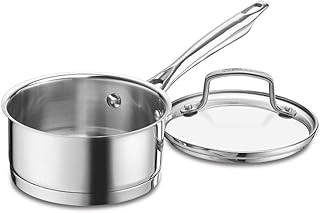
A tri-ply stainless steel saucepan with a mirror finish designed for durability and even heating. It lacks nonstick coating, so sauces prone to sticking require more attention. The handle can become hot during extended cooking.
Brand: Cuisinart · Rating: 4.6 out of 5
Pros
- Professional tri-ply construction
- Durable mirror finish
- 1-quart size for small sauce tasks
Cons
- No nonstick surface
- Handle gets hot without protection
Best budget stainless steel option: P&P CHEF 1 Quart Sauce Pan
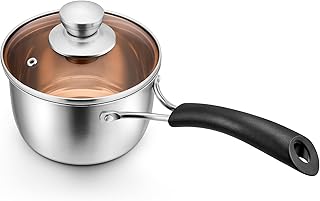
This budget-friendly stainless steel saucepan covers basic needs for small sauces with a lid included. Its finish and heat distribution are less refined, so it may develop hot spots, requiring careful heat management during cooking.
Brand: P&P · Rating: 4.6 out of 5
Pros
- Includes lid for covered cooking
- Affordable stainless steel option
- Compact 1-quart size
Cons
- Less even heat distribution
- Occasional hot spots reported
Best for dishwasher-safe versatility: Cuisinart 1.5 Quart Sauce Pan

A larger small saucepan with dishwasher-safe stainless steel construction, this pot suits users who want a versatile pot for slightly bigger batches. Its size may be too large for very small sauce portions, potentially leading to faster evaporation than desired.
Brand: Cuisinart
Pros
- Dishwasher safe for easy cleaning
- Stainless steel with lid
- 1.5-quart capacity for moderate volumes
Cons
- May be too large for tiny sauce quantities
- Lacks nonstick coating
How to choose the right small saucepan for your kitchen
Consider first what typical sauces or tasks you want to use the saucepan for. If you frequently work with dairy like milk or butter, a small aluminium pan with a nonstick surface and pour spouts like the FryNest is specialised but limited in scope.
For general sauce making, a tri-ply stainless steel pan between 1 and 1.5 quarts offers balanced heat control and durability. Nonstick coatings like Swiss granite provide easier cleanup but wear faster and limit high-heat use.
Users with induction cooktops must prioritise fully compatible pans with magnetic cores, such as the KC-Emier or KitchenAid models. Size also matters: very small 0.5-quart pots suit melting or warming but not reductions or thicker sauces.
If these options do not fit your needs or budget, it may be better to use larger saucepans with careful heat control rather than investing in a small pot you rarely use.
When selecting a saucepan, also consider maintenance and longevity. Stainless steel pans with tri-ply construction tend to last longer and maintain performance over years, whereas nonstick coatings degrade with use and require replacement more frequently. Budget constraints matter too; investing in a high-quality tri-ply pan may cost more upfront but save money in the long term due to durability.
Additionally, think about storage and handling. Small saucepans are ideal for kitchens with limited space and for cooks who prepare small quantities frequently. Their lighter weight and compact size improve maneuverability and reduce fatigue during repetitive tasks like stirring or pouring.
Finally, remember that the right saucepan can improve cooking outcomes significantly. Precise heat control prevents burning and uneven cooking, while ergonomic design enhances safety and ease of use, making the cooking process more enjoyable and efficient.
Related reading
- Budget vs Premium Ice Cream Makers: What the Price Actually Buys You
- How to choose the best 2 burner gas cooktop for your kitchen
- Portable induction cooktop vs electric hot plate: how they differ and which to choose
Frequently Asked Questions
What size saucepan is best for making small sauces?
For small sauces, saucepans between 1 to 1.5 quarts (roughly 0.95 to 1.4 litres) work best. This capacity allows enough volume to stir and reduce liquids without excessive evaporation or burning. Smaller pots, around 0.5 quarts, are better suited to melting or warming tiny amounts but not for cooking sauces that require stirring or thickening.
How does tri-ply construction improve saucepan performance?
Tri-ply saucepans have three bonded layers: usually stainless steel on the outside and inside, with an aluminium or copper core in the middle. The metal core conducts heat quickly and spreads it evenly across the pan’s base and lower sides, preventing hot spots and scorching. The stainless steel layers provide durability and a non-reactive cooking surface.
Are nonstick coatings necessary for small saucepans?
Nonstick coatings make cleanup easier and reduce sticking risks, especially for delicate sauces or low-fat cooking. However, they can wear down with metal utensils or high heat and limit searing or browning. Stainless steel pans without nonstick coatings offer versatility and durability but require more attention to heat control and oiling during cooking.

Rimi Sultana is a home cook from Bangladesh who has cooked for her family every day for the past five years and writes about it at Smart Cooks. Perpetually testing whether internet-famous recipes actually work in a regular home kitchen. Say hello on Facebook or through the contact page.