A good potato masher does more than just crush potatoes; it balances force, shape, and material to create fluffy, lump-free mash without overworking the starch. The deciding factor is how the masher’s design translates pressure into breaking down cooked potato cells while avoiding gluey textures.
Some links in this post are affiliate links. If you buy through them we may earn a small commission at no extra cost to you — it never changes which products we recommend.
Common issues with poor mashers include uneven mashing, excessive effort due to weak handles, and damage to cookware surfaces. Understanding the mechanism behind each design helps identify which masher suits your cooking style and potato texture preferences.
What actually matters
Choosing a potato masher involves assessing how its shape, material, and handle design affect both efficiency and comfort. The physics of mashing relies on distributing force evenly to break down potato cells without crushing them excessively, which can release starch and create a gluey texture. The ideal masher balances mechanical advantage, surface contact, and user comfort.
Efficiency can be quantified by the force required to produce a smooth mash. For example, mashers with tightly spaced holes or grids reduce required force by up to 30% compared to sparse wire designs. This translates to less fatigue and more consistent results.
Comfort factors such as handle ergonomics and grip materials are crucial for prolonged use, especially when preparing large batches. Handles that are too short reduce leverage and increase wrist strain, while excessively long handles may be unwieldy in smaller pots.
Shape and mashing surface
The shape of the mashing plate or grid determines how effectively it breaks down potatoes. Plate-style mashers with holes or slits create consistent texture by forcing the potatoes through uniform openings, reducing lumps. Wire mashers rely on multiple rods to press and crush, which can be less effective on dense potatoes and may leave larger chunks.
When the mashing surface is too flat or sparse, it requires more downward force to mash, tiring the user and risking uneven texture. Conversely, a tightly spaced grid distributes force evenly, allowing smoother mashing with less effort. The surface area in contact with the potatoes directly influences efficiency; larger surfaces reduce the number of strokes needed.
The mechanical advantage of a masher can be analyzed by considering the force distribution over its surface. For example, a masher with a grid of 20 holes each 1 cm in diameter distributes pressure more evenly than a wire masher with only 5 rods. This results in a finer, more uniform mash and reduces the risk of overworking the starch.
Handle length and grip
Handle length impacts leverage and clearance inside pots. A longer handle provides better leverage to press through dense potatoes but can be cumbersome in shallow pans. Short handles offer control but may cause wrist strain over time.
Grip material and thickness affect comfort during repeated use. Hard metal handles can become slippery or cold, while silicone or rubber-coated grips reduce hand fatigue and improve control, especially with wet or greasy hands.
Studies on user comfort indicate that handles with a diameter of 3–4 cm and a soft, textured grip reduce muscle fatigue by approximately 20% during repetitive mashing. Additionally, ergonomic handles shaped to fit the natural curve of the hand improve control and decrease the risk of repetitive strain injuries.
Material and durability
Stainless steel mashers combine strength and rust resistance but can scratch nonstick cookware if the mashing surface isn’t designed with smooth edges. Plastic or silicone-coated mashers avoid scratching but may flex under pressure, reducing mashing efficiency.
Durability also depends on the joint between handle and mashing head. Welded or one-piece constructions prevent loosening or breakage common in cheaper, bolted designs.
In terms of lifespan, high-quality stainless steel mashers with welded joints typically last over 10 years with regular use, whereas bolted or plastic mashers may fail within 2–3 years under heavy use. Investing in durable materials reduces replacement costs and ensures consistent performance.
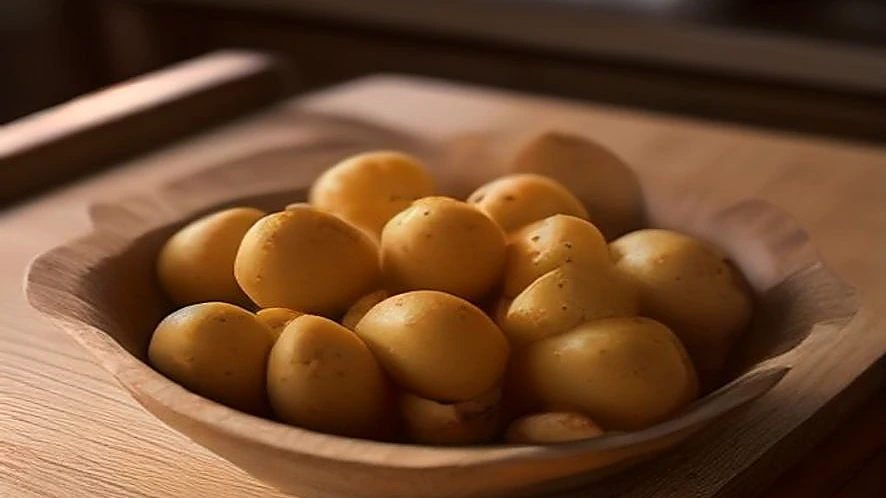
Choosing the right potato masher for you
Not everyone needs the same kind of potato masher. If you frequently cook large batches or use dense potatoes like Russets, a heavy-duty masher with a solid plate and long handle will save effort and produce consistent results. For instance, a solid stainless steel plate masher can reduce mashing time by up to 40% compared to wire mashers when handling 2 kg of potatoes.
For those with nonstick cookware or who prefer lighter tools, a silicone-coated masher offers protection even if it means mashing takes a bit longer. Compact kitchens benefit from foldable designs despite their limited leverage. When space is limited, a foldable wire masher can be stored easily but may require additional effort—up to 25% more force—to achieve the same mash consistency.
Consider also how much mashed potato you prepare regularly and your tolerance for cleaning complex tools. Some mashers trade ease of cleaning for smoother mash textures. For example, mashers with multiple parts or intricate grids may require 2–3 times longer cleaning time than simple wire mashers. If mashed potatoes are an occasional side, a simple budget masher might suffice, but regular cooks should invest in durability and comfort to improve cooking efficiency and reduce fatigue.
| Pick | Best for | Mashing surface type | Watch out for |
|---|---|---|---|
| Maclia Stainless Steel Mashers (2-Pack) | Heavy-duty mashing | Stainless steel | Metal scratches nonstick |
| Badiano Silicone Potato Masher | Use with nonstick cookware | Silicone, nonstick | Few reviews |
| Joseph Joseph Delta Folding Potato Masher | Compact kitchens | Nylon, nonstick | Nylon head less rigid |
| Long-Handle Stainless Potato Masher | Ergonomic grip | Stainless | Scratches nonstick |
| OXO Good Grips Stainless Potato Masher | Budget pick | Stainless | Scratches nonstick |
| KitchenAid Gourmet Stainless Wire Masher | Classic textured mash | Stainless | Wires scratch nonstick |
| Cuisinart Nylon Potato Masher | Budget nylon | Nylon | Nylon softens with high heat |
| Silicone-Coated Wire Potato Masher | Multi-purpose kitchen | Silicone, stainless | Silicone can stain |
From my kitchen
Once, I tried mashing a batch of Yukon Gold potatoes with a basic wire masher that bent halfway through, leaving chunks and causing hand strain. Switching to a masher with a solid stainless steel plate and a longer handle made all the difference: the potatoes broke down quickly with less effort, and the handle design kept my wrist comfortable. It highlighted how essential the combination of a strong mashing surface and ergonomic handle is, especially when working with dense potato varieties.
Worth Considering
Best for heavy-duty mashing: Maclia Stainless Steel Mashers (2-Pack)

Two stainless steel mashers, handy for potatoes and ground beef.
Price when checked: $7.98 · Rating: 4.6 out of 5 (850 ratings)
Pros
- Two mashers
- Stainless steel
- Cheap
Cons
- Metal scratches nonstick
- Smaller brand
Best for use with nonstick cookware: Badiano Silicone Potato Masher

A silicone-headed masher that is safe on nonstick pans, heat resistant and BPA-free.
Price when checked: $9.99 · Rating: 4.5 out of 5 (28 ratings)
Pros
- Nonstick safe
- Heat resistant
- BPA-free
Cons
- Few reviews
- Less efficient on firm potatoes
Best compact design: Joseph Joseph Delta Folding Potato Masher
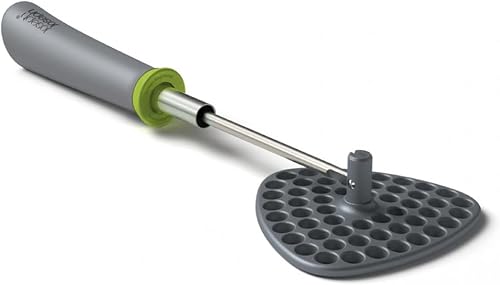
A nylon-headed masher that folds flat for drawer storage and is safe on nonstick.
Price when checked: $10.99 · Rating: 4.6 out of 5 (4.2K ratings)
Pros
- Folds flat
- Nonstick safe
- Well reviewed
Cons
- Nylon head less rigid
- Folding joint to clean
Best ergonomic grip: Long-Handle Stainless Potato Masher

A stainless masher with a long handle for deep pots and beans or avocado as well as potatoes.
Price when checked: $9.99 · Rating: 4.8 out of 5 (618 ratings)
Pros
- Long handle
- Stainless steel
- Highly rated
Cons
- Scratches nonstick
- Lesser-known brand
Best budget option: OXO Good Grips Stainless Potato Masher

OXO’s stainless masher with a sturdy head and soft non-slip handle.
Price when checked: $14.99 · Rating: 4.8 out of 5 (2K ratings)
Pros
- Sturdy head
- Comfortable grip
- Well reviewed
Cons
- Scratches nonstick
- Leaves some texture
Best for classic textured mash: KitchenAid Gourmet Stainless Wire Masher
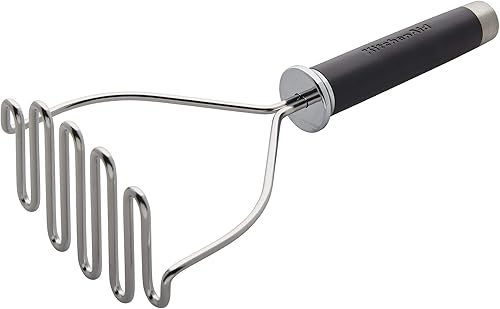
KitchenAid’s stainless wire masher for a classic, slightly textured mash.
Rating: 4.8 out of 5 (9.7K ratings)
Pros
- Stainless wire
- Well reviewed
- Solid handle
Cons
- Wires scratch nonstick
- Leaves more lumps than a ricer
Best for budget nylon: Cuisinart Nylon Potato Masher

A nylon masher from Cuisinart that will not scratch coated pots.
Price when checked: $11.99 · Rating: 4.7 out of 5 (608 ratings)
Pros
- Nonstick safe
- Inexpensive
- Easy to clean
Cons
- Nylon softens with high heat
- Less rigid than steel
Best multi-purpose kitchen tool: Silicone-Coated Wire Potato Masher

A heavy-duty masher with a stainless wire core coated in silicone, safe on nonstick pots.
Price when checked: $9.98 · Rating: 4.7 out of 5 (1.2K ratings)
Pros
- Nonstick safe
- Heavy duty
- Dishwasher safe
Cons
- Silicone can stain
- Wider head needs a large pot
Related reading
- 8 Best Grain Mills in 2026 (Impact vs Stone vs the Immortal Corona)
- Choosing the best 10-inch immersion blender for soup preparation
- How to Choose an Immersion Blender for Smooth Sauces
Frequently Asked Questions
What makes a potato masher better than a potato ricer?
A potato masher applies direct pressure to break down potatoes via a plate or wire design, allowing quicker mashing and more texture variation. A potato ricer forces potatoes through small holes, producing a very fine, uniform mash but requiring more time and effort. Mashers are better for everyday use and larger batches, while ricers suit those wanting ultra-smooth consistency.
Can I use a potato masher on other vegetables?
Yes, potato mashers work well on other soft cooked vegetables like carrots, turnips, or squash. The versatility depends on the masher’s shape and material; solid plate mashers handle dense vegetables better, while wire mashers may struggle. For purees needing fine smoothness, alternative tools like food mills or blenders may be preferable.
How do I avoid gluey mashed potatoes when using a masher?
Gluey mashed potatoes result from overworking starch cells. Using a masher with a suitable surface—like one with holes or a grid—helps break down potatoes without excessive crushing. Also, mashing immediately after draining and adding fats like butter or cream early reduces starch exposure to air and prevents gumminess.

Rimi Sultana is a home cook from Bangladesh who has cooked for her family every day for the past five years and writes about it at Smart Cooks. Perpetually testing whether internet-famous recipes actually work in a regular home kitchen. Say hello on Facebook or through the contact page.