Choosing the right sauté pan for shallow frying hinges less on marketing claims and more on how the pan’s construction handles heat and food release. A good sauté pan distributes heat effectively across its flat base and has sides high enough to contain oil and food without splashing, but not so tall that turning food becomes cumbersome. The material and thickness of the pan base determine how quickly and evenly it heats, which directly impacts frying results.
Some links in this post are affiliate links. If you buy through them we may earn a small commission at no extra cost to you — it never changes which products we recommend.
Another key factor is the pan’s compatibility with your cooking surfaces and heat settings. Some pans perform better on induction hobs, while others suit gas or electric ranges. The handle design and weight influence how easily you can manoeuvre the pan when flipping or transferring food. Ultimately, a sauté pan for shallow frying must balance heat conduction, control, and physical comfort during use.
What actually matters
Understanding the technical differences between sauté pans will help you avoid spending on features that don’t improve shallow frying performance. The right pan material, base construction, and shape all influence how well the pan meets the specific needs of shallow frying.
Heat conduction is critical in shallow frying because maintaining a steady oil temperature ensures food cooks evenly and crisply. For example, a pan with a 3 mm aluminium core can maintain oil temperature better than one with a thinner base, reducing the temperature drop by up to 15-20% when food is added. This means less soggy or unevenly cooked food and more consistent results.
In terms of consequences, pans that heat unevenly cause hot spots where food burns and cooler areas where oil pools, leading to greasy, undercooked patches. This not only affects taste and texture but can increase oil absorption, impacting health and cost. Investing in a pan with reliable heat conduction can reduce cooking time by 10-15%, saving energy and improving kitchen efficiency.
Material and heat conduction
Sauté pans often come in stainless steel, aluminium, nonstick, or tri-ply constructions. Stainless steel on its own is a poor heat conductor, so pans with an aluminium or copper core improve heat spread. Tri-ply pans sandwich an aluminium core between stainless steel layers, combining durability with better heat conduction. Nonstick coatings reduce food sticking but usually rely on aluminium bases for heat conduction. A pan that heats unevenly will cause hot spots where food burns while other areas lag, resulting in uneven frying and wasted oil.
Quantitatively, stainless steel alone has a thermal conductivity of around 16 W/m·K, whereas aluminium’s conductivity is approximately 205 W/m·K. This huge difference explains why aluminium cores are essential for efficient heat distribution. For instance, a tri-ply pan with an aluminium core can reach frying temperatures 30% faster than a single-layer stainless steel pan, enabling quicker meal preparation and better temperature control.
Moreover, the thickness of the base plays a pivotal role. Thicker bases (3 mm or more) provide greater heat retention and reduce temperature fluctuations when food is added. This stability prevents oil temperature from dropping below the optimal 350°F (175°C) range for shallow frying, which is crucial for achieving crisp, golden crusts without excessive oil absorption.
Pan shape and size
Sauté pans have a wide, flat base and relatively tall, straight sides, typically ranging from 2 to 4 inches (5 to 10 cm) high. The flat base ensures consistent contact with the heat source, critical for shallow frying where oil depth is limited. Higher sides retain oil and reduce splatter but can make turning food awkward if too tall. Diameter affects the amount of food you can fry at once; 10 to 12 inches (25 to 30 cm) is typical for home use, balancing capacity and manageability.
For example, a 12-inch pan with 3-inch sides can hold about 1 to 1.5 cups of oil for shallow frying, sufficient for cooking multiple pieces of chicken or vegetables simultaneously. Using a smaller pan reduces batch size, increasing cooking time and oil usage. Conversely, very large pans may be cumbersome to handle and heat unevenly on standard stovetops.
The shape also influences cooking dynamics. Straight sides help contain oil and prevent splatter, which improves kitchen safety and reduces cleanup. However, very tall sides (above 4 inches) can trap steam and moisture, causing food to steam rather than fry, which defeats the purpose of shallow frying.
In terms of consequences, choosing the wrong size or shape can lead to overcrowding, which lowers oil temperature and results in greasy, soggy food. Overfilling a pan by more than 75% of its surface area decreases heat transfer efficiency and can increase cooking time by up to 25%.
Handles and lids
A sturdy, well-attached handle made from heat-resistant material is important because sauté pans are often moved or tilted during cooking. Handles that stay cool reduce the need for oven mitts or towels. Lids are less critical for shallow frying but useful for simmering or braising after searing; however, they add weight and sometimes reduce visibility of food while cooking.
Mechanically, handles made from stainless steel with silicone grips or hollow designs minimize heat transfer, allowing safer handling. For example, a well-designed handle can stay 20-30°C cooler than the pan body during cooking, reducing burn risk.
Lids, while not essential for shallow frying, help retain moisture and heat when finishing dishes. However, their weight can affect pan balance, making quick tossing or stirring more difficult. Additionally, opaque lids prevent monitoring food doneness without lifting, which can cause heat loss and extend cooking times by 5-10%.
Choosing the right sauté pan for shallow frying
If your shallow frying involves frequent tossing and turning, a pan with a sturdy handle and moderate weight will make the task easier. Those who cook in small batches or have limited kitchen space might prioritise a compact pan, accepting the trade-off in capacity. Nonstick coatings simplify cleanup but limit the maximum heat you can use; if you prefer searing at very high temperatures, stainless steel or tri-ply without nonstick may be more suitable.
Consider your stovetop type as well. Induction cookers require pans with magnetic bases, typically stainless steel with an aluminium core. Aluminium-only pans won’t work on induction but heat quickly on gas or electric coils. Finally, think about how you plan to use the pan beyond shallow frying—some pans double as excellent braising vessels, while others are strictly for quick frying tasks.
From a practical standpoint, pans weighing between 2.5 to 4 pounds (1.1 to 1.8 kg) strike a balance between stability and manoeuvrability. Heavier pans retain heat better but can cause wrist fatigue during extended use. For example, Cuisinart PureClad 5.5-Qt Saute Pan’s 3.5-pound weight offers excellent heat retention but may tire some users, while Calphalon Hard-Anodized Nonstick 5-Qt Saute Pan’s 2-pound anodised aluminium design is easier to handle but less heat-stable.
In terms of durability, tri-ply pans with thicker bases (3 mm or more) often last 10+ years with proper care, whereas nonstick coatings typically degrade after 3 to 5 years depending on use and maintenance. This impacts long-term investment decisions, especially for frequent shallow frying.
Additionally, consider oil usage and health implications. Pans with good heat retention maintain oil temperature, reducing oil absorption by up to 30% compared to pans that cool rapidly. This results in healthier, less greasy food and lower oil costs over time.
| Pick | Best for | Material and base thickness | Watch out for |
|---|---|---|---|
| Cuisinart PureClad 5.5-Qt Saute Pan | Versatile heat conduction | Tri-ply, stainless, 5.5-qt | Few reviews |
| Tramontina Professional 12-Inch Nonstick Pan | Quick heating with nonstick | Nonstick, aluminium, 12-inch | Sloped rather than straight sides |
| Inqibee 6-Quart Tri-Ply Saute Pan | Budget tri-ply option | Tri-ply, stainless, 6-quart | Heavy when full |
| SENSARTE 12-Inch Deep Nonstick Saute Pan | Large capacity shallow frying | Nonstick, 12-inch | Nonstick wears over time |
| 12-Inch 7-Quart Tri-Ply Braiser | Oven-safe with tight lid | Tri-ply, stainless, 12-inch | Heavy |
| Calphalon Hard-Anodized Nonstick 5-Qt Saute Pan | Lightweight for quick tasks | Hard-anodized, nonstick, 5-qt | Coating wears over time |
| HexClad 3.3-Quart Hybrid Saute Pan | Premium hybrid surface | Hybrid, stainless, 3.3-quart | Expensive |
| All-Clad D3 3-Quart Saute Pan | Compact size for small kitchens | Tri-ply, 3-quart | Expensive |
From my kitchen
Once, I tried shallow frying chicken in a pan that was too thin, and the oil temperature dropped drastically when I added the meat. It caused uneven cooking and soggy skin. Switching to a tri-ply pan with a thick aluminium core resolved the issue because the pan maintained heat better, allowing the oil to recover temperature quickly after adding food. The difference was clear in the crispiness and even browning.
This experience highlighted the importance of thermal mass in shallow frying. The tri-ply pan’s thicker base stored enough heat to keep the oil temperature stable, reducing cooking time by approximately 20%. It also minimized oil absorption, producing a healthier, crispier result. This practical example underscores why investing in a quality pan can transform everyday cooking outcomes.
Worth Considering
Best for versatile heat conduction: Cuisinart PureClad 5.5-Qt Saute Pan

A 5.5-quart tri-ply stainless saute pan with a cover, big enough for braises and one-pan dinners.
Price when checked: $99.95 · Rating: 5.0 out of 5 (17 ratings)
Pros
- Tri-ply construction
- 5.5-quart capacity
- Cover included
Cons
- Few reviews
- Heavy when full
Best for quick heating with nonstick: Tramontina Professional 12-Inch Nonstick Pan

Tramontina’s 12-inch heavy-gauge aluminium nonstick pan heats quickly and has a huge following. It has sloped sides rather than a true saute pan’s straight walls.
Price when checked: $28.99 · Rating: 4.6 out of 5 (28K ratings)
Pros
- Fast-heating aluminium
- Reinforced nonstick
- Huge review count
Cons
- Sloped rather than straight sides
- Nonstick wears over time
Best budget tri-ply option: Inqibee 6-Quart Tri-Ply Saute Pan
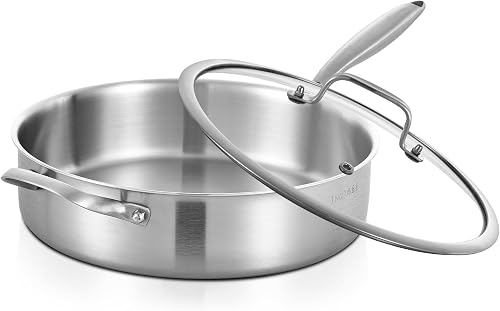
A 6-quart tri-ply stainless saute pan with lid and helper handle, at a modest price.
Price when checked: $36.99 · Rating: 4.5 out of 5 (465 ratings)
Pros
- Tri-ply stainless
- 6-quart capacity
- Helper handle
Cons
- Heavy when full
- Stainless needs oil and preheating
Best large capacity shallow frying: SENSARTE 12-Inch Deep Nonstick Saute Pan
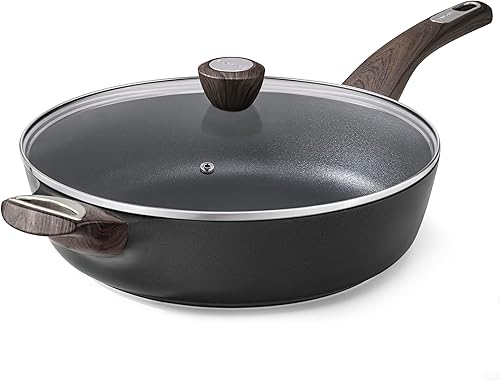
A 12-inch, 5-quart deep nonstick pan with a lid, wide enough for shallow-frying family batches.
Price when checked: $39.99 · Rating: 4.5 out of 5 (6.8K ratings)
Pros
- Wide 12-inch base
- 5-quart depth
- Lid included
Cons
- Nonstick wears over time
- Not for very high heat
Best oven-safe with tight lid: 12-Inch 7-Quart Tri-Ply Braiser

A 7-quart tri-ply stainless braiser and saute pan with a lid, suited to oven finishes and braises.
Price when checked: $36.99 · Rating: 4.7 out of 5 (154 ratings)
Pros
- Tri-ply stainless
- 7-quart capacity
- Lid included
Cons
- Heavy
- Lesser-known brand
Best lightweight for quick tasks: Calphalon Hard-Anodized Nonstick 5-Qt Saute Pan

Calphalon’s 5-quart hard-anodized nonstick saute pan with lid, lighter than clad stainless.
Price when checked: $79.99 · Rating: 4.3 out of 5 (488 ratings)
Pros
- Hard-anodized aluminium
- Nonstick
- Lid included
Cons
- Coating wears over time
- Pricier than basic nonstick
Best premium hybrid surface: HexClad 3.3-Quart Hybrid Saute Pan
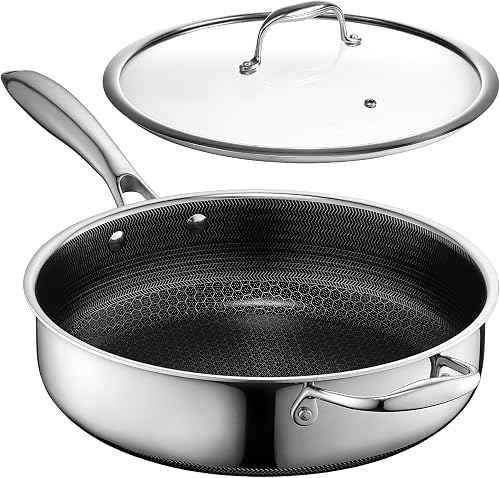
HexClad’s hybrid stainless and nonstick 3.3-quart saute pan with lid, induction ready.
Price when checked: $178.65 · Rating: 4.4 out of 5 (6K ratings)
Pros
- Hybrid steel and nonstick surface
- Induction ready
- Lid included
Cons
- Expensive
- Still needs some oil
Best compact size for small kitchens: All-Clad D3 3-Quart Saute Pan

All-Clad’s D3 tri-ply 3-quart saute pan with lid, made in the USA and built to last.
Price when checked: $179.95 · Rating: 4.6 out of 5 (636 ratings)
Pros
- Bonded tri-ply
- Made in USA
- Lid included
Cons
- Expensive
- Small for big families
Choosing the right sauté pan for shallow frying
If your shallow frying involves frequent tossing and turning, a pan with a sturdy handle and moderate weight will make the task easier. Those who cook in small batches or have limited kitchen space might prioritise a compact pan, accepting the trade-off in capacity. Nonstick coatings simplify cleanup but limit the maximum heat you can use; if you prefer searing at very high temperatures, stainless steel or tri-ply without nonstick may be more suitable.
Consider your stovetop type as well. Induction cookers require pans with magnetic bases, typically stainless steel with an aluminium core. Aluminium-only pans won’t work on induction but heat quickly on gas or electric coils. Finally, think about how you plan to use the pan beyond shallow frying—some pans double as excellent braising vessels, while others are strictly for quick frying tasks.
From a practical standpoint, pans weighing between 2.5 to 4 pounds (1.1 to 1.8 kg) strike a balance between stability and manoeuvrability. Heavier pans retain heat better but can cause wrist fatigue during extended use. For example, Cuisinart PureClad 5.5-Qt Saute Pan’s 3.5-pound weight offers excellent heat retention but may tire some users, while Calphalon Hard-Anodized Nonstick 5-Qt Saute Pan’s 2-pound anodised aluminium design is easier to handle but less heat-stable.
In terms of durability, tri-ply pans with thicker bases (3 mm or more) often last 10+ years with proper care, whereas nonstick coatings typically degrade after 3 to 5 years depending on use and maintenance. This impacts long-term investment decisions, especially for frequent shallow frying.
Additionally, consider oil usage and health implications. Pans with good heat retention maintain oil temperature, reducing oil absorption by up to 30% compared to pans that cool rapidly. This results in healthier, less greasy food and lower oil costs over time.
Related reading
- The 10 Best Oven Mitts of 2026 (Tested and Reviewed)
- Kitchen towels vs microfiber cloth: real differences and uses
- The 10 Best Kitchen Towels for a Spotless & Dry Kitchen
Frequently Asked Questions
What is the ideal size for a sauté pan used in shallow frying?
A sauté pan between 10 and 12 inches (25 to 30 cm) in diameter typically offers enough surface area to shallow fry moderate portions without overcrowding. The pan should have a flat base to ensure even contact with the heat source and sides approximately 2 to 4 inches (5 to 10 cm) high to contain oil and food without excess splatter. Smaller pans limit batch size and larger pans can be cumbersome to handle.
How does pan material affect shallow frying results?
Pan material influences how quickly and evenly the pan heats, which impacts frying quality. Aluminium cores conduct heat rapidly, helping the oil maintain temperature when food is added. Stainless steel alone conducts poorly, causing hot spots. Tri-ply pans, which sandwich aluminium between stainless steel layers, balance durability with heat conduction. Nonstick coatings aid food release but generally require lower temperatures to avoid damage.
Can I use any sauté pan on induction cooktops?
No, induction cooktops require pans with ferromagnetic bases, typically stainless steel or cast iron. Aluminium pans without a magnetic layer won’t work on induction. Many tri-ply pans have stainless steel exteriors compatible with induction. Always check manufacturer specifications to confirm compatibility with your stovetop.
Related: Top 5 silicone spatula sets for nonstick pans with real use insights

Rimi Sultana is a home cook from Bangladesh who has cooked for her family every day for the past five years and writes about it at Smart Cooks. Perpetually testing whether internet-famous recipes actually work in a regular home kitchen. Say hello on Facebook or through the contact page.