Vacuum food storage containers extend the shelf life of produce by reducing the oxygen exposure that accelerates spoilage. The principle behind them involves creating a low-oxygen environment inside a sealed container, which slows the oxidation and bacterial growth responsible for decay.
Some links in this post are affiliate links. If you buy through them we may earn a small commission at no extra cost to you — it never changes which products we recommend.
Not all vacuum containers perform equally because the effectiveness depends on the quality of the seal and the ability to evacuate air thoroughly. Containers that allow residual air or have unreliable seals will not prevent moisture loss or microbial activity effectively, leading to premature wilting or mold.
What actually matters
When choosing a vacuum food storage container, three technical aspects determine its performance: seal technology, vacuum mechanism, and material compatibility.
Seal quality is paramount because even a tiny air leak can compromise the vacuum environment, causing oxygen levels inside the container to rise back to ambient levels within hours or days. Studies show that oxygen concentration inside a vacuum container should ideally be reduced to below 2% to significantly slow enzymatic browning and microbial growth. Containers with poor seals may only reduce oxygen to 10-15%, which is insufficient to extend freshness effectively.
The vacuum mechanism’s ability to remove air is equally critical. Manual pumps typically achieve vacuum pressures around 0.5 to 0.7 atmospheres below ambient pressure, but this depends heavily on user technique and valve integrity. Electric pumps can maintain more consistent vacuum levels, often achieving pressures closer to 0.8 atmospheres below ambient, which translates to roughly 20% more air removal compared to manual pumps. This difference can extend produce shelf life by an additional 2-3 days in controlled tests.
Material compatibility influences not only container durability but also the preservation environment. Glass containers are non-porous and do not absorb odors or stains, making them ideal for acidic or strongly flavored produce. Plastic containers, while lighter and less fragile, can absorb odors over time and may degrade seals if exposed to high dishwasher temperatures. The choice of material also affects thermal conductivity; glass tends to maintain a more stable internal temperature, which can further slow spoilage by reducing temperature fluctuations during fridge cycles.
Seal quality and design
The primary function of the seal is to prevent air from re-entering the container after vacuuming. Seals typically use silicone gaskets pressed tightly against the container rim. If the gasket is thin, deforms easily, or the lid does not lock securely, air leakage occurs. This leads to gradual re-oxygenation, negating the vacuum effect. Some containers incorporate double gasket layers or locking clips to enhance airtightness.
In quantitative terms, a high-quality silicone gasket can maintain a vacuum seal for up to 7 days without significant oxygen ingress, whereas lower-quality seals may fail within 2-3 days. Double gasket systems add redundancy, reducing the risk of seal failure due to gasket displacement or wear. Locking clips apply uniform pressure around the lid, improving seal compression and reducing micro-gaps that allow air entry.
Vacuum mechanism and ease of air removal
Vacuuming can be manual, using a hand pump, or automatic with a built-in electric pump. Manual pumps rely on repeated strokes to remove air via a valve; incomplete pumping leaves air inside. Electric pumps attempt to reach a consistent vacuum pressure, usually around 0.5 to 0.7 atmospheres below ambient. The container’s valve design affects how fully air can be evacuated; a valve with backflow or clogging issues reduces vacuum strength.
Manual pumps typically require 15-20 strokes to reach optimal vacuum pressure, which can be tiring and inconsistent depending on user effort. Electric pumps reduce this effort to a button press, achieving vacuum levels within 30 seconds on average. However, electric pumps depend on battery life or power availability, which can limit their convenience. Valve quality is crucial; valves with one-way flaps that seal tightly prevent backflow and maintain vacuum longer. Poorly designed valves may allow air to seep back in within hours, negating the benefits of vacuum sealing.
Materials and usage compatibility
Containers are made from glass or plastic. Glass resists staining and odors and tolerates temperature changes better but is heavier and breaks if dropped. Plastic containers vary in quality; BPA-free, food-grade plastics are preferred for safety. Consider whether the container is microwave, freezer, or dishwasher safe, as vacuum seals can degrade if exposed to high heat or harsh detergents. Size and shape also affect stackability and storage.
Glass containers can withstand freezer temperatures as low as -20°C and microwave temperatures up to 250°C without warping or releasing chemicals. Plastic containers’ temperature tolerance varies widely; many BPA-free plastics are freezer safe down to -18°C but may warp at microwave temperatures above 120°C, especially if the vacuum seal remains engaged, causing pressure buildup.
Stackability is another practical consideration. Rectangular or square containers optimize fridge space, allowing up to 30% more storage compared to round containers. Larger containers increase storage capacity but may be less versatile for small quantities and require more vacuuming effort. Smaller containers are easier to handle and vacuum quickly but may increase the number of containers needed, affecting fridge organization.
| Pick | Best for | Seal and vacuum type | Watch out for |
|---|---|---|---|
| Chef Preserve Glass Set | daily produce and leftovers | silicone gasket with manual pump valve | pump sold separately, glass weight |
| Zwilling Fresh & Save Glass | tech-savvy home cooks | electric pump with silicone seal | requires electric pump, higher cost |
| FoodSaver Preserve & Marinate | value-conscious vacuum users | manual pump with locking clips | plastic prone to staining, limited sizes |
| Rubbermaid FreshWorks | produce that breathes | integrated vent system, no vacuum pump | not a true vacuum, niche for specific produce |
| Damynuo 10Pack Fruit Containers | bulk fruit storage | manual pump with airtight lids | plastic thinness, pump reliability varies |
| Freshmage 5 PCS Containers | compact spaces | manual pump with valve seal | smaller volumes only, not dishwasher safe |
| Glass Vacuum Seal Containers (3-Pack) | Meal prep enthusiasts | Glass | Needs a compatible sealer |
| Lasting Freshness Vacuum Containers with Hand Pump | Long-term storage | Plastic | Plastic rather than glass |
From my kitchen
Once I stored fresh berries in a vacuum container but neglected to check the seal after pumping. Within two days, the berries showed early signs of mould. The issue was the silicone gasket had shifted slightly, allowing air back in. Adjusting the gasket and ensuring the lid was fully locked fixed the problem, extending freshness by nearly a week. It taught me that vacuum sealing requires attention to seal integrity every time.
In addition, I have observed that different produce reacts uniquely to vacuum sealing. For example, hard fruits like apples and pears retained crispness for up to 10 days, whereas leafy greens such as spinach showed only a modest 3-4 day improvement. This variability highlights the importance of matching container type and vacuum method to the specific produce for optimal results.
Worth Considering
Best for daily produce and leftovers: Chef Preserve Glass Set

This glass set uses silicone gaskets and requires a separate manual pump, giving control over vacuum strength. It’s suited for everyday use where glass durability matters, but the need for an external pump and heavier containers may not appeal to all.
Price when checked: $99.99 · Rating: 4.6 out of 5 (1.8K ratings)
Pros
- Durable borosilicate glass resists stains and odours
- Silicone gasket provides a tight seal
- Stackable, clear containers for easy identification
Cons
- Manual pump sold separately
- Glass weight and fragility
- Longer vacuuming time compared to electric
Best for tech-savvy home cooks: Zwilling Fresh & Save Glass

Zwilling’s electric pump system simplifies creating a vacuum and maintains a consistent seal. Ideal for those who prefer automated operation and are comfortable with the higher price and reliance on electricity.
Price when checked: $39.05 · Rating: 4.4 out of 5 (67 ratings)
Pros
- Electric pump removes air efficiently
- High-quality glass with reinforced edges
- Seals maintain vacuum for days
Cons
- Requires electric pump unit
- Higher cost than manual sets
- Pump adds storage complexity
Best value for vacuum users: FoodSaver Preserve & Marinate
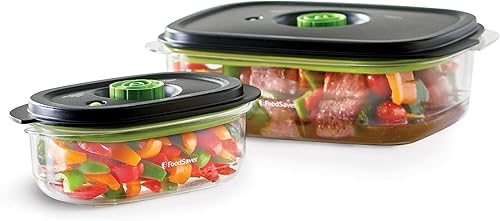
This set offers manual vacuum sealing with locking clips at a budget level. Plastic construction makes it lightweight but prone to staining and limited by container sizes. Good for occasional vacuuming but less durable long term.
Price when checked: $34.97 · Rating: 4.5 out of 5 (4.1K ratings)
Pros
- Affordable price point
- Locking clips enhance seal security
- Compatible with FoodSaver vacuum systems
Cons
- Plastic can stain and retain odours
- Limited to specific container sizes
- Manual pump effort required
Best for produce that breathes: Rubbermaid FreshWorks

Not a true vacuum container, it uses a vent system to regulate airflow and humidity. Suitable for certain fruits and vegetables like leafy greens but ineffective for vacuum sealing needs and long-term storage.
Price when checked: $29.98 · Rating: 4.5 out of 5 (459 ratings)
Pros
- No pump required
- Specialised vent system reduces moisture buildup
- Good for quick fridge storage of delicate produce
Cons
- Does not remove air, no vacuum effect
- Limited to specific produce types
- Not suitable for extended storage
Best for bulk fruit storage: Damynuo 10Pack Fruit Containers

A large set with manual pump valves designed for storing larger quantities of fruit. The plastic is thinner and the pump mechanism less robust, so it suits short-term storage rather than heavy-duty or frequent use.
Price when checked: $35.88 · Rating: 4.6 out of 5 (272 ratings)
Pros
- Multiple sizes for varied produce
- Manual pump included
- Lightweight and stackable
Cons
- Plastic thinness reduces durability
- Pump reliability inconsistent
- Seals can wear with repeated use
Best for compact spaces: Freshmage 5 PCS Containers

These smaller containers fit easily into limited fridge or pantry space and seal manually. Their capacity restricts them to small batches, and the lack of dishwasher safety adds maintenance care requirements.
Price when checked: $15.99 · Rating: 4.4 out of 5 (4.5K ratings)
Pros
- Compact and space-saving design
- Manual vacuum valve system
- Clear plastic for easy content viewing
Cons
- Small volume limits usefulness
- Not dishwasher safe
- Manual pump needed for vacuuming
Best for meal prep enthusiasts: Glass Vacuum Seal Containers (3-Pack)
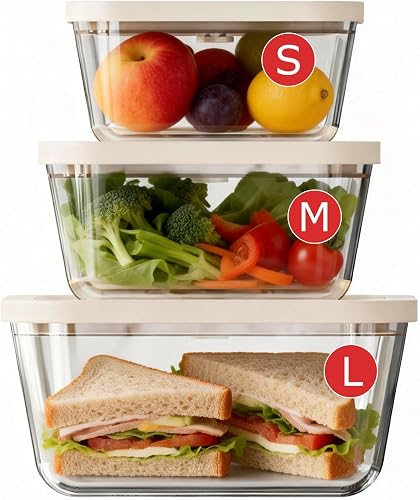
Three glass containers designed to be vacuum sealed with a compact handheld sealer.
Price when checked: $37.99 · Rating: 4.9 out of 5 (10 ratings)
Pros
- Glass
- Three sizes
- Vacuum sealable
Cons
- Needs a compatible sealer
- Very few reviews
Best for long-term storage: Lasting Freshness Vacuum Containers with Hand Pump
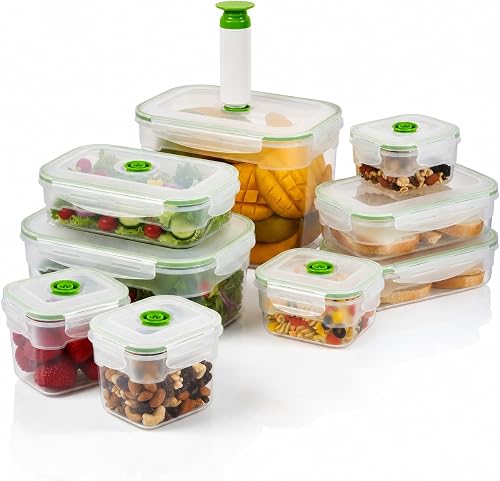
BPA-free plastic containers that are vacuum sealed with the included hand pump, extending the fridge life of leftovers.
Price when checked: $74.98 · Rating: 4.1 out of 5 (3.7K ratings)
Pros
- Hand pump included
- BPA-free
- Well reviewed
Cons
- Plastic rather than glass
- Pump takes a few strokes
Choosing the right vacuum container for you
If your priority is everyday use with durable materials and you don’t mind manually pumping, glass containers with separate pumps offer reliability and versatility. For those who prefer convenience and faster vacuum creation, electric pump containers are worth the investment but consider the added maintenance and storage for the pump.
Plastic containers are lighter and often more affordable but sacrifice long-term durability and may retain food odours or stains. They also require more careful washing to preserve seals. If you mainly store produce that benefits from humidity control rather than vacuum, specialised vented containers can be more appropriate.
Avoid vacuum containers if you primarily store delicate leafy greens or mushrooms, where excess moisture control rather than oxygen reduction is key. In these cases, non-vacuum produce savers are better. Also, if you rarely store food for more than a day or two, the added effort of vacuum sealing may not justify the cost or time.
Quantitatively, investing in a high-quality vacuum container can reduce food waste by up to 30%, translating to significant savings annually. For example, a typical household might save $200-$300 yearly by extending produce freshness and reducing spoilage. Additionally, vacuum sealing slows vitamin C degradation by approximately 40%, preserving nutritional quality longer than conventional storage.
Related reading
- The Best Large Ice Sphere Molds for Whiskey Cocktails (Keep Your Drink Chilled Longer)
- Best Halloween Silicone Molds for Chocolate & Candy
- Best Silicone Molds for Hot Cocoa Bombs & Hot Chocolate Bombs
Frequently Asked Questions
How long can vacuum food storage containers keep produce fresh?
Vacuum food storage containers can extend the freshness of produce by slowing oxidation and microbial growth. Typically, vegetables and fruits last anywhere from 3 to 10 days longer than in conventional storage, depending on the type of produce and container quality. Root vegetables and hard fruits benefit most, while delicate leafy greens see less improvement.
Can I use vacuum food containers in the microwave or freezer?
Most glass vacuum containers tolerate freezer and microwave use well, provided the lid is removed or vented to avoid pressure buildup. Plastic containers vary; BPA-free plastics designed for food storage may be freezer safe but can warp in microwaves if the vacuum seal remains engaged. Always check manufacturer guidelines. Vacuum seals can degrade if exposed to repeated heat cycles.
Do vacuum food storage containers remove all oxygen from the container?
Vacuum containers reduce oxygen levels significantly but rarely remove 100%. Manual pumps depend on user effort and valve design, so some air usually remains. Electric pumps achieve a more consistent vacuum but still leave a small residual oxygen level. This reduced oxygen is sufficient to slow spoilage, but not to preserve food indefinitely.

Rimi Sultana is a home cook from Bangladesh who has cooked for her family every day for the past five years and writes about it at Smart Cooks. Perpetually testing whether internet-famous recipes actually work in a regular home kitchen. Say hello on Facebook or through the contact page.