
Making dahi at home requires consistent temperature control and a stable environment for the bacterial cultures to ferment properly. The difference between a good yogurt maker and a bad one lies mainly in how well it maintains the ideal incubation temperature, typically around 110°F (43°C), and how user-friendly the device is for everyday use.
Some links in this post are affiliate links. If you buy through them we may earn a small commission at no extra cost to you — it never changes which products we recommend.
A reliable yogurt maker also allows for precise timing and, in some cases, accommodates multiple jars for batch cooking. Poor temperature regulation can lead to inconsistent texture and flavor, while complicated controls or hard-to-clean parts can discourage regular use. Understanding these aspects can help you choose a yogurt maker that suits your needs and kitchen routine.
What actually matters
When selecting a yogurt maker for homemade dahi, focus on how it controls temperature, the capacity and type of containers it uses, and ease of cleaning and maintenance.
Temperature control is crucial because yogurt cultures ferment optimally between 104°F and 113°F (40°C to 45°C). Maintaining this range ensures the bacteria multiply properly, producing the desired texture and flavor. For example, a deviation of just 5°F can slow fermentation or result in sourness. Devices with built-in thermostats or digital controls provide more consistent incubation, reducing batch failures.
Capacity affects how much dahi you can prepare in one cycle. Models with multiple jars allow fermenting different flavors or batches simultaneously, which is convenient for families or experimentation. Glass jars are preferred for their resistance to staining and flavor retention, although plastic jars are lighter and less fragile. The size and number of jars determine the total volume — for instance, an 8-jar maker with 6-ounce jars can produce up to 48 ounces per batch.
Ease of use and cleaning also impact regular use. Intuitive controls and timers with automatic shut-off prevent over-fermentation, which can cause bitterness and whey separation. Removable, dishwasher-safe jars simplify cleanup. Some models have sealed heating elements that trap moisture or milk residue, increasing the risk of mold or odors if not cleaned thoroughly.
Temperature control and heating mechanism
Yogurt cultures ferment best between 104°F and 113°F (40°C to 45°C). A yogurt maker with a built-in thermostat or digital temperature control maintains a steady heat within this range. Devices using indirect heating with insulation retain temperature more consistently, while those with a constant low wattage heat source may fluctuate more, risking under- or over-fermentation.
For example, a digital thermostat with ±1°F (±0.5°C) accuracy can maintain the incubation temperature precisely, reducing batch variability. Indirect heating and insulation help minimize temperature swings caused by ambient room temperature changes, which is especially important in cooler or drafty kitchens.
Some models allow temperature adjustment within a range of 86°F to 113°F (30°C to 45°C), enabling fermentation of various cultured dairy products. However, fixed temperature units may not accommodate all recipes, limiting versatility.
Capacity and container type
Some yogurt makers use multiple small glass jars, allowing different flavours or batches to be fermented simultaneously, while others have a single large container. Glass jars resist staining and retain flavour better than plastic, but plastic containers can be lighter and less fragile. The number of jars and their size influences how much dahi you can prepare in one cycle.
For example, an 8-jar yogurt maker with 6-ounce jars offers 48 ounces total capacity, suitable for families or batch cooking. Single-container models may hold up to 1 quart (32 ounces) or more, simplifying preparation but limiting flavour variety.
Glass jars also facilitate portion control and easy storage of leftovers. Plastic jars are more prone to staining from milk solids and may absorb odors over time, requiring more frequent replacement.
Ease of use and cleaning
Controls that are intuitive and timers with automatic shut-off reduce the risk of over-fermentation. Removable jars and parts that are dishwasher safe simplify cleaning. Models with awkward lids or sealed heating elements can trap moisture or milk residue, requiring more frequent manual cleaning.
For instance, automatic shut-off timers prevent incubation beyond the ideal fermentation period, typically 6 to 12 hours depending on recipe and temperature. This helps avoid overly sour or separated yogurt.
Dishwasher-safe glass jars and lids save time and reduce the risk of bacterial contamination from inadequate cleaning. Some models include stackable jars for compact storage.
Heating elements sealed inside the unit may cause condensation buildup, which requires regular wiping to prevent mold growth. Units with removable heating plates or open designs can be easier to maintain but may be less energy efficient.
How to choose the right yogurt maker for your needs
If you regularly make dahi for a family or like experimenting with multiple flavours, a yogurt maker with multiple jars and adjustable temperature control is more convenient. For those focused on probiotic benefits and fermentation precision, models with digital thermostats and timers are preferable. Budget buyers may accept less temperature accuracy but should be prepared to monitor fermentation times closely.
Choosing a model with digital temperature control allows you to maintain the incubation temperature within ±1°F (±0.5°C), which significantly improves consistency and probiotic viability. For example, maintaining 110°F (43°C) for 8 hours typically yields optimal texture and tang.
Models with multiple jars enable preparation of different dahi varieties simultaneously, such as plain, flavored, or probiotic-enhanced batches. This is beneficial for families with diverse preferences or for culinary experimentation.
Budget models with fixed temperature heating elements may fluctuate by several degrees, causing variable results. Users should monitor fermentation closely and adjust times accordingly, which can be less convenient.
If you only want to thicken store-bought yogurt or homemade dahi, a Greek yogurt strainer can be a useful accessory but does not replace the need for a yogurt maker. Strainers remove whey to produce thicker consistency but do not incubate or ferment milk.
Finally, if you rarely make dahi or prefer stovetop incubation methods, a dedicated yogurt maker might not be necessary. However, yogurt makers simplify the process by maintaining stable temperatures and reducing manual monitoring.
| Pick | Best for | Temperature control | Watch out for |
|---|---|---|---|
| Ultimate Probiotic Yogurt Maker | Consistent homemade dahi with probiotic focus | Digital thermostat with ±1°F (±0.5°C) accuracy | Higher price, larger footprint |
| Euro Cuisine GY60 Greek Yogurt Strainer | Thick Greek-style dahi | Stainless | Does not ferment yogurt itself |
| Suteck 8-Jar Yogurt Maker | Batch making with multiple jars | Adjustable temperature 86°F–113°F (30°C–45°C) | Plastic jars prone to staining |
| Adjustable-Temperature Yogurt Maker (1.6 Qt) | Precise culturing temperatures | Stainless steel, 1.6 qt | Lesser-known brand |
| 8-Jar Yogurt Maker with Temperature Control | Multi-flavour family use | 8-jar | Very few reviews |
| HOXXU 1100 ml Greek Yogurt Strainer | Compact straining for thick yogurts | No heating, works with pre-made yogurt | Not a full yogurt maker |
| Euro Cuisine YM80 | Budget-friendly basic yogurt making | Fixed low wattage heating | Temperature fluctuates, no timer |
| GDOR 8-Jar Yogurt Maker | Temperature control on a budget with multiple jars | Adjustable temperature and timer | Plastic jars, less durable lids |
From my kitchen
Once, I tried fermenting dahi in a basic yogurt maker with no temperature control. The incubation temperature varied with ambient kitchen heat, causing the yogurt to separate and develop a slightly sour taste after 12 hours. Switching to a model with a digital thermostat and timer allowed me to maintain steady incubation at exactly 110°F (43°C), resulting in smooth, creamy dahi every time. The timer’s auto shut-off also prevented over-fermentation, which had been a recurring problem.
Maintaining a stable temperature is critical because fluctuations can cause the milk proteins to coagulate unevenly, leading to grainy texture or whey separation. In my experience, keeping the temperature within ±1°F (±0.5°C) produced consistently smooth dahi with a balanced tang.
Using multiple jars also helped me prepare different flavors simultaneously, such as plain dahi and dahi with added spices or fruit. This versatility is especially useful for family meals or for those who enjoy culinary experimentation.
Worth Considering
Best for probiotic cultivation: Ultimate Probiotic Yogurt Maker

This model excels at maintaining precise temperatures within ±1°F (±0.5°C), which is crucial for cultivating a rich probiotic dahi. It’s ideal for those focused on the health benefits of fermentation but may be too large and expensive for casual users.
Price when checked: $39.99 · Rating: 4.1 out of 5 (35 ratings)
Pros
- Digital thermostat with fine accuracy
- Multiple containers for batch control
- Automatic shut-off timer
Cons
- Larger footprint requires more counter space
- Higher price point than simpler models
Best for thick Greek-style dahi: Euro Cuisine GY60 Greek Yogurt Strainer
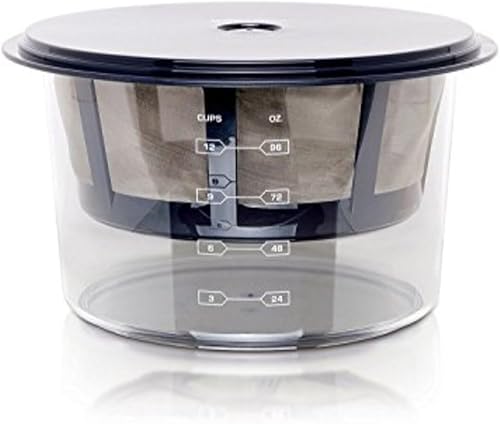
Strictly a strainer rather than a heated maker: the fine stainless mesh basket drains whey from finished yogurt to make thick hung curd or Greek-style yogurt.
Price when checked: $39.99 · Rating: 4.6 out of 5 (2.5K ratings)
Pros
- Ultra-fine stainless mesh
- BPA-free
- Makes hung curd easily
Cons
- Does not ferment yogurt itself
- Takes fridge space overnight
Best for batch making: Suteck 8-Jar Yogurt Maker

With eight jars and adjustable temperature controls from 86°F to 113°F (30°C to 45°C), this model is convenient for families or flavour experimentation. Its plastic jars are lightweight but can stain over time.
Price when checked: $35.38 · Rating: 4.2 out of 5 (276 ratings)
Pros
- Multiple jars for simultaneous batches
- Adjustable temperature and timer
- Auto shut-off prevents over-fermentation
Cons
- Plastic jars prone to staining
- Heating element can be noisy
Best for precise culturing temperatures: Adjustable-Temperature Yogurt Maker (1.6 Qt)

A yogurt maker with adjustable temperature from 21 to 45 °C and a 1-99 hour timer, with a 1.6-quart 304 stainless steel inner bowl.
Price when checked: $36.09 · Rating: 3.9 out of 5 (22 ratings)
Pros
- Adjustable temperature
- Long timer range
- Stainless inner bowl
Cons
- Lesser-known brand
- Few reviews
Best for multi-flavour family use: 8-Jar Yogurt Maker with Temperature Control

A yogurt maker with eight BPA-free jars, a timer up to 48 hours and 68-127 °F temperature control, so each jar can hold a different flavour.
Price when checked: $39.99 · Rating: 4.5 out of 5 (10 ratings)
Pros
- 8 separate jars
- Temperature control
- Long timer
Cons
- Very few reviews
- Jars are small individually
Best compact strainer for small kitchens: HOXXU 1100 ml Greek Yogurt Strainer

This is a space-saving strainer for thickening yogurt, perfect for small kitchens with limited storage. It doesn’t incubate or ferment yogurt, so it complements but doesn’t replace a yogurt maker.
Price when checked: $14.99 · Rating: 4.3 out of 5 (1K ratings)
Pros
- Compact and lightweight
- Easy to clean and store
- Produces thick, creamy yogurt
Cons
- No incubation or heating function
- Must use with pre-made yogurt
Best budget basic yogurt maker: Euro Cuisine YM80

This entry-level yogurt maker offers fixed low wattage heating for fermentation but lacks precise temperature control and a timer. It is suited for users who want a simple, inexpensive way to make dahi but must monitor fermentation closely.
Price when checked: $29.99 · Rating: 4.4 out of 5 (5.6K ratings)
Pros
- Affordable price
- Easy to operate
- Includes multiple jars
Cons
- Temperature fluctuates during incubation
- No timer or automatic shut-off
Best budget multi-jar temperature control: GDOR 8-Jar Yogurt Maker

This model balances budget and features with adjustable temperature and timer controls plus eight jars. Its plastic jars are less durable and may stain, but it suits those wanting batch capacity without premium pricing.
Price when checked: $32.99 · Rating: 4.2 out of 5 (35 ratings)
Pros
- Adjustable temperature and timer
- Eight jars for batch variety
- Compact design
Cons
- Plastic jars prone to staining
- Lid design less sturdy
How to choose the right yogurt maker for your needs
If you regularly make dahi for a family or like experimenting with multiple flavours, a yogurt maker with multiple jars and adjustable temperature control is more convenient. For those focused on probiotic benefits and fermentation precision, models with digital thermostats and timers are preferable. Budget buyers may accept less temperature accuracy but should be prepared to monitor fermentation times closely.
Choosing a model with digital temperature control allows you to maintain the incubation temperature within ±1°F (±0.5°C), which significantly improves consistency and probiotic viability. For example, maintaining 110°F (43°C) for 8 hours typically yields optimal texture and tang.
Models with multiple jars enable preparation of different dahi varieties simultaneously, such as plain, flavored, or probiotic-enhanced batches. This is beneficial for families with diverse preferences or for culinary experimentation.
Budget models with fixed temperature heating elements may fluctuate by several degrees, causing variable results. Users should monitor fermentation closely and adjust times accordingly, which can be less convenient.
If you only want to thicken store-bought yogurt or homemade dahi, a Greek yogurt strainer can be a useful accessory but does not replace the need for a yogurt maker. Strainers remove whey to produce thicker consistency but do not incubate or ferment milk.
Finally, if you rarely make dahi or prefer stovetop incubation methods, a dedicated yogurt maker might not be necessary. However, yogurt makers simplify the process by maintaining stable temperatures and reducing manual monitoring.
Related reading
- Large Sphere vs. Skull Ice Molds for Whiskey Drinks: A Comparison
- Popsicle Molds: A Buying Guide for Parents
- Best Halloween Silicone Molds for Chocolate & Candy
Frequently Asked Questions
What is the ideal temperature for making dahi at home?
The ideal incubation temperature for homemade dahi is between 104°F and 113°F (40°C to 45°C). Maintaining this range allows the bacterial cultures to ferment the milk properly, producing a creamy texture and balanced tang. Temperatures outside this range can cause slow fermentation or overly sour results.
Can I use a yogurt maker to make other fermented foods?
Yes, many yogurt makers can be used to ferment other cultured foods like kefir, labneh, or even sourdough starters, provided the temperature range fits the specific fermentation requirements. However, some models have preset temperatures ideal only for yogurt and may not be adjustable enough for other ferments.
Do all yogurt makers come with multiple jars?
No, some yogurt makers come with a single large container, while others include multiple small jars. Multiple jars allow making different flavours or smaller batches simultaneously, but single-container models may be easier to clean and better for larger volumes.

Rimi Sultana is a home cook from Bangladesh who has cooked for her family every day for the past five years and writes about it at Smart Cooks. Perpetually testing whether internet-famous recipes actually work in a regular home kitchen. Say hello on Facebook or through the contact page.