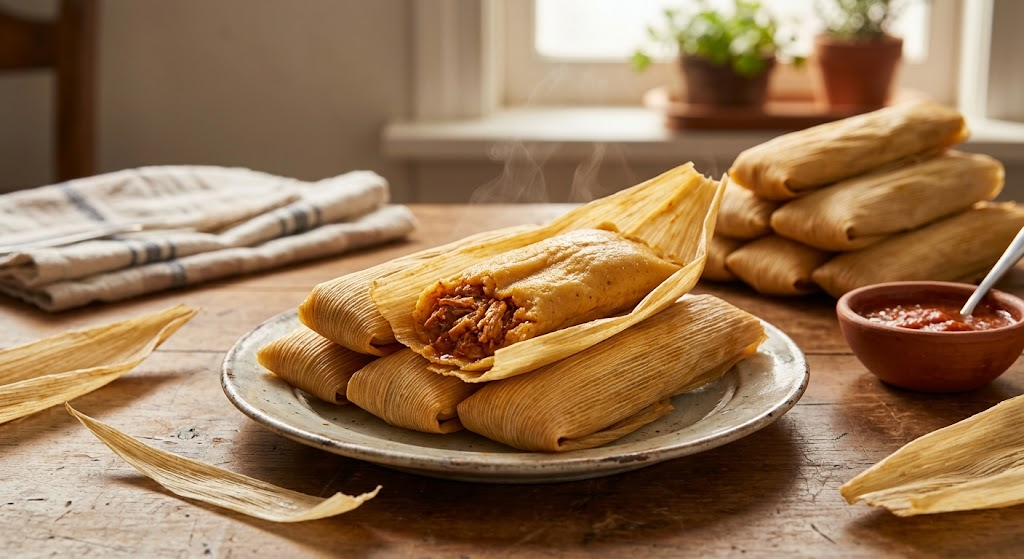
Tamales have a reputation for being an all-day project, and honestly, that’s not entirely wrong — but most of that time is hands-off steaming, not active work. The two things that actually make or break a batch are the masa (it needs to be whipped enough to float, literally) and the steamer setup (too much water touching the tamales ruins them, too little and they never cook through). This version uses a red chile pork filling, the most common style you’ll find, wrapped in corn husks and steamed in a proper tamale steamer.
Ingredients You’ll Need
For the Filling
- 2 lbs pork shoulder, cut into large chunks
- 4 dried guajillo chiles, stemmed and seeded
- 2 dried ancho chiles, stemmed and seeded
- 1 small white onion, quartered
- 3 garlic cloves
- 1 tsp ground cumin
- 1 tsp Mexican oregano
- Salt, to taste
- 2 cups water or reserved pork cooking liquid
For the Masa
- 4 cups masa harina
- 2¾ cups warm pork broth (or water)
- 1 cup lard or vegetable shortening
- 2 tsp baking powder
- 1½ tsp salt
- 1 package dried corn husks, soaked in warm water until pliable (30–60 minutes)
How to Make Homemade Tamales
Step 1: Cook the Pork and Chile Sauce
- Simmer the pork chunks in a pot of water with a quarter onion and a garlic clove until fork-tender, about 1.5 hours. Remove the pork, shred it, and reserve the cooking liquid.
- Toast the guajillo and ancho chiles in a dry pan for about 30 seconds per side until fragrant but not blackened, then soak them in hot water for 15 minutes to soften.
- Blend the softened chiles with the remaining onion, garlic, cumin, oregano, and 2 cups of the reserved pork liquid until smooth.
- Strain the sauce through a fine mesh sieve to remove the chile skins, then simmer it in a pot for 10 minutes. Stir in the shredded pork and season with salt.
Step 2: Whip the Masa
- Beat the lard on its own with an electric mixer for about 2 minutes until light and fluffy — this step matters more than people expect.
- In a separate bowl, mix the masa harina, baking powder, and salt, then gradually add the warm broth, mixing until you have a soft, spreadable dough.
- Add the masa mixture to the whipped lard in batches, beating continuously. Keep beating for several minutes until the masa is light and airy.
- Test it: drop a small ball of masa into a cup of cold water. If it floats, it’s ready. If it sinks, keep beating.
Step 3: Assemble and Steam
- Spread about 2–3 tablespoons of masa in a thin, even layer on the smooth (inner) side of a softened corn husk, leaving space at the top and sides.
- Spoon 1–2 tablespoons of the pork filling down the center of the masa.
- Fold one long side of the husk over the filling, then the other side, so the masa encloses the filling. Fold up the empty tapered end, leaving the top open.
- Stand the tamales upright, open end up, in a tamale steamer with the water level below the steamer rack — the water should never touch the tamales directly.
- Cover the top of the tamales with extra husks and a damp towel, then steam over medium heat for 60–75 minutes, checking the water level periodically and topping up with hot water as needed.
- They’re done when the masa pulls away cleanly from the husk without sticking. Let them rest for 10 minutes before unwrapping — they firm up as they cool slightly.
From My Kitchen: The Batch I Steamed Into Mush
My first attempt, I didn’t have a real tamale steamer yet, so I improvised with a regular stockpot and a metal colander balanced inside it. I misjudged the water level and filled it too high — the water level ended up above the bottom of the colander, and by the time I checked at the 40-minute mark, the bottom layer of tamales had been sitting directly in simmering water instead of steam. They’d turned to wet, disintegrating mush, and the husks had gone slimy instead of staying intact. The tamales on top, above the waterline, came out completely fine, which is what made it obvious what had gone wrong. A real tamale steamer (vaporera) has the rack set at a fixed height specifically designed to keep a safe gap above the water line no matter how full the pot gets, which is the exact problem my colander setup didn’t solve. I check the water level now every 20 minutes without fail, and it never touches the rack.
Tips for the Best Tamales
- Don’t skip whipping the lard separately before combining it with the masa — this is what makes the difference between dense, heavy tamales and light, tender ones.
- Pack the steamer standing upright and snugly — tamales that lean or fall over during steaming can let filling leak out.
- Corn husks vary a lot in size; tear extra thin strips off spare husks to use as ties if a husk won’t fold securely on its own.
- Tamales freeze extremely well, still wrapped in their husks — steam them straight from frozen, just add 15–20 extra minutes.
Frequently Asked Questions
What size tamale steamer do I actually need for a normal batch?
For a standard batch of 2–3 dozen tamales, a steamer in the 20–32 quart range gives you enough vertical room to stand the tamales upright without overcrowding. Smaller steamers work fine for half batches but you’ll need to steam in shifts for a full one.
Can I make tamales without a corn husk wrapper?
Banana leaves are a traditional substitute in some regional styles and work well, giving a slightly different, more floral flavor. Parchment paper can work in a pinch for the steaming mechanics, but it won’t give you the same flavor or the traditional presentation.
Why did my masa turn out dense instead of light?
This almost always comes down to not whipping the fat and masa mixture long enough, or using masa that was too dry. The float test in cold water is the most reliable way to check before you start assembling — if it sinks, keep beating.
How long do homemade tamales keep?
Refrigerated in an airtight container, they keep for about 5 days. In the freezer, well-wrapped, they hold up well for up to 3 months without a noticeable drop in quality.
If you’re steaming more than a few at a time, a dedicated steamer makes a real difference — see our guide to the best tamale steamers for which sizes actually fit a full batch standing upright.

Rimi Sultana is a home cook from Bangladesh who has cooked for her family every day for the past five years and writes about it at Smart Cooks. Perpetually testing whether internet-famous recipes actually work in a regular home kitchen. Say hello on Facebook or through the contact page.